Languages
Tuesday, September 22, 2026



News and Views from the Global South
Sustainable Development Goals

Running on Sunshine: Pakistan’s Solar Boom to Tide Over Middle East Energy Crisis
Energy expert Vaqar Zakaria believes solar power makes “excellent economic sense” – and he lives by it. For over five years, his rooftop panels have slashed his bills, sometimes to zero, even allowing him to sell surplus electricity back through net metering.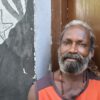
How a Handful of Fishers Show How Harpooning Can Be Ecologically Sustainable
Sudhi Kumar animatedly moves his hands, resembling a graceful dance performance, as he demonstrates how a fishing harpoon is used. He has been on a brief hiatus from harpooning, owing to the recent rough nature of the sea, and doesn’t have the tool with him as we speak. But more than three decades of experience using harpoons is apparent in how vividly he uses his body to mimic the process.
Geospatial Innovations Addressing Critical Water Data Gaps in Asia
Across Asia, new initiatives are showing how satellite Earth observation data and AI-powered technologies can turn fragmented water-related data into actionable insights for managers and policymakers in line ministries and local governments.
Where Water Doesn’t Flow, Equality Doesn’t Grow – Challenging Global Patriarchy this World Water Day
The 2026 campaign on World Water Day’s focuses on Water and Gender – ‘where water flows, equality grows’ . While substantial progress has been achieved across a range of gender indicators spanning education, health and public participation, the situation around WASH (water, sanitation and hygiene) is still marked by deep inequalities with women and girls disproportionately affected – and this reflects the persistence of global patriarchy.
80 Percent of Rural Households Without Direct Water Access – World Water Report
A new United Nations report has warned that global water inequality remains one of the most pressing development challenges of the decade, with billions still lacking safe drinking water and sanitation – while women and girls continue to bear the heaviest burden of water insecurity.

Tanzania, Mozambique and Malawi Launch $7.12 Million GEF Project to Protect the Ruvuma Basin
At dawn, the Ruvuma River moves quietly through a vast wetland along the border between Tanzania and Mozambique. Its muddy waters appear calm, disturbed only by drifting logs and the occasional ripple.
Housing as Climate Resilience in Asia-Pacific Cities
Access to adequate housing is a foundation of resilient cities. Safe and affordable homes provide stability, allow residents to access essential services, and enhance the capacity for communities to withstand and recover from shocks. Yet housing is often treated as a downstream outcome of urban development or disaster recovery rather than as a strategic investment in resilience.
Syria’s Mobile Cultural Bus: Championing Cultural Justice, Delivering Art and Literature to Children of War
In the Al-Azraq camp in northern Syria, 10-year-old Abeer Al-Qaddour sits, browsing a colourful book with intense focus and curiosity. Nearby stands a bus, elegantly inscribed with the words 'The Cultural Bus'.
One in Four Migratory Species Under Threat, But Conservation Efforts Can Reap Rewards
Global wildlife is facing a deepening crisis as the latest United Nations assessment warns that nearly half of the world’s migratory species are in decline due to human activity, habitat destruction, and climate change.
Tanzanian School Launches Energy Club to Promote Clean Cooking
A cloud of steam rises from a giant aluminium pot as Maria Joseph, a middle-aged cook in a toque blanche and faded apron, plants her feet firmly on the tiled kitchen floor. With both hands clasped around a wooden paddle, she plunges deep into the mound of rice, threatening to burn at the bottom.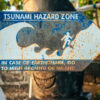
15 Years After the Great East Japan Earthquake & Tsunami
On 11 March 2011, the powerful 9.0 magnitude Tōhoku earthquake struck off the northeastern coast of Japan, triggering a 40-meter Tsunami. Many coastal towns along Japan’s Pacific coast were devastated. Approximately 20,000 people lost their lives and around 470,000 were evacuated from their homes.
Nigeria’s Failing Road Transport System Leaves Commuters at the Mercy of Robbers
Abimbola David still remembers being robbed twice in taxis in Abuja, Nigeria’s capital. The most recent incident occurred in 2023 when the robbers, who pretended to be passengers, took her belongings while the car was moving.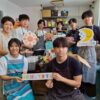
Turning Waste into Hope: A Youth-Led Model for Sustainable Change
From the beginning, this project was a collaboration between student teams in Japan and Korea. Although we live in different countries, we shared one common question: How can young people reduce waste while supporting families facing food insecurities?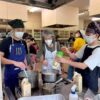
From Truancy to Belonging: Why Safe Spaces Matter for Youth Well-Being
I recently came across a statistic that stopped me in my tracks.
Before We Label Others: Why Listening Is the First Step Toward Peace
Around the world, conflicts often begin not with violence, but with assumptions. When people judge others before understanding them, labels replace dialogue—and division replaces trust. For young people growing up in an increasingly polarized world, learning to listen may be one of the most powerful tools for peace.
Caribbean Civil Society Gathered in Jamaica to Strengthen Resilience Amid Global Shifts
Civil society groups from across the Caribbean met in Jamaica in February 2026 for a landmark regional conference, with development leaders urging stronger governance, digital readiness and deeper partnerships to adapt to a shifting and increasingly complex geopolitical landscape.
International Women’s Day 2026: For Girls in Pakistan’s Tribal Belt, Women’s Sports Come at a Cost
“I was very happy to see the way Aina Wazir was playing cricket,” says 28-year-old Noorena Shams, a professional squash player, when she saw the seven-year-old’s video. The clip, which spread rapidly across social media, drew widespread praise for the young girl’s remarkable talent.
The Architecture of Hope Under Siege: One Year of Global Aid Dismantling
A year has passed since a 90-day freeze on U.S. foreign assistance signaled the deepening of a structural dismantling of international solidarity. Today, the "existential threat" to the freedom of association I warned of in my report to last year's General Assembly (A/80/219) is no longer a warning; it is a lived reality.
Financing Africa’s Biodiversity Conservation With Dwindling Donor Support
As the global community marks 2026 World Wildlife Day today (March 3), this year's focus is on Medicinal and Aromatic Plants: Conserving Health, Heritage and Livelihoods. However, beneath these celebrations, a difficult question emerges: who will bear the cost of conservation when traditional donor funding becomes uncertain and in the face of climate change?
How do we Navigate Asia-Pacific’s Climate-Cyber Polycrisis?
Communities globally are increasingly exposed to overlapping threats. Extreme weather, health emergencies and cyberattacks are occurring more frequently and simultaneously, often interacting in ways that amplify risks and strain response systems.
How Child Labour Persists Along Zanzibar’s Blue Economy
As the tide falls on Zanzibar’s western coast, 13-year-old Asha* moves across the reef, her gown flapping in knee-deep water. She carries a plastic basin and a knife. Since dawn, Asha has been prying octopus and scaling fish for drying and selling.« Previous Page — Next Page »


The Week with IPS

NEXT STOP - SDGs
Tracking global progress towards a sustainable world
Tracking global progress towards a sustainable world
