Languages
Monday, September 21, 2026



News and Views from the Global South
Sustainable Development Goals
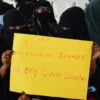
Stateless at Home: Kenyan Somalis Struggle to Reclaim Citizenship from Refugee Records
In 2006, Amina Saida was only two years old when her parents moved to the Dadaab refugee camp in northern Kenya, near the border with Somalia.
From Dialogue to Delivery: The Pacific’s Climate Mobility Moment
Rising seas, intensifying storms, saltwater intrusion and shifting coastlines are the lived realities of Pacific communities today. Families are making difficult decisions about whether to stay, adapt or move. Some communities have already relocated. Others are preparing for that possibility. Many are determined to stay for as long as possible on lands that hold ancestral meaning and identity.
The Inter-American Development Bank Invest Talks Growth– but Ignores People Bearing the Cost
In Asunción, Paraguay last month, finance ministers, central bank presidents, and private sector leaders gathered for the Inter-American Development Bank’s (IDB) Annual Meetings to talk about growth.
It Is Time For Africa to Fund Its Health Security
Relying on foreign aid is bad for Africa's health and it must stop if the continent is to enjoy health security.
UN80: UN General Assembly Adopts Resolution on Mandate Review
UN Member States made progress toward the UN80 initiative by adopting a resolution that would implement a mandate review, which is set to pave the way to strengthen the process of mandate creation and implementation.
Artisanal Miners in Western Kenya Move Away From Mercury
They call this land Bushiangala. Gold has been mined here for nearly a century. In 1931, colonial prospectors arrived after traces were found in the nearby Yala River, setting off a rush that changed this quiet corner of western Kenya.
UNECA Warns Africa Risks Remaining Uncompetitive, Urges AI Adoption
Africa must move swiftly to harness data and frontier technologies such as Artificial Intelligence (AI) to drive its economic growth and make the continent globally competitive in the digital economy, a senior official at the United Nations Economic Commission for Africa (ECA) has told policymakers.
Escalation in Middle East Reverses more than a Year of Economic Growth in the Region
New estimates by the United Nations Development Programme (UNDP) suggest the military escalation in the Middle East, now into its fifth week, may cost economies in the region from 3.7 to 6.0 percent of their collective Gross Domestic Product (GDP).
Once Evicted From This Kashmir Lake, People Now Seen as Its Saviours
For the past few weeks, residents living in and around Dal Lake in Indian Kashmir have witnessed “a different phenomenon” as a green sludge has accumulated on the once pristine water. Photos circulating widely on social media triggered a public outcry.
Experts, Rights Groups Warn of Crisis of Obstetric Violence
Government and medical professionals must implement systematic changes to deal with a “crisis” of obstetric violence (OV) across Eastern Europe and Central Asia (EECA), experts and rights campaigners have said.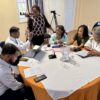
Caribbean Leaders and Civil Society Prepare for Global Push on Fossil Fuel Phase-Out
As the world edges closer to breaching key climate thresholds, Caribbean policymakers, scientists and civil society leaders gathered in Saint Lucia this month to coordinate the region’s position ahead of a landmark global meeting on transitioning away from fossil fuels.
War in Iran, Middle East Threatens Global Agrifood Systems
The current conflict in Iran and the Middle East region threatens to disrupt the global energy and agri-food sectors, as the closure of the Strait of Hormuz affects oil and fertilizer exports for farmers during critical harvest seasons.
EXCLUSIVE: Water Laureate Kaveh Madani on Arrest, Exile and Fight for Science
Professor Kaveh Madani of Iran has been named the 2026 Stockholm Water Prize laureate. The award will be formally presented by King Carl XVI Gustaf of Sweden in August during World Water Week in Stockholm.
As East Africa’s Migratory Fish Vanish, a Food Security Crisis Surfaces
By the time the auction begins at Nangurukuru fish market in Tanzania’s southern Lindi region, the crisis is already visible. Wooden canoes that once returned from the Rufiji River with heavy catches now bring only a fraction of what they used to. Traders scan for the long-whiskered catfish that once defined the market but find none.
What the US Really Wants from MC14 in Yaoundé
As trade ministers gather in Yaoundé, Cameroon, for the WTO’s 14th Ministerial Conference (MC14) on 26–29 March 2026, the preparatory process has produced a dense fog of competing reform proposals, draft ministerial statements, and work plans.
“At Africa’s First Our Ocean Conference, a Test of Global Will on High Seas Protection and Deep-Sea Mining”
When the 11th Our Ocean Conference opens in Mombasa and Kilifi, Kenya, from June 16-18, 2026, it will mark the first time this influential meeting has been held on African soil. For coastal and island nations across the continent and the wider Indian Ocean – and for the Global South more broadly – the stakes could not be higher: the promises and commitments made there will help decide whether the ocean becomes a source of justice and resilience, or deepens existing inequalities.
World Heating Faster Than Expected, Scientists Sound Alarm in latest UN Report
The global climate system continued its alarming trajectory in 2025, with multiple indicators reaching record or near-record extremes, underscoring the accelerating pace of climate change and its cascading impacts on ecosystems and human societies, according to the latest State of the Global Climate 2025 report released by the World Metereological Organisation (WMO).
Running on Sunshine: Pakistan’s Solar Boom to Tide Over Middle East Energy Crisis
Energy expert Vaqar Zakaria believes solar power makes “excellent economic sense” – and he lives by it. For over five years, his rooftop panels have slashed his bills, sometimes to zero, even allowing him to sell surplus electricity back through net metering.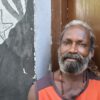
How a Handful of Fishers Show How Harpooning Can Be Ecologically Sustainable
Sudhi Kumar animatedly moves his hands, resembling a graceful dance performance, as he demonstrates how a fishing harpoon is used. He has been on a brief hiatus from harpooning, owing to the recent rough nature of the sea, and doesn’t have the tool with him as we speak. But more than three decades of experience using harpoons is apparent in how vividly he uses his body to mimic the process.
Geospatial Innovations Addressing Critical Water Data Gaps in Asia
Across Asia, new initiatives are showing how satellite Earth observation data and AI-powered technologies can turn fragmented water-related data into actionable insights for managers and policymakers in line ministries and local governments.
Where Water Doesn’t Flow, Equality Doesn’t Grow – Challenging Global Patriarchy this World Water Day
The 2026 campaign on World Water Day’s focuses on Water and Gender – ‘where water flows, equality grows’ . While substantial progress has been achieved across a range of gender indicators spanning education, health and public participation, the situation around WASH (water, sanitation and hygiene) is still marked by deep inequalities with women and girls disproportionately affected – and this reflects the persistence of global patriarchy.« Previous Page — Next Page »


The Week with IPS

NEXT STOP - SDGs
Tracking global progress towards a sustainable world
Tracking global progress towards a sustainable world
