Languages
Friday, September 25, 2026



News and Views from the Global South
Sustainable Development Goals
How do we Navigate Asia-Pacific’s Climate-Cyber Polycrisis?
Communities globally are increasingly exposed to overlapping threats. Extreme weather, health emergencies and cyberattacks are occurring more frequently and simultaneously, often interacting in ways that amplify risks and strain response systems.
How Child Labour Persists Along Zanzibar’s Blue Economy
As the tide falls on Zanzibar’s western coast, 13-year-old Asha* moves across the reef, her gown flapping in knee-deep water. She carries a plastic basin and a knife. Since dawn, Asha has been prying octopus and scaling fish for drying and selling.
Climate Change Is Coming for Your Morning Coffee
Your morning cup of coffee could soon cost more, thanks to climate change, which is raising the heat on the production of the world's most loved beverage.
Why Ugandan Male Sexual Violence Survivors Suffer In Silence
When people ordinarily think about sexual violence, it's of the rape of women by men. In Uganda, as in other countries, activists say men are also victims of sexual violence perpetrated by women, though males remain silent.
Trachoma: What It Takes to Eliminate a Disease in the Pacific Islands
Two Pacific Island nations have been applauded for their successes in the global health campaign to eliminate the infectious eye disease, Trachoma.
Russia Assessing the Benefits of WTO Membership
Despite consistent criticisms over its operations down the years, Russia still finds it difficult to leave the World Trade Organization (WTO), and instead assessing the opportunities and broad benefits of membership. WTO is not just an organization, but a multilateral bridge for strategic trade engagement and securing results-oriented partnerships. Certainly, unlocking and accelerating trade initiatives should be the key focus in the changing world.
As Biodiversity Loss Grows, Rome Talks Urge Nations to Step Up Action
Governments meeting in Rome last week acknowledged that global efforts to protect nature are still not moving fast enough, even as biodiversity loss continues to affect ecosystems, livelihoods, and economies worldwide.
Players Score Dignity in India’s First Transgender Football League
Pyari Hessa, 26, balances long shifts as a loco traffic controller at a steel company in Jamshedpur with evening football practice on the same turf where professionals train.
Brazil Can Boost Growth by Bringing More Women into the Labor Force
When Brazil’s unemployment rate dropped to 5.2 percent in November 2025—the lowest in a quarter century—it punctuated an impressive turnaround from the pandemic. Yet, while men’s participation in the labor market has returned to its pre-COVID trend, women have fallen behind significantly.
The Global Struggle for Equality for Women and Girls
The global struggle for equality for women and girls has been ongoing for centuries, with no single country having achieved full equality. In many countries, women and girls continue to face discrimination, harassment, unequal treatment, injustice, domestic violence, and a lack of security and safety.
From Pledges to Proof: UN Biodiversity Meeting Begins First Global Review of Nature Action
Governments convened in Rome on Monday (February 16) for a critical round of UN biodiversity negotiations, launching the world’s first global review of how countries are acting to protect nature.
Regional Trade in Transition: Digitalization, Servicing and De-risking
Trade in the Asia-Pacific region has moved into a new strategic reality. The latest Asia-Pacific Trade and Investment Trends (APTIT) highlights that rapid technological change and a strategic reconfiguration of supply chains are reshaping how economies in the region trade and compete.
Extreme Heat Undermines Decent Work in North Eastern Kenya
By 9 a.m. on a Wednesday, Hawa Hussein Farah is already watching the temperature climb. Awake since 6 a.m., she has prepared her three children for school before walking them to class and heading to Suuq Mugdi, an open-air market in Garissa town, to buy the fruit she will sell.
As Glaciers Melt, the World’s Hidden Water Banks Are at Risk
Glaciers – the world’s hidden water banks - are a source of life for billions. The seasonal melt from mountains and glaciers sustains some of the world’s most important rivers, such as the Indus, the Nile, the Ganges and the Colorado. Those and other mountain-fed rivers irrigate crops, provide drinking water for nearly two billion people, and power electricity generation.
Africa’s Food Systems Will Not Transform Without Parliamentary Accountability
Africa has never lacked agricultural strategies. Since the launch of the Comprehensive Africa Agriculture Development Programme (CAADP) in 2003, governments have pledged repeatedly to spend at least 10 per cent of public budgets on agriculture and to raise productivity through better investment and coordination. The African Union reaffirmed this target in subsequent declarations, such as Malabo in 2014 and the Kampala CAADP Strategy (2026-2035).
Bridging the Capital Gap: Strategic Public-Private Partnerships Invest in Young Agri-entrepreneurs
The global aid system is crumbling amidst chronic underinvestment in rural areas, posing a systemic threat to food systems everywhere. With 1.3 billion young people in the world today – the largest generation in history, and nearly half of them living in rural areas – investing in their entrepreneurial potential is key.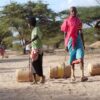
When Drought Steals Childhood: How Climate Shocks in Northern Kenya Are Testing the SDGs
Every morning before sunrise, 10-year-old Amina Adan walks away from school and toward a shrinking water pan on the outskirts of Rhamu, Mandera County. By the time her classmates would be opening exercise books, Amina was already balancing a yellow jerrycan almost half her size.
Leveraging Artificial Intelligence and Enhancing Countries’ Preparedness
It is a pleasure for me to join His Excellency, Minister Al Hussaini in welcoming you to this important dialogue here in the United Arab Emirates—a fast-growing global AI hub. A recent Microsoft study reports that 64 percent of the UAE’s working age population uses AI, which is the highest rate globally.
A Business Necessity: Align With Nature or Risk Collapse, IPBES Report Warns
Business can still remain profitable while protecting the environment but invest in nature-positive operations, says a landmark report by the Intergovernmental Platform on Biodiversity and Ecosystem Services (IPBES), which finds that global companies have contributed to the escalating loss of biodiversity.
Goal 1: End Poverty in all its Forms –Everywhere
Eradicating extreme poverty for all people everywhere by 2030 is a pivotal aim of the Sustainable Development Goals. Extreme poverty, defined as surviving on less than US$3.00 per person per day at 2021 purchasing power parity, has witnessed remarkable declines over recent decades.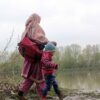
‘When Rains Come, Our Hearts Beat Faster’
When the rain begins in Kashmir's capital Srinagar, Ghulam Nabi Bhat does not watch the clouds with relief anymore. He watches them with calculation. How much can the gutters take? How fast will the river rise? Which corner of the house will leak first? Where should the children sleep if the floor turns damp?« Previous Page — Next Page »


The Week with IPS

NEXT STOP - SDGs
Tracking global progress towards a sustainable world
Tracking global progress towards a sustainable world
