Languages
Saturday, November 14, 2026



News and Views from the Global South
Sustainable Development Goals

Africa Pushing Limits To Boost Renewable Energy Supply Chain, Security
Investors, regulators, researchers, policymakers, and representatives of renewable energy companies, acknowledged the key challenges of shifting away from fossil fuels to renewable energy in Africa when they gathered in Abu Dhabi, United Arab Emirates (UAE) this week.
Rural Entrepreneurs Thriving Against All Odds in Zimbabwe
With heavy sweat drenching his face and his shirt soaked in the sweat, 39-year-old Proud Ndukulani wrestled with a homemade knife, which he dipped in some used oil, before turning the glistening knife upon a rather tough and dusty tyre obtained from what he said was a forklift. His assistant stood by his side as he (Ndukulani) cut some tough rubber from the giant tyre lying outside an open shade roofed with aging asbestos sheets at Juru Growth Point, located 52 km east of Harare in Zimbabwe’s Goromonzi district in the country’s Mashonaland East province.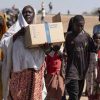
Conflict’s Long Shadow Has a Name: It’s Hunger
Scarce food and drinking water. Limited and inconsistent healthcare. Rapidly deteriorating mental health. With conflict on the rise globally, this is the grim reality for millions around the world.
Leaders Need to Break the Chokehold of Debt and Austerity. Our Health Depends on it
As leaders gather for the Spring Meetings of the IMF and World Bank amid the cherry blossom trees of Washington, DC, there is some good news to celebrate.
Pioneering Digital Initiative Empowers Pacific Islands to Tackle Climate Disasters
Winning a battle for survival requires understanding the opponent. And, for the peoples of 22 island nations and territories scattered across more than 155 million square kilometres of Pacific Ocean, the volatility and wrath of the climate are their greatest threats.
IPCI 2024: Oslo Commitment Protects Sexual and Reproductive Rights Across All Contexts
Parliamentarians from 112 countries have adopted the IPCI statement of commitment to protect and promote sexual and reproductive health rights, committing to the principle that "life or death is a political statement." As IPCI Oslo drew to a close on Friday, April 12, 2024, parliamentarians adopted a new Statement of Commitment that was “the collective effort of every single delegate,” said Alando Terrelonge, MP from Jamaica and chair of the drafting committee.
IPCI 2024: Technology as a Tool to Advance and Threaten Sexual and Reproductive Health Rights
Technology emerged as a core theme of IPCI Oslo for its relevance in advancing the objectives of the Cairo Programme of Action. When channeled for good, it is an effective tool that can fill accessibility gaps in the health sector and spread awareness of sexual and reproductive health rights. Yet, the way in which digital technology has been weaponized against SRHR is of great concern for parliamentarians, especially for women.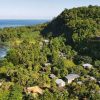
Climate Governance, Adaptation, and Digital Solutions
Let's take a moment to reflect on a critical question: In the decade since the Third International Conference on Small Island Developing States (SIDS3), what tangible progress have we made in addressing the challenges faced by our SIDS?
When the Man Who Built the Bombs Met the Man Who Dropped the Bombs…
The award-winning Hollywood movie Oppenheimer portrays the life of J. Robert Oppenheimer, who helped create the atomic bomb, which claimed the lives of an estimated 140,000 to 226,000 people and devastated the two Japanese cities of Hiroshima and Nagasaki in August 1945.
IPCI 2024: Oslo Conference Focuses on Parliamentary Power over Reproductive Rights
Gearing up for the 30th anniversary of the International Conference on Population and Development (ICPD), the world’s parliamentarians and ministers are meeting in Oslo to determine the course of action needed to promote sexual and reproductive human rights (SRHR).
30 Years On, Genocide Survivors Embark on a Journey To Build a Resilient Future
A minute of silence was observed on April 7 across Rwanda as the country held a memorial ceremony to mourn more than one million people, overwhelmingly Tutsis, who were systematically killed in the 100 days of atrocities between April and July 1994.
Following Asian Countries’ Leads, Climate Action Opportunity for Developing Nations
In the deserts of Gujarat, something remarkable is happening. On my recent visit I saw hundreds of trucks moving under the warm Indian sun. Thousands of hardworking young people from all corners of Bharat, as Indians now often call their nation, are turning around the previously empty and harsh landscape.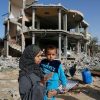
‘Scattered Measures’ in Humanitarian Aid for Gaza Are Not Enough – UN Secretary General
As the humanitarian crisis in Gaza drags into its sixth month on Sunday, April 7, the UN Secretary-General calls for a “true paradigm shift” in the delivery of humanitarian aid. On Friday April 5, 2024, Secretary-General António Guterres spoke before reporters to mark six months since the October 7 attacks, where 1,200 civilians in Israel were killed in a terrorist attack led by Hamas, which has since led to a military campaign by the Israel Defense Forces (IDF) into Gaza.
No Turning a Blind Eye to Protection of Dominican Republic’s Natural Resources, Says Environment Minister
In 2020, general elections were held in the Dominican Republic. This took place while the COVID pandemic was becoming an increasingly serious threat, causing severe social and economic disruption. The elections were two months late as a result of the initial chaos COVID caused. The governing Dominican Liberation Party’s 16-year rule ended after the Modern Revolutionary Party’s candidate, Luis Abinader, received a majority of the votes. Elections are now scheduled for May 19 this year and IPS took the opportunity to ask Miguel Ceara Hatton, the country’s Minister of Environment and Natural Resources, how he perceived the past four years' efforts to mitigate a global crisis that now threatens us all, namely climate change and environmental degradation.
Can Preserving Goa’s Khazans Address Climate Threats?
Growing up in a khazan ecosystem, the traditional agricultural practice followed in the south-western Indian state of Goa, Elsa Fernandes would love sitting in a koddo, a woven bamboo structure for storing paddy. Her family members would pour paddy around her and with the growing pile, she would rise to the top and then jump down with joy.
Taking Charge: Three Actions to Help Combat Climate Change and Save Amazonia
Climate change is the defining crisis of our time––it is the ultimate equalizer from which no one is immune. The Earth's ecosystems are on the brink of collapse, threatening biodiversity and human societies in unprecedented ways at a global scale.
India’s Farmers Could Use Better Monsoon Forecasts
Agriculture in India need not 'gamble' with the monsoons if accurate weather and climate forecasts are proactively made available to farmers, according to the results of a new experimental study conducted by the University of Chicago.
Breaking the Silence: Gender-Based Challenges in the Lesotho Highlands Water Project ll
In the journey towards gender equality and justice, recent decades have seen strides made, yet the road ahead remains treacherous. In the race to achieve the Sustainable Development Goals (SDGs) by 2030, attention is turning to the role that over five hundred public development banks worldwide could play.
Developing Countries’ Government Debt Crises Loom Larger
Developing countries are being blamed for having borrowed and spent irresponsibly. But they have only been doing what foreign powers and financial interests have urged them to do.
“I’m More Optimistic than Before Regarding the Goal of Ending Hunger in Latin America”
"I'm more optimistic than before" about the goal of ending hunger included in the 2030 agenda for Latin America and the Caribbean, said FAO regional representative Mario Lubetkin in an interview with IPS.
Climate Change: the Partnership with Asian & Pacific Small Island Developing States
Stories of growing vulnerability make regular headlines across all Asian and Pacific small island developing States (SIDS). With tens of thousands of people displaced every year due to climate and disaster-related events, there are continued concerns about the costs of climate-related hazards.« Previous Page — Next Page »


The Week with IPS

NEXT STOP - SDGs
Tracking global progress towards a sustainable world
Tracking global progress towards a sustainable world
