Languages
Saturday, August 15, 2026



News and Views from the Global South

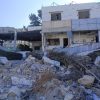
Gaza Counts Costs of Catastrophic Impacts of Israeli Bombardment on Healthcare
With enough steel and concrete, the hospitals that have been smashed to bits in Gaza can be rebuilt. But a construction plan paired with an army of bulldozers will not be enough to reconstruct the entirety of Gaza's health care system, which, after many months of war, has been decimated by the Israeli military forces.
Nuclear Testing in Kazakhstan Documentary Showcases Urgent Need for Nuclear Abolition
The documentary I Want to Live On: The Untold Stories of the Polygon exposes the lifelong impacts of nuclear testing in Kazakhstan’s Semey region. As a third-generation survivor born in Semey, international relations legal expert based in New York, Togzhan Yessenbayeva said she was aware of the “profound impact” that nuclear testing has had on her community and environment. She remarked that the tests in Semipalatinsk have left a “legacy of challenges” that people must deal with to this day.
Agriculture for Economic Resilience During Political and Financial Crisis – The Case of Bangladesh
The recent student movement in Bangladesh demanding reform of the quota system for public jobs led a ‘march of the people’ towards the official Residence of the Prime Minister Sheikh Hasina on 5th of August 2024. The security forces of the country, including the army, refused to open fire on the marching crowd. Fearing an imminent attack on her residence without the protection of the army, Sheikh Hasina fled to neighbouring India after being in power continuously since 2008. With Sheikh Hasina fleeing to India on 5th of August 2024 her authoritarian and corrupt rule of 15 years just melted away.
The G20: How it Works, Why it Matters and What Would be Lost if it Failed
South Africa took over the presidency of the G20 at the end of 2024. Since then the world has become a more complex, unpredictable and dangerous place.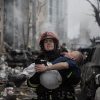
Ukrainians Stress That a Peace Agreement Must Include Justice
After three years of bloodshed, extraordinary courage and immense sacrifices in resisting Russia’s invasion, the people of Ukraine are in limbo as peace negotiations to end the war, instigated by United States President Donald Trump, remain unpredictable.
Western Climate Hypocrisy Exposed by NATO Energy Policy
NATO geopolitical strategy has now joined the ‘coalition’ of Western geoeconomic forces accelerating planetary heating, now led again by re-elected US President Donald Trump.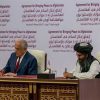
First Vietnam, Then Afghanistan: Is Ukraine Next?
The ongoing war in Ukraine has raised difficult questions for U.S. foreign policy. With U.S. and Russian leaders engaged in direct talks in Saudi Arabia over the future of the conflict, many are left wondering whether the Ukraine crisis could become another Afghanistan or Vietnam—two conflicts where the U.S. pursued peace talks with its adversaries while sidelining local governments, leading to catastrophic outcomes. Drawing lessons from these past negotiations and the eventual collapse of South Vietnam in 1975 and the Republic regime in Afghanistan in 2021, one cannot help but wonder whether Ukraine could face a similar fate unless the U.S. carefully navigates these talks with a more inclusive approach.
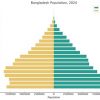
Bangladesh Economy: Turning Demographic Challenges into Opportunities
Speaking at the recent annual conference of the Bangladesh Administrative Service Association, Chief Adviser Dr Muhammad Yunus has emphasised the need to create opportunities for young people, asserting that Bangladesh’s large population is not a burden but a valuable resource.
Tensions Between Israel and Hamas Threaten Second Phase of Gaza Ceasefire
On March 1, the first phase of the Israel-Hamas ceasefire was scheduled to end. However, as Israel continues to block humanitarian aid from entering Gaza, and Hamas declining to release more hostages until the second phase goes into effect, the long-term feasibility of the ceasefire agreement is uncertain. Additionally, U.S. President Donald Trump’s recent inflammatory comments surrounding the conflict between the two parties might put further strain on the already fragile ceasefire agreement.
Society’s Self-Sabotage: How Discrimination Cripples Nations
One look at the headlines recently and anyone would know that cuts to foreign aid are jeopardizing hard-won progress on a range of issues. AIDS is one of them.
The Worldwide Demographic Ageing Transformation
Country populations worldwide are experiencing the demographic ageing transformation. The relatively young populations experienced during most of the 20th century are increasingly being transformed into the older populations of the 21st century.
Siddis of India—a Unique Community Moves Into the Mainstream With Tourist Venture
The Siddi community, descendants of slaves from Africa, is now becoming more involved with mainstream enterprises, including a forest homestay venture—which is changing their fortunes after years of discrimination on the Indian subcontinent where they were originally enslaved.
A Cash Crisis Forces UN to Re-Figure its Budget and Freeze Staff Hiring
Faced with an impending cash crisis primarily due to non-payment of dues by the US and over 100 other member states-- along with threats of a US withdrawal from the world body-- there were widespread rumors the United Nations was re-costing and reducing its approved budget for 2025 while deciding to freeze hiring new staffers.
Addressing the Scars of Abuse: A Global Call to Protect Girls and Secure Their Futures
In March 2000, 15-year-old Binta Manneh was eager to test her skills at an out-of-town interschool sports competition. That night, as she stepped out to buy biscuits from a nearby shop, she encountered paramilitary officers – men sworn to protect the nation.
International Women’s Day, 2025
Rule Breakers: The Compelling True Story of Afghan Girls Who Risked All to Learn
Like the Afghan robotics team, Education Cannot Wait (ECW), the global fund for education in emergencies and protracted crises in the United Nations, is breaking the 'rules' and continuing to educate young women in that country despite an edict from the Taliban denying girls a secondary school education.

Developing a Thriving e-vehicles Value Chain in Africa
African countries should join hands to make the most of their own resources and build a formidable electric vehicle ecosystem that could help fast-track realisation of SDGs.
Solutions To TB and HIV Benefit All of Us, North and South
In the west of Kenya, near the shores of Lake Victoria, where I come from, a tuberculosis outbreak is no different from one that takes place anywhere else in the world. A few dozen people get sick, health workers attempt to locate and test everyone with a bad cough and other symptoms. A concerted effort is made to make sure that patients take their medications for the entire duration of treatment, at least six months, to help stem the creation of drug-resistant infections.
International Women’s Day, 2025
UN: Women’s Rights Face ‘Unprecedented’ Pushbacks
Girls and women worldwide are facing growing threats to their security and rights, from threats to their education access to severe poverty and multiple forms of violence. In 2024, nearly one in four governments worldwide reported a backlash to women’s rights, as a new report from UN Women reveals. 
How the Arts Play a Role in the Fight for Nuclear Disarmament
This week countries and communities converge in New York for the 3rd Meeting of State Parties on the Treaty for the Prohibition of Nuclear Weapons (TPNW), with multiple side events to address the social, political and cultural impact of nuclear abolition across different sectors.
International Women’s Day, 2025
The Quest for a Female UN Secretary-General: Assessing the Probability
The United Nations has chosen “For ALL Women and Girls: Rights. Equality. Empowerment.” as the theme for International Women’s Day on March 8, 2025. This theme emphasizes the importance of equal rights, power, and opportunities for all women and girls, urging action to create a feminist future where no one is left behind.
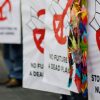
Nuclear Weapons, Far from Diminishing, Keep Rising
The United Nations, whose primary mandate is to maintain international peace and security, has been one of the longstanding leaders in the global campaign for a world without nuclear weapons. But the progress has been relatively slow – despite the growing number of anti-nuclear treaties. Perhaps the only consolation is the absence of a nuclear attack or a nuclear war in over 80 years.« Previous Page — Next Page »


Want to keep up with the latest news and views from the Global South? Sign up for IPS Daily News Report for daily emails with our top stories about international development, climate change, gender and more. (Formerly IPS TerraViva since 1993).

The Week with IPS

NEXT STOP - SDGs
Tracking global progress towards a sustainable world
Tracking global progress towards a sustainable world
