Languages
Saturday, August 15, 2026



News and Views from the Global South


International Day of Forests
‘Now is the time for decisive, collaborative action’
The Forest Declaration Assessment Partners have called for urgent reforms to the international financial system to halt deforestation and protect biodiversity. It has also pitched for redirecting the public subsidies to mitigate the direct and indirect environmental risks from both public and private finance. 
Argentina is Experiencing an Oil Boom, with Bright Spots and Shadows
For about three years now, Argentines have been hearing almost every month that oil production is breaking new records. Looking ahead, the country is projected to become a major global supplier of what remains the most sought-after energy source.
New Survey: US Funding Freeze Triggers Global Crisis in Human Rights and Democracy
A new survey carried out by the EU System for an Enabling Environment (EU SEE) network exposes the impact of the US funding freeze on civil society organisations (CSOs) in over 50 countries. With 67% of surveyed organisations directly impacted and 40% of them losing between 25-50% of their budgets, the abrupt halt in funding is disrupting critical human rights, democracy, gender equality and health programs, leaving vulnerable communities without essential support.
Musk is Wrong. Empathy is Not a Weakness
“The fundamental weakness is empathy,” Musk recently told radio podcast host Joe Rogan. “There is a bug, which is the empathy response.” As Musk has established himself as at least the second most powerful person in an administration seeking a wholesale remaking of institutions, rules and norms, what he said matters, because it encapsulates a political plan. What the Project 2025 report set out in over 900 turgid pages, Musk’s remark captures in a simple pithy mantra for the social media age.
Epilepsy Patients in Africa Fight Stigma and Neglect
When Angela Asemota’s son began having seizures at six years old in 1996, people gossiped that he was possessed by evil spirits, leading her to seek healing from native healers and religious clerics. He underwent several traditional rituals and drank various concoctions, but the seizures persisted. It was not until his fourth year in secondary school in 2004 that she took him to a hospital, where he was diagnosed with epilepsy and began taking medication.
When Ethnic Violence Turns Women Against Women
For Kikim*, it was the ides of May, instead of March, that was, in one sense, her undoing. She was looking forward to welcoming her baby, her first. But life took an unexpected turn, and things changed within a split second.
Pioneering Sustainable Energy Solutions in Africa
The 12th Sankalp Africa Summit, held on Feb 26-27 in Nairobi, brought together a pivotal cohort of start-up innovators, investors, entrepreneurs and policymakers to accelerate the innovation needed to enhance Africa’s energy transition.
Funding Disruptions Are a Systemic Failure – Philanthropy Must Do What’s Right and Support Local Leadership
The slashing of US aid funding by Donald Trump and Elon Musk, and cuts or planned cuts in international support by several European states, threaten to cut off the oxygen supply to a civil society already in a critical condition. At CIVICUS, the global civil society alliance, activists and grassroots groups have shared with us time and again that shifting and volatile donor priorities are one of the top funding challenges they face, alongside limited resources for strategy and restricted funding.
The United States Confronts the Demographic Piper
As the United States confronts the unflinching demographic piper with the stark facts of reality, the new administration and Congress are denying, disengaging and dismantling.
Papua New Guinea: Years of Environmental Clean Up Ahead Following New Report on Abandoned Bougainville Mine
Local communities are finally witnessing progress in their mission for justice, 36 years after the Panguna copper mine in Papua New Guinea’s Autonomous Region of Bougainville became the centre of landowner grievances about environmental damage.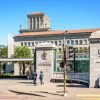
WTO: Standing Tall as the Winds Howl
Winds are also changing in trade policy. As they get rougher and more unpredictable, the much-criticised multilateral trade regime of the World Trade Organization (WTO) has so far proved surprisingly resilient. Paradoxically, Donald Trump’s tariff policy could actually strengthen the WTO.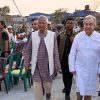
UN Chief’s Ramadan Solidarity Visit Revives Rohingya Refugees Hope
When United Nations Secretary-General António Guterres appeared before the Rohingya refugees wearing a traditional white panjabi, a costume of Muslims, to join an iftar party in Ukhiya refugee camp, thousands who had gathered waved to welcome him.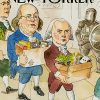
Trump, Democracy and the U.S. Constitution
In these turbulent and sad times, it is hard to keep quiet about abuses and violations of human rights taking place around the world; in eastern DR Congo, South Sudan, Ukraine, and Gaza. Among the most egregious examples of incomprehensible stances on such abuses is the behaviour displayed by the Trump Administration, not least the President’s behaviour against the lawfully elected president of Ukraine. Trump’s doubts about the validity of a nation’s desperate struggle against the forces of a dictatorial regime, which destroys their country and aims at taking over its richest territory.
Is UN in Danger of Losing its Battle for Gender Equality?
The Trump administration’s decision to abandon DEI—diversity, equity and inclusion— which was aimed at promoting fair treatment in the work place, is having its repercussions at the United Nations. The US has been exerting pressure on UN agencies to drop DEI largely protecting minority groups, and women in particular, who have been historically underrepresented or subject to discrimination.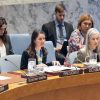
Women and Girls in Afghanistan Bear the Brunt of the Country’s Crisis
Since the Taliban’s return to power in Afghanistan nearly four years ago, human rights have begun diminishing for over 14 million women. Heightened gender inequality has exacerbated the pre-existing humanitarian crisis in Afghanistan, which has been marked by conflict, displacement, climate change, food insecurity, and economic instability. In 2025, widespread cuts in humanitarian funding look to further strain the crisis.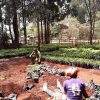
Activists Fear Kenya Forests Threatened Due to Government Development
After the controversial lifting of a six-year moratorium or temporary ban on logging activities in public and community forests by the Kenyan government in July 2023, trucks ferrying tree logs are frequently seen on major highways in total disregard of environmental concerns.
Trashing Jewish Values Risks Israel’s Survival as We Know It
77 torturous years of the Israeli-Palestinian conflict, punctuated by intense violence and wars, successive Netanyahu-led governments have shattered Jewish values to the core—values that have sustained and preserved Jewish lives for centuries and provided the moral foundation on which Israel was built.
Surges in Violence in Haiti Push Basic Services to the Brink of Collapse
In 2025, the humanitarian crisis in Haiti has grown increasingly dire amid the ongoing gang wars. With rates of displacement, child recruitment, food insecurity, physical violence, and sexual violence having skyrocketed in the past year alone, the national police have found it difficult to keep gang activity under control.
United Nations’ New Efficiency Initiative is Aiming for Structural Changes to Operations
The United Nations chief announced on Wednesday (March 12) a new initiative that aims to assess areas of efficiency and improvement for the international organization to expand its efforts and recognize the need “for even greater urgency and ambition.”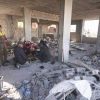
Energy is a Catalyst for Peace Between Israel and Gaza
Israel’s decision to suspend electricity supplies to Gaza has far-reaching consequences for daily life of Palestinians as well as Gaza’s reconstruction. Managing Gaza’s energy crisis will require the development of alternative supplies, which are found in off-shore natural gas fields that can be developed off the coast of Israel and Gaza in the Eastern Mediterranean (EastMed).
UN Chief Launches New Initiative as World Faces Growing Challenges
Our world is facing challenges on every front. Since the United Nations reflects that world in all its aspects, we feel it in all our work.« Previous Page — Next Page »


Want to keep up with the latest news and views from the Global South? Sign up for IPS Daily News Report for daily emails with our top stories about international development, climate change, gender and more. (Formerly IPS TerraViva since 1993).

The Week with IPS

NEXT STOP - SDGs
Tracking global progress towards a sustainable world
Tracking global progress towards a sustainable world
