Languages
Monday, August 24, 2026



News and Views from the Global South


Israel-Lebanon Ceasefire Uncertain Amid Repeated Violations
On November 27, Israel, Lebanon, and a host of mediating states agreed upon a ceasefire agreement that would establish a permanent cessation of warfare between the two parties. As of December 3, there have been no reported instances of Hezbollah directing attacks toward Israel that resulted in any casualties. Despite this, there have been numerous reported violations committed by Israel, causing extensive harm to civilian lives and local infrastructure. Many parties have warned for the international community to hold Israel accountable for these violations.
Courage, not Compromise? A Rallying Cry that Failed a Deadlocked COP Meeting
Courage and not compromise. That was the motto desperately launched by members of the civil society in the twilight of the negotiations of the Plastic Pollution Treaty in Busan, South Korea last week.
‘Quilombola Communities Live in Fear Because the Laws That Are Supposed to Protect Them Are Ignored’
CIVICUS discusses threats to the security, rights and ancestral lands of Brazil’s quilombola communities with Wellington Gabriel de Jesus dos Santos, leader and activist of the Pitanga dos Palmares Quilombola community in Bahia state.

Climate Change’s Dire Consequences Laid Bare at International Court of Justice Hearings
At the International Court of Justice on Tuesday, December 4, 2024, Brazil called for climate justice, and Canada urged swift action on the world's "greatest challenge," while China advocated for equity and development rights. These countries are among the 98 that will make presentations during the fortnight of hearings, after which the court will give an advisory opinion.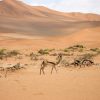
Focus on Africa: IPBES Plenary Session Makes Inaugural Visit to Biodiverse Continent
The Intergovernmental Science-Policy Platform on Biodiversity and Ecosystem Services’ (IPBES) first Plenary session in Africa is a “crucial acknowledgement of Africa’s important contribution to biodiversity conservation, which is a global public good, a heritage that Africa has the privilege to share with the peoples of the world,” says Dr. Luthando Dziba, from South Africa, co-chair of the IPBES Multidisciplinary Expert Panel.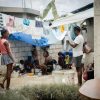
UN ECOSOC Special Meeting Highlights the Urgent Scale of Needs in Haiti
As a result of the ongoing hostilities from gang violence in Haiti, children continue to bear the brunt of the humanitarian crisis. Armed gangs have committed various human rights violations, many of which compound issues surrounding food insecurity, displacement, and social instability for millions of children in Haiti. Children have also lost their access to education and continue to be recruited into gangs. It is crucial for the international community to prioritize the multifaceted crisis facing Haitian children in order to avoid losing an entire generation to violence.
South Africa’s G20 Presidency in 2025: A Pivotal Moment for the Country and Africa
In 2025, South Africa will assume the presidency of the G20, a pivotal moment in the African country's international diplomatic efforts. The Group of Twenty (G20), is an intergovernmental economic forum comprising 19 countries and two regional unions - the European Union (EU), and recently the African Union (AU). It represents 85 per cent of the global economy, 75 per cent of world trade and 67 per cent of the global population.
Small Island States Urge International Court to Look Beyond Climate Treaties
A few UN member states responsible for the majority of emissions have breached international law, Ralph Regenvanu, a special climate envoy from Vanuatu, told the International Court of Justice in the Hague in his opening address.
COP29 Falls Short on Finance
COP29, the latest annual climate summit, had one job: to strike a deal to provide the money needed to respond to climate change. It failed. This was the first climate summit dedicated to finance. Global south countries estimate they need a combined US$1.3 trillion a year to transition to low-carbon economies and adapt to the impacts of climate change. But the last-minute offer made by global north states was for only US$300 billion a year.
What Does The Ceasefire in Lebanon Entail For Gaza?
On November 27, a ceasefire agreement was agreed upon by officials for Israel, Lebanon, and a host of other mediating parties, including the United States. Yet even with this step towards peace, conflict and suffering continue in Gaza, raising questions of when – or how – a similar outcome can be achieved.
Giving the Ocean a Fighting Chance Through the Great Blue Wall
The Ocean is our life source, but for decades it has been repeatedly marred by humankind. With the disposal of pollutants into the Ocean, overexploitation of Ocean resources and the human-driven increase of global temperatures, the Ocean is changing and not for the better. Our Oceans are warming, corals are dying, fish stocks are declining, toxic chemicals are being released into the Ocean – these eAects are clearly visible today, but there is hope. There are organisations from all around the world that are fighting to save our Ocean.
Confronting the Global Crisis of Land Degradation
A major new scientific report was launched December 1, a day ahead of the opening of the 16th meeting of the Conference of the Parties to the UN Convention to Combat Desertification (UNCCD COP16).
Who are the Ultimate Winners in the World’s Ongoing Military Conflicts?
If and when the devastating military conflicts in Ukraine and Gaza come to an end, the ultimate winners will not be the Russians, the Americans or the Israelis but the world’s arms manufacturers—contemptuously described as “merchants of death”. And so will be the winners in a rash of conflicts and civil wars in Syria, Myanmar, Lebanon, Yemen, Sudan and Afghanistan.
Youth-Led Landmark Climate Change Case Starts in The Hague
The intersection of law, diplomacy, and science will come under the spotlight at the International Court of Justice hearings starting today (Monday, December 2, 2024) in The Hague as the court starts its deliberations into the obligations under international law of UN member states to protect people and ecosystems from climate change.
Famine and Violence Raise Death Toll in Sudan
The humanitarian crisis in Sudan continues to deepen as a result of the ongoing Sudanese Civil War. Intensified conflict between the Sudanese Armed Forces (SAF) and the Rapid Support Forces (RSF) has led to widespread food insecurity, with many humanitarian organizations expressing concern that starvation is being used as a method of warfare. Additionally, heightened violence has caused considerable civilian casualties.
Maya Train is Yet to Deliver Promised Benefits
Indigenous craftsperson Alicia Pech doesn’t know about the Maya Train (TM), the Mexican government's most emblematic megaproject that runs through five states in the country’s south and southeast
A New Compass for Climate Action
The climate crisis has become devastating across the world over the past few months: super typhoons sweeping through the Western Pacific, unprecedented superstorms in the Gulf of Mexico, raging wildfires across the Amazon rainforest, severe flooding in Central and Eastern Europe, just to mention a few. Rising seas and intensifying storms threaten to devastate communities and erase entire countries from the map.
Sudanese Women & Human Rights Defenders Call for Solidarity to Stop the Bloodshed
On 15 April 2023, the outbreak of war between the Sudanese army and the Rapid Support Forces (RSF) drastically altered the face of Sudanese society. The fighting left thousands of dead, wounded, displaced people and refugees.
US Envoy-in-Waiting Blasts UN as Corrupt – & Threatens Funding Cuts
John Bolton a former US ambassador to the United Nations (2005-2006) once infamously declared that if the 39-storeyed UN Secretariat building in New York “lost 10 stories, it wouldn’t make a bit of difference.” That statement triggered a sarcastic response from a New York Times columnist who said Bolton would have done better as an urban planner than a US diplomat --while another newspaper described him as “a human wrecking ball”
Eliminating Rabies in Africa Must Begin with Quality Data
Rabies, despite being a major public health concern in Africa, is still not fully understood, due to the limited data available on it. This has slowed down efforts to eliminate it, yet the continent bears a significant burden of the disease and accounts for most of the deaths it causes globally.
Solar Project Causes Social and Environmental Conflict in Rural El Salvador
With machete in hand, Salvadoran farmer Damián Córdoba weeds the undergrowth covering the trunk of what was once a leafy tree to show the deforestation taking place on the Santa Adelaida farm, where a company seeks to install a solar park in western El Salvador.« Previous Page — Next Page »


Want to keep up with the latest news and views from the Global South? Sign up for IPS Daily News Report for daily emails with our top stories about international development, climate change, gender and more. (Formerly IPS TerraViva since 1993).

The Week with IPS

NEXT STOP - SDGs
Tracking global progress towards a sustainable world
Tracking global progress towards a sustainable world
