Languages
Tuesday, October 27, 2026



News and Views from the Global South
The Southern Africa Water Wire
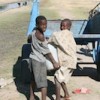
A $45-million infrastructure upgrade could give clean drinking water and provide sanitation to a million people in Namibia and Angola.
 A $45-million infrastructure upgrade could give clean drinking water and provide sanitation to a million people in Namibia and Angola.
BOTSWANA: Capital Upgrade for City’s Sewers
The evidence of Gaborone's inadequate sewerage system hangs in the air over the Botswana capital's low income area. Pit latrines dominate, and residents complain that the city doesn't empty them frequently enough. But the end may be in sight.Heaviest Ever Floods in Northern Namibia
North-central Namibia is experiencing the heaviest floods ever recorded, but unlike in previous years, the area is fully prepared.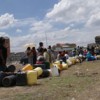
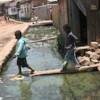
Nairobi’s slums are not known for positive community inputs, but in Waruku a group of residents have taken steps to improve access to water.
Nairobi’s slums are not known for positive community inputs, but in Waruku a group of residents have taken steps to improve access to water. Mary Itumbi visited the Kenyan informal settlement.
SADC says World Water Day must be used to highlight the movement of Africa’s rural people to the cities and the pressure that the influx is putting on water resources.
SADC says World Water Day must be used to highlight the movement of Africa’s rural people to the cities and the pressure that the influx is putting on water resources.

MALAWI: Enterprising Approach Underlies New Sanitation Campaign
The market can do better: a sanitation and hygiene campaign to be launched in Malawi plans to apply this tenet to improve cleanliness and public health in the country's cities.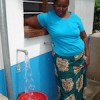
U.N. Water Conference Focuses on Cities
As a U.N. conference on water opens in South Africa today, the country's Council for Scientific and Industrial Research has repeated warnings that the country faces a water supply crisis. Experts attending the three-day conference will consider the challenges posed by growing demands, migration and water resources potentially limited by careless use and climate change.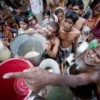
A Moment of Silence for Dying Millions on World Water Day
When the international community commemorates World Water Day next week, perhaps it should ponder the words of U.N. Secretary-General Ban Ki-moon, who once remarked he does not expect people the world over to stop what they are doing and observe a moment of silence, come Mar. 22.
Zambezi Floods Displace Thousands in Namibia
Thousands of people and livestock in the Caprivi Strip have had to be evacuated as annual floodwaters rise in the Zambezi. However, loss of life has been kept to a minimum as informal warning systems prove to be effective.SOUTHERN AFRICA: Plumbing Grey Data for Clear Water
They come like pilgrims to the Department of Geological Surveys office in Lobatse, 120 kilometres south of the Botswanan capital. In the sparsely furnished offices there, they pore over charts, trying to take the guesswork out of choosing where to sink a borehole.WATER: Working Together on River Management
Postwar Angola is keen to expand irrigation for much-needed development, Namibia is prioritising clean drinking water and sanitation, while Botswana wants to preserve the integrity of the world-renowned Okavango Delta for tourism.
NAMIBIA: Water in the Kambashu
For Namibia's capital city, the goal of sustainable water and sanitation is a major challenge for the 21st century.
MALAWI: In Praise of Dry Sanitation
At its best it is waterless, odorless, eminently affordable and has a rich fertiliser as byproduct, yet for residents of Malawi's informal settlements, dry sanitation retains a whiff of the unwanted.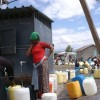
KENYA: Profiting From Better Sanitation
She contributed towards building toilets for her community; in return Teresia Wasuka is getting a home to call her own.
SOUTHERN AFRICA: Tri-Partite Agreement Presages Wider Zambezi Agreement
Mozambique, Zambia and Zimbabwe are poised to sign a memorandum of understanding to improve power generation along the length of the Zambezi River.Malawi Business Keen on Power From Mozambique
The feasibility study looking at connecting Malawi's electricity grid to Mozambique's Cahora-Bassa hydropower station was completed 15 years ago; a price for power was long ago agreed by the respective governments: but somehow the project is yet to go ahead.SOUTHERN AFRICA: Energy Pie Greater Than the Sum of its Parts
Two million compact fluorescent lamps will be distributed to households and industry in Malawi by June, in just one of several measures to bridge the gap between electricity supply and demand. Across Southern Africa, energy shortfalls threaten to choke development.
ENERGY-DR CONGO: Small Is Beautiful – And Electrifying
While discussion of hydroelectric power on the Congo River is dominated by the massive Grand Inga project and the dream of power for the entire continent, construction of a series of smaller dams to benefit local communities may produce tangible results much more quickly.
SOUTHERN AFRICA: Securing Safe Water for a Million More
Long years of armed conflict have obstructed development in the areas on either side of the Angola-Namibia border. Now a 45 million dollar infrastructure upgrade is set to improve access to clean drinking water and decent sanitation for one million people.SOUTHERN AFRICA: Together Against the Rising Water
A decade after heavy floods wrecked havoc in Southern Africa, the region is better prepared to monitor and respond to seasonal flooding. This is thanks as much to the growing strength of transboundary institutions as it is to technical improvements.ZIMBABWE: Filtering Fact From Fiction About D.I.Y. Water Treatment
The southern Zimbabwean city of Bulawayo has not been spared the heavy rains that have fallen across Southern Africa; the water is welcome in this semi-arid part of the country, but the coming of the rainy season has provoked fresh memories of the 2008 cholera epidemic.« Previous Page — Next Page »





The Southern Africa Water Wire provides in-depth coverage of a diverse range of water-related issues in Africa, linking water to economic development, social well-being and environmental protection. Local journalists from across the continent explore the challenges, failures and successes of managing this vital resource.


Like the Southern Africa Water Wire to receive the latest water news and information from IPS and other top news agencies, as well as agencies in the field
Follow @africawaterwire

