
Saturday, October 17, 2026



News and Views from the Global South
Trade and poverty: Facts beyond theory
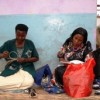
DEVELOPMENT-WORLD: What Is So Fair About Fair Trade?
Fair trade is held up as promoting fair prices for producers and guaranteeing social and environmental standards. These ideas are neither new nor controversial. But the recent boom in fair trade has drawn attention as standards and models multiply while authentication mechanisms lag behind.
Q&A: Zimbabwean Women Have Had ‘‘More Trauma'' After Independence
Zimbabwean women have experienced higher levels of trauma, including violence and lack of food, after the country's independence from Britain in 1980 than before.
TRADE-SOUTHERN AFRICA: The Deal’s Signed But Where’s The Action?
Cross-border trader Florence Tjani is sceptical about the free trade agreement (FTA) recently signed by southern African states.
TRADE-KENYA: A Woman Navigating the Obstacles to the ‘Big Money’
‘‘I enjoy the trade,’’ says Sonia Gateri as she ushers me into her office next to the Yaya Centre in the Kenyan capital. It is a hot afternoon and she has been busy most of the morning, preparing for a trip to Tanzania later in the evening.ECONOMY: Increased Nuclear Energy Demand Boosts Namibia
The worldwide scramble for energy sources due to dwindling fossil fuel reserves has placed renewed emphasis on nuclear energy as solution for future needs. As a result, Namibia in south-western Africa is experiencing a uranium boom.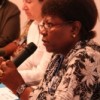
WORLD-DEVELOPMENT: ‘‘It’s the Same Talking and Talking’’
About a 1,000 delegates are expected to take up their seats tomorrow at a high level forum on the effectiveness of aid that opens in Ghana’s capital, Accra. But their arrival has been met with mixed reactions.ECONOMY-NAMIBIA: Plans Afoot as Diamonds Dwindle after 100 years
Namibia’s once rich diamond deposits are dwindling after a century of exploitation, forcing miners to look for the hard stones offshore while the country’s fledgling cutting and polishing sector could shrink as fewer and smaller stones are found.TRADE-AFRICA: The Struggle Continues Over EPAs
The economic partnership agreements (EPAs) are being given a bad name for nothing, according to Ghanaian parliamentarian JB Danquah.DEVELOPMENT: Africa Still Hampered by Lack of Geographical Data
Geographic Information Systems (GIS) could play a vital role in improving agriculture and boosting food security in Africa. However, only a few African countries are capable of developing such systems, partly because of a lack of basic geographical data.SIERRA LEONE: Activists Cry Foul Over Mining Policy
In December 2007, unrest broke out in the diamond mining region of Kono in the east, between kimberlite mining corporation Koidu Holdings and locals in the lease area. The company had promised to relocate hundreds of community residents to make way for its mining operation but the slow pace of implementation of this pledge, coupled with the repeated blasts of dynamite in underground mining sites set the company and its hosts on a collision course.TRADE-KENYA: British Imports Losing Their Appeal
When Kenya purchased Toyota vehicles for its military forces, instead of the all-pervasive Land Rover, it signalled a seismic change - in effect ending the most favoured status enjoyed by imports sourced from its erstwhile colonial master the United Kingdom.
SOUTHERN AFRICA: Free Trade Deal Full of Potential – And Danger
The launch of a free trade area (FTA) within the Southern Africa Development Community (SADC) has brought the region one step closer to a regional customs union by 2010. But the launch of the FTA at the recent SADC heads of state summit was met with mixed reaction.
TRADE-SOUTHERN AFRICA: FTA Will ‘‘Choke’’ Small Business
The Free Trade Agreement (FTA) that Southern African Development Community (SADC) governments agreed to will boost large South African companies’ reach in the region at the expense of small-scale producers and shops.
CULTURE-SOUTH AFRICA: Crafts That Steal Hearts All Over the World
It is early on a Monday morning and Margret Woermann is late for her interview with IPS. The owner and creative force behind the Heartworks shops is at a meeting discussing a project with a clothing designer.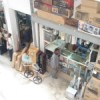
TRADE-TANZANIA: Cheap Imitation Goods Are Flooding Markets
The mishmash of shops in Tanzania's central Kariakoo market in Dar es Salaam stock an infinite array of brand name fakes. Throngs of customers snap up mobile phones, designer gear, high-tech electronics and gadgets - all imitations being sold at unbelievably low prices.
DEVELOPMENT-ZAMBIA: Sharing the Copper Windfall
Australian mining giant Equinox Minerals is developing the Lumwana Copper Mine (LCM) to take advantage of strong prices for copper on the international market. When it opens later this year, the mine will be the largest in Africa, but critics say Zambia's share of the profits of minerals is smaller than it should be.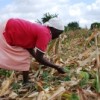
ZIMBABWE: Farmers Can't Afford to Leave Markets – Literally
It is a wintry Tuesday evening at one of the tobacco auction floors in the Zimbabwean capital Harare. A group of small-scale tobacco farmers are preparing food for the night.
TRADE-AFRICA: ‘‘An Injury To One Market Is an Injury to All’’
Southern African non-governmental organisations have put forward demands to their governments in resistance to the continuing talks on economic partnership agreements (EPAs) between the European Union and the African, Caribbean and Pacific (ACP) states.
DEVELOPMENT-AFRICA: Retailer Creates Jobs With Green Practices
Seven years ago, 54 subsistence farmers in the Umbumbulu district on the KwaZulu-Natal coast of South Africa were struggling to feed their families. They could barely pay their children’s school fees.
TRADE: Malawi Still Hopeful That Investment Will Come
Malawi is on the prowl to extend its trade connections to different corners of the world, west and east. The small southern African country is hoping foreign investment will help it to become a producer and exporter rather than a consumer and importer economy, as is presently the case.TRADE-WEST AFRICA: Overfishing Linked to Food Crisis, Migration
According to a recent report by the nongovernmental organisation ActionAid, West African seas are being devastated by legal and illegal overfishing, while local fishing industries decline. Moreover, the economic partnership agreements in their currently proposed form only exacerbate this problem.« Previous Page — Next Page »





Trade has historically been a geopolitical tool, creating significant economic imbalances in developing countries. However, many countries in East Asia and Latin America have been able to alleviate poverty due to increasing trade. Tackling poverty has proven to be much harder in low income countries in sub-Saharan Africa, Asia and Latin America, and their dismal trade performance is one important reason for that. They remain at the margins of world trade and indeed of the world economy. These articles are aimed at informing readers about the complexities of trade and its varying effects on development, with a special focus on the consequences of the global economic crisis, the potential of fair trade and the gender implications of trade policies.

The Week with IPS

Tracking global progress towards a sustainable world
