
Thursday, October 15, 2026



News and Views from the Global South
Trade and poverty: Facts beyond theory

AFRICA: Financial Crisis May Increase Pressure for Debt Repayment
The collapse of the financial markets may force the World Bank, the International Monetary Fund (IMF) and the United Nations Development Programme (UNDP) to come down hard on African countries to repay their debts because the huge rescue packages for collapsing banks will need to be recuperated.
SOUTHERN AFRICA: More Debt But Still No Development
Shupikai Machinya, a Zimbabwean cross-border trader who attended the recent Southern Africa Social Forum in Manzini, Swaziland, is one of the many delegates who wanted to understand just how a country ends up in debt.ECONOMY: Usual Suspects Eyeing Zimbabwe for Massive Deregulation
As the global financial crisis unfolds and more questions are asked about excessive deregulation, the World Bank and others are preparing economic policy prescriptions that will throw open Zimbabwe’s economy to the whims of the world markets.
TRADE: Cotton Subsidies Remain Big Hurdle in WTO Doha Round
The Doha Round was launched in 2001 in Doha, Qatar, to provide a developmental dimension to global trade by enabling developing and least developed countries to secure enhanced access for their products in rich country markets. However, there is a pronounced shift in the negotiations in the last seven years - from developmental issues to the purely market-driven concerns of the dominant players.TRADE: African States Won’t Compromise on Development in Doha
Faced with the global financial crisis and high food prices, African countries want to conclude the much-delayed modalities agreement in the Doha Round of talks on agriculture and market-opening for industrial goods by the end of this year.
TRADE-AFRICA: Customs Union to Be Launched at COMESA Summit
Following the signing of a power-sharing agreement in Zimbabwe on September 15, the country seems to be growing in confidence. Harare has announced that it will now host the 13th Common Market for Eastern and Southern Africa (COMESA) summit in the resort town of Victoria Falls.
ZIMBABWE: Economic Package Being Crafted For New Government
The Southern African Development Community (SADC) is mobilising economic aid for its troubled member state Zimbabwe. The economic aid package is part of efforts by the region to help bolster the faltering political deal, widely regarded as the initial phase towards the recovery of Zimbabwe's wretched economy.
TRADE-MALAWI: The ABC of Being a Successful Business Woman
Through hard work and resilience, Malawian entrepreneur Mary Phombeya has developed her once small and struggling business outfit into a fully fledged company. She imports fashionable clothes – for women, children and men – from Dubai, Thailand and Hong Kong which she sells locally.TRADE-AFRICA: Red Faces Over EPAs Red Herring
Senior European Union officials have admitted being embarrassed at how the bloc’s own procedures are delaying them from signing economic partnership agreements (EPAs) with Africa.ECONOMY: India, Brazil and South Africa Should Gang Up With China
The India-Brazil-South Africa (IBSA) formation could have enough clout to stand up to the European Union and the U.S. but it needs the help of emerging superpower China. Alternatively it should align with the BRIC (Brazil-Russia-India-China) group.
TRADE-EAST AFRICA: Going Bananas to Fight Poverty and Hunger
Arguably one of the world’s most popular fruits, bananas are poorly marketed as a value-added commercial crop in Africa. But that is about to change as a plan is being conceptualised to transform the way Africa produces and sells bananas.
ECONOMY: Kenyan Companies Cautiously Venture Into Regional Market
Dr. Manu Chandaria (79) has been lionised as East Africa’s most respected chief executive officer of a company.
SPAIN: Some Retailers Have Still Not Caught Up With Fair Trade Boom
Fair trade has grown in leaps and bounds since the mid-1990s but retailers such as El Corte Ingles, the department store chain with the most sales in Europe, are still not giving consumers the choice to buy these products.WORLD: Fair Trade – An Old Idea That’s Become a Fashion Statement?
The idea of making trade fair is as old as ethics itself.
TRADE-AFRICA: Art Creating Hope in the Midst of Death and Disease
Zulu artists working at the Ardmore Ceramic Studio in South Africa’s coastal province of KwaZulu Natal have gone from poverty to international acclaim.ECONOMY-SOUTH AFRICA: Manuel, Mbeki Resignations Welcomed by Some
Minutes after the news broke today that Trevor Manuel, South African minister of finance, resigned from his post, the South African currency lost ground against international currencies, falling 20 cents against the dollar within less than an hour.
UGANDA: Women Wield Fair Trade Tools to Beat Poverty
Producing baskets and mats in central Uganda has traditionally been women’s work. Women made these items for use in homes. The National Association of Women Organisations in Uganda (NAWOU) has changed this practice into a powerful force fighting poverty.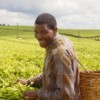
KENYA: Tea Market Tumultuous as Trading Partners Change
Tea used to be Kenya’s major cash crop earner but ever since the world’s largest consumer of tea, Pakistan, entered into a free trade agreement with seven of its Asian neighbours, the local tea industry has been haemorrhaging.ECONOMY-KENYA: Shady Deals and Intrigues Haunt Privatisation
The Kenya Railways Corporation was more than a national utility. It was a repository of Kenya’s history, beginning in the 19th century when indentured Indian labourers were brought to the East African region to build the Kenya-Uganda railway line.WEST AFRICA: Cotton Symbolises Global Trade System’s 'Iniquity'
The international cotton trade has been a sad tale for West African countries. The region produces five percent of the world’s cotton and 15 percent of the global cotton fibre trade. Yet West African cotton farmers are among the poorest in the world.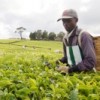
TRADE: Africa’s Export Performance Still Dismal, Says UNCTAD
Despite the liberalisation of trade over more than two decades, the level and composition of Africa’s exports have not substantially changed, according to the 2008 report by the United Nations Conference on Trade and Development (UNCTAD) on economic development in Africa.« Previous Page — Next Page »





Trade has historically been a geopolitical tool, creating significant economic imbalances in developing countries. However, many countries in East Asia and Latin America have been able to alleviate poverty due to increasing trade. Tackling poverty has proven to be much harder in low income countries in sub-Saharan Africa, Asia and Latin America, and their dismal trade performance is one important reason for that. They remain at the margins of world trade and indeed of the world economy. These articles are aimed at informing readers about the complexities of trade and its varying effects on development, with a special focus on the consequences of the global economic crisis, the potential of fair trade and the gender implications of trade policies.

The Week with IPS

Tracking global progress towards a sustainable world
