
Friday, July 31, 2026



News and Views from the Global South
IPS UN: Inside the Glasshouse

Activists Call on World to ‘Imagine’ Peace, End Nuclear Arms
In any discussion of world peace and the future of humanity, the issue of nuclear arms must be addressed, and now. That was the message from a range of delegates at the “Imaginer la Paix / Imagine Peace” conference, held in Paris September 22 to 24, and organized by the Sant’Egidio Community, a Christian organization founded in Rome in 1968 and now based in 70 countries.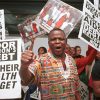
Easing Africa’s Debt Burdens: a Fresh Approach, Based on an Old Idea
The statistics are stark: 54 governments, of which 25 are African, are spending at least 10% of their revenues on servicing their debts; 48 countries, home to 3.3 billion people, are spending more on debt service than on health or education.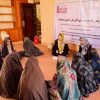
Cultivating a Culture of Peace
As global peace hits its lowest point since the Second World War, the International Day of Peace on September 21 offered a critical moment to reflect on and strengthen our peacebuilding efforts.
The UN Needs a Summit for the Present
The Summit of the Future has now ended, but the real and present world is still on fire. As the General Assembly, an annual ritual where dozens of heads of state descend on New York, kicks off, key questions about the role and future of the United Nations, a body that was created to maintain international peace and security almost 80 years ago, remain unanswered.
UN Charter: the Final Hurdle for Reform of the Security Council
When the "founding fathers" –regrettably, no "founding mothers"—created the United Nations 79 years ago, one of the biggest anomalies was bestowing the power of the veto to the five permanent members (P5) of the UN Security Council (UNSC): the US, UK, France, Russia and the Republic of China (later the People’s Republic of China).
Summit of the Future: Youth Driven Action Needed to Tackle Nuclear and Climate Crises
Driving the Summit of the Future’s core messages of international solidarity and decisive action are young people who are determined to address the intersecting issues that the world contends with today.
What does Russia Trade with Africa?
After two symbolic African leaders' summits, Russia's trading is steadily increasing but significantly in exports of military weapons and equipment. According to Kremlin reports, Russian President Vladimir Putin said the trade turnover between Russia and African countries had increased by almost 35% in the first half of 2023 despite international sanctions.
Multilateral Systems in Urgent Need of Reform, Says UN Secretary General
As the United Nations gears up to host the international community for the high-level meeting week, the UN chief appeals to world leaders to commit to universal agreements to work towards solutions.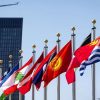
UN’s Summit of the Future to Forge a New Path for Humanity
A major event at UN Headquarters – Summit of the Future scheduled for September 22-23-- is being billed as a once in a generation opportunity for the international community to grapple with important questions, and forge a new path, for the benefit of all.
UN’s Five Major Leaders Skip Key Summit
The United Nations, over the last year, has been relentlessly promoting the upcoming Summit of the Future – scheduled for September 22-23—as a landmark event. And rightly so. But, surprisingly, the provisional list of speakers, released early this week, reflects notable absentees for a high-level summit-- the five permanent members (P5) of the Security Council -- whose representatives do not include any head of state (HS) or head of government (HG).
Where Has Poverty Gone?
Political polarization, the climate emergency, organized crime, migration, and low economic growth currently dominate the public debate in Latin America and the Caribbean (LAC), and rightly so. However, there is a significant structural challenge to human development and democracy itself that, along with inequalities, lies at the root of these crises: poverty.
ECW Delivers Holistic Education Against All Odds, But More Funding Needed
Education Cannot Wait (ECW) has delivered quality education to children in crisis "against all odds," ECW Executive Director Yasmine Sherif said at the United Nations today. "And you can imagine the odds. We are seeing more armed conflict, a growth of climate-induced disasters and the biggest refugee movement since World War 2."
Are the World’s Ongoing Conflicts in Danger of Going Nuclear?
The constant drumbeat of nuclear threats seems never ending—emanating primarily from the Russians, Israeli right-wing politicians and North Koreans. The threats also prompt one lingering question: Can there be a World War III without the use of nuclear weapons?
Building Inclusive Smart Cities: Bridging the Gender Gap
When the Beijing Declaration was adopted in 1995, it called for the removal of systematic and structure barriers that prevent women and girls from enjoying their human rights across social, economic, political and environmental domains. Over the last decade, the proportion of population with access to the internet has increased from 36 per cent in in 2013 to 67 percent today.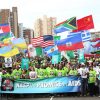
Leaders Can Rise to the Summit, Together
As heads of state and government fly into New York for the United Nations General Assembly and the Summit of the Future (September 22-30), 2.3 billion mothers, fathers, and children are unsure where their next meal will come from. Millions face the terror of brutal, protracted armed conflicts that make no distinction between civilians and soldiers.
25TH Anniversary Message to the UN: Prioritize the Culture of Peace in its Leadership Agenda
This opinion piece is being published exactly on the date when twenty-five years ago today the UN took its most forward-looking stride in ensuring a peaceful planet for all of us since the signing of the Charter of the United Nations in 1945.
The Deadly US Weapons of Civilian Destruction
As the devastating 11-month-old conflict in Gaza keeps escalating, with over 41,000 mostly civilian killings, and more than 92,000 Palestinians injured --in retaliation for the 1,200 killings inside Israel last October-- the Israelis continue to defy the United States which maintains its uninterrupted flow of heavy weapons to Tel Aviv.
‘Safe Zone’ Al-Mawasi Bombed, Leaving Dozens Killed
On Tuesday, an airstrike was carried out in Al-Mawasi, on a displacement camp situated on the Gaza Strip. According to the Gaza Civil Defense Agency, 40 people were killed and over 60 were injured. Despite being designated as a “safe zone” by the Israel Defense Forces (IDF), this region has seen continual airstrikes and armed hostility since December 2023.
A Better Tomorrow with South-South Cooperation
The annual United Nations Day for South-South Cooperation, commemorated annually on September 12, serves as a powerful reminder of the spirit of solidarity and cooperation that transcends geographic borders — a spirit that is crucial for securing a better and thriving future for all. In a world facing cross-cutting challenges, the importance of this South-South solidarity cannot be overstated.
Women Lead Record Number of Central Banks, but More Progress is Needed
Women are leading more central banks than ever before, thanks to appointments in the past year, but recent gains still leave the share of female governors far short of parity.
60 Years After Lyndon Johnson’s “Daisy Ad,” the Silence on Nuclear War Is Dangerous
One evening in early September 1964, a frightening commercial jolted 50 million Americans who were partway through watching “Monday Night at the Movies” on NBC. The ad began with an adorable three-year-old girl counting petals as she pulled them from a daisy. Then came a man’s somber voiceover, counting down from ten to zero. Then an ominous roar and a mushroom cloud from a nuclear bomb explosion.« Previous Page — Next Page »


It was dubbed "The Glass House" by U.S. ambassador James Wadsworth in 1966. Half a century later, the United Nations has gradually expanded its role as agent of peace and protector of the world's vulnerable populations, while simultaneously facing internal pressures to become more inclusive, increase transparency and maintain legitimacy in the post-Cold War political and economic order. Highlighting the local impacts of global policies on economic development, environment, health and human rights, IPS's coverage goes beyond the edicts of the Security Council to illuminate the power struggles, successes and shortcomings of the 193-member institution as it grapples with crises like climate change, armed conflict, poverty and HIV/AIDS.

The Week with IPS
