
Friday, July 31, 2026



News and Views from the Global South
IPS UN: Inside the Glasshouse
Russia-Africa: Developing Media Partnership
At a recent media briefing, Maria Zakharova, the spokesperson for Russia's Foreign Ministry, criticized the United States for its support of educational programs, media and NGOs in Africa. Zakharova argued that these efforts are part of a broader attempt by the U.S. to impose Western values and governance models on sovereign African states, framing it as a form of neo-colonialism.
Reviving the Spirit of the Steppe: Kazakhstan Has Hosted the 5th World Nomad Games
In a vibrant display of culture and tradition, Kazakhstan recently hosted the 5th World Nomad Games in Astana, celebrating the enduring spirit of nomadic heritage against a backdrop of modernity and globalization. This biennial event, which drew competitors and spectators from around the globe, served not only as a showcase of traditional sports but also as a poignant reminder of the resilience of a culture that faced near extinction under Soviet rule.
What is the World’s Most “Demanding and Impossible Job”?
When Dr Gamani Corea, a former Secretary-General of the Geneva-based UN Conference on Trade and Development (UNCTAD) was holding court in the delegate's lounge, I asked him what he thought of the bitter dispute between then Secretary-General (SG) Boutros Boutros-Ghali (1992-1996) and the United States over the Egyptian's determination to win re-election for a second term.
Empowering Indigenous Communities: A Path to Sustainable and Just Development
In a world where the fight for land rights often pits the powerful against the marginalized, Indigenous communities stand as resilient defenders of their ancestral lands.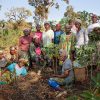
The Growing Gender Gap in Social Protection
Published ahead of the International Day for the Eradication of Poverty on 17 October, UN Women issued the 2024 World Survey on the Role of Women in Development Report. This is the UN Secretary-General’s Report, which is mandated by the Economic and Financial Committee (Second Committee) of the UN General Assembly, and focuses on macroeconomic policy, sustainable development, financing and poverty eradication.
A Staggering 2.0 Billion Women Live With No Access to Social Protection
The growing gender gap between men and women is reflected not only in the world’s highest political hierarchies but also in the daily social and economic lives—with most women fighting a losing battle against poverty. The latest flagship report from UN Women reveals a widening gender gap in social protection -– the raft of policies, including cash benefits, unemployment protection, pensions and healthcare – which leaves women and girls more vulnerable to poverty.
Abortion is a Fundamental Human Rights Issue
The right to abortion is a human rights issue that no government agency, courts, local and state legislators, or anyone else has the right to violate or impede in any shape or form. It is a fundamental right that every woman must be free to exercise with impunity, in consultation with her doctor only, who acts based on his/her professional ethics and responsibility.
Stigmatization is the Entry Door for Repression and Violence
Information manipulation and misinformation are not new phenomena, but they have taken on exaggerated importance, especially with the massive use of social media.
Guterres Congratulates Nihon Hidankyo For Nobel Prize For Efforts To Rid Humanity of Nuclear Weapons
The United Nations Secretary General António Guterres congratulated grassroots Japanese organization Nihon Hidankyo on being awarded the 2024 Nobel Peace Prize.
What do Russia and Israel Share in Common?
Russia is pursuing, during these contemporary times, a new form of economic architecture, non-hegemonic policies and simultaneously portraying its first-class military power in the world. Russia's development paradigm is distinctively different and largely oriented towards Global South.
Strategic Patience can Mitigate Conflict Between Israel & Iran
How will Israel respond to Iran’s recent ballistic missiles barrage? “Strategic patience” is the best course. Israel has its hands full with Hamas and Hezbollah. Now is not the time to escalate a new major war with Iran, which could have nuclear implications.
Playing Nuclear Games: Tickling the Tail of the Promethean Nuclear Fire Dragon
In recent years, the rhetoric, strategy and practice of nuclear deterrence has grown riskier, more urgent, more dangerous, less stable, and increasingly in the hands of deficient leaders and policymakers.
A Growing New Battle: Nuclear Weapons vs Conventional Arms
The warnings from the United Nations and from anti-nuclear activists are increasingly ominous: the world is closer to a nuclear war—by design or by accident—more than ever before. The current conflicts—and the intense war of words—between nuclear and non-nuclear states—Russia vs. Ukraine, Israel vs. Palestine and North Korea vs. South Korea—are adding fuel to a slow-burning fire.
“Escalation Dominance” . . . and the Prospect of More Than 1,000 Holocausts
Everything is at stake. Everything is at stake with nuclear weapons. While working as a nuclear war planner for the Kennedy administration, Daniel Ellsberg was shown a document calculating that a U.S. nuclear attack on communist countries would result in 600 million dead. As he put it later: “A hundred Holocausts.”
Empowering Change & Resilience: Social Protection in the Age of Megatrends
Social protection systems are essential to achieving the 2030 Agenda for Sustainable Development. However, social protection is insufficient across Asia and the Pacific, and the region is at risk from megatrends: climate change, demographic shifts and digitalization. Tens of millions of people have been pushed into extreme poverty since COVID-19, reversing past gains, and many millions more live precariously just above the poverty line.
Will Ukraine Benefit if IMF Ends its Punitive Fees on Debt Burdened Countries?
Over the coming month, the United States has a window of opportunity to lift a multi-billion-dollar burden from Ukraine, and other countries in financial distress, without costing the US taxpayer a dime.
BRICS+ Prioritising Expansion to Fight Western Hegemony
In an interview with Sky News Arabia on September 20, Russian Foreign Minister Sergey Lavrov expressed scepticism but was straight to the point about the strategic expansion of BRICS, an association comprising Brazil, Russia, India, China and South Africa. Under Russia's BRICS presidency which began in January 2024.
Nuclear Annihilation Threatened by Revival of 20h Century McCarthy Era Cold War & Red Scare
The world may have dodged an immediate bullet when the US intelligence agencies warned, this week, that by giving in to Ukraine’s pleading for long range missiles that could attack targets deep into Russia, we would be poking the Russian bear beyond its patience without even influencing the outcome of the war in Ukraine’s favor.
Nasrallah: Stronger Dead than Alive
There is no question that Hassan Nasrallah was a powerful orator. He could hold millions of followers in rapt attention—even adoration—through his deep voice, logic, passion, and wit.
Will the UN’s Pact of The Future Modernize the World’s Outdated Multilateral Systems?
While most world leaders who attended the United Nations inaugural Summit of the Future—a two-day high-level event at UN headquarters in New York meant to address the most pressing global challenges of the 21st century—agree that the world's aging multilateral system needs modernizing, not all agree on how to get there.
Bangladesh’s Chief Advisor Addresses UNGA Calling for International Cooperation, Freedom and Rights
In his first major address at the United Nations, the Chief Advisor of Bangladesh’s interim government, Dr. Muhammad Yunus, appealed to the international community to engage with a ‘new Bangladesh’ in the shared efforts to cooperate on global issues. Yunus arrived earlier in the week to attend the 79th United Nations General Assembly (UNGA) in New York. In the four days he was here, Yunus held meetings with a range of world leaders, notably UN Secretary-General António Guterres and US President Joe Biden. This would indicate there is good support for him and what he represents. On Friday, Yunus addressed the General Assembly, speaking in his native language, Bangla.« Previous Page — Next Page »


It was dubbed "The Glass House" by U.S. ambassador James Wadsworth in 1966. Half a century later, the United Nations has gradually expanded its role as agent of peace and protector of the world's vulnerable populations, while simultaneously facing internal pressures to become more inclusive, increase transparency and maintain legitimacy in the post-Cold War political and economic order. Highlighting the local impacts of global policies on economic development, environment, health and human rights, IPS's coverage goes beyond the edicts of the Security Council to illuminate the power struggles, successes and shortcomings of the 193-member institution as it grapples with crises like climate change, armed conflict, poverty and HIV/AIDS.

The Week with IPS
