
Thursday, July 30, 2026



News and Views from the Global South
IPS UN: Inside the Glasshouse
One in Three Women Experiences Gender-based Violence
Every year, the 16 Days of Activism against Gender-Based Violence (GBV) campaign led by UN Women serves as a powerful reminder of the widespread violence women and girls face worldwide.
Genocide: The Wheels of Justice Must Keep Turning
Last April, we commemorated the 30th anniversary of the genocide against the Tutsi in Rwanda. At the Rwandan capital, Kigali, at United Nations Headquarters, in New York, and across the world, we remembered the immense suffering this genocide caused on so many innocent civilians, who were targeted because of their identity, because of who they were.
UN May Face Another Calamity– Under a Second Trump Presidency
US President Donald Trump’s return to the White House on January 20 next year may be another calamity for the United Nations—particularly if the second term turns out to be a re-run of his first presidency (2017-2021). Trump’s past track record included the US withdrawal from the UN Educational, Scientific and Cultural Organization (UNESCO); threats against member states voting for anti-Israeli resolutions and slashing funds to a 72-year-old UN agency for Palestinian refugees.
French-Speaking African Nations Bartering Natural Resources for Russian Arms
At the first ministerial conference of the Russia-Africa Partnership Forum in the southern coastal city of Sochi, seeking to deepen political and business ties with African countries, Russian President Vladimir Putin in his message and Foreign Minister Sergey Lavrov in his powerful speech underlined Russia's security support to fight terrorism and extremism across Africa.
Asia’s Economies Can Embrace Services to Boost Growth & Productivity
The Asia-Pacific region prospered by becoming the source of more than half of global factory output, but another transformation to higher-productivity services has the potential to further support growth.
Middle East: Ceasefires are the Only Answer
“The shockwaves from Israel’s ongoing and indiscriminate warfare on Gaza and Lebanon are reverberating across this entire region. Neither the horrific assault on Israeli civilians on 7 October 2023, nor the indiscriminate missiles launched by militant groups from Lebanon, can justify the degree of destruction on civilian lives and infrastructure in the region that I have witnessed in recent days.
Scorched Earth Colonizing of Gaza is a Horrible Idea
For religious, humanitarian, and scientific reasons, Israel’s increasingly apparent plan for the de facto colonization of the Northern Gaza Strip is a bad idea. When that program was rejected recently by Israel’s own Defense Minister Yoav Galant, he was summarily fired by Prime Minister Netanyahu.
When the truth becomes a lie: What Trump’s election means for the world as we know it
On the day following the US election, UN Secretary General, Antonio Guterres issued a brief statement commending the people of the United States for their active participation in the democratic process. He wisely omitted mention that the election of Donald J. Trump – who attempted to overturn the people’s mandate by inciting an insurrection in 2021 - is a major setback for the UN’s worldwide quest to advance human rights and the rule of law. Trump is a self-avowed admirer of authoritarian strongmen like Russia’s Vladimir Putin and Hungary’s Viktor Orban who disdain international norms that the UN seeks to uphold.
UN Arms Embargo on Israel: Dead on Arrival
When the United Nations imposes sanctions or penalizes a member state – be it the General Assembly or the Human Rights Council – the resolutions are “non-binding” and often remain unimplemented. But the Security Council resolutions are “binding” – and still openly violated by countries such as North Korea—because all these UN bodies have no means of implementing these resolutions, nor a standing army to forcibly enforce them. But they only carry moral weight.
How Megatrends Affect Advancement of Gender Equality & Women’s Empowerment in Asia and the Pacific
The Beijing Declaration and Platform for Action, adopted in 1995 during the Fourth World Conference on Women, remains a cornerstone in the global pursuit of gender equality and women's empowerment. With the Asia-Pacific Ministerial Conference on the Beijing+30 Review fast approaching, now is the time to reflect on the progress made and the challenges that remain in Asia and the Pacific.
Africa’s Most Important Election is Underway
Africa has had a terrible record dealing with extreme poverty. The late Adebayo Adedeji, the legendary head of the United Nations Economic Commission for Africa (ECA), campaigned vigorously but unsuccessfully in the 1980s against the IMF and World Bank-imposed structural adjustment programmes, contending that these contributed to poverty’s increase.
Democracy’s Dilemma: Can We Overcome Short-Termism to Build Lasting Peace?
While the expansion of democracy is a key condition for peace, the Achilles’ heel of democracies is that their leaders are constrained by electoral calendars, forcing them to push for peace or delay, whereas autocracies can afford to play the long game to achieve the favorable outcomes they desire.
Has the United Nations Outlived its Usefulness?
The United Nations, established in 1945 at the end of World War II, has sadly virtually outlived its usefulness as it commemorated its 79th anniversary due to its failure to reform itself and adjust to the new world order following the collapse of the Soviet Union, which is significantly different from when the UN was established.
UN Remains Paralyzed as “Rogue Nations” Violate Charter & Escalate War Crimes
The United Nations continues to be virtually paralyzed – and remains politically impotent amidst two raging conflicts—as Russia and Israel keep defying the world body. The killings of civilians and the destruction of cities, particularly by Israel, are devastating and continue despite repeated warnings from the UN, its humanitarian agencies, the International Criminal Court (ICC), UN human right experts and the Security Council.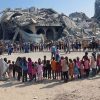
Hope Springs Eternal—Dashed it’s Deadly
The most solemn and terrifying words ever uttered are those inscribed over the gateway to Hell in Dante’s Inferno: “Abandon all hope, ye who enter here!” Hope is essential for human survival both as individuals and as nations.
This Is Not a Drill. Fascism Is on the Ballot. But…
The conclusion that Donald Trump is a fascist has gone mainstream, gaining wide publicity and affirmation in recent weeks. Such understanding is a problem for Trump and his boosters.
Pressure on an Atomic Level
Violence in the Middle East has escalated dramatically since the Hamas terrorist attack in October 2023 and the fallout that has since followed. There is tension, if not a state of war, between all the major opponents on the ground.
Over 150 NGOs Urge World Governments to Help End War Crimes in Gaza
As it continues to leave a mounting trail of death and destruction in Gaza, Israel has come under severe attack from the international community, including the United Nations and its humanitarian agencies, Western allies, the International Criminal Court (ICC) and scores of human rights experts.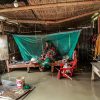
The Impact of Global Megatrends on Poverty in Asia & the Pacific
In the coming decades, the Asia-Pacific region faces a series of challenges that threaten to exacerbate poverty. Among these, climate change, demographic shifts, particularly population ageing and the rise of digital technologies stand out as three interconnected global megatrends.
The IMF Just Made the Case for its Own Irrelevance
This month, the International Monetary Fund (IMF) had an opportunity to end one of its most reviled policies and lift billions of dollars of debt off the backs of crisis-stricken developing countries. It chose not to.
Russia-Africa: Developing Media Partnership
At a recent media briefing, Maria Zakharova, the spokesperson for Russia's Foreign Ministry, criticized the United States for its support of educational programs, media and NGOs in Africa. Zakharova argued that these efforts are part of a broader attempt by the U.S. to impose Western values and governance models on sovereign African states, framing it as a form of neo-colonialism.« Previous Page — Next Page »


It was dubbed "The Glass House" by U.S. ambassador James Wadsworth in 1966. Half a century later, the United Nations has gradually expanded its role as agent of peace and protector of the world's vulnerable populations, while simultaneously facing internal pressures to become more inclusive, increase transparency and maintain legitimacy in the post-Cold War political and economic order. Highlighting the local impacts of global policies on economic development, environment, health and human rights, IPS's coverage goes beyond the edicts of the Security Council to illuminate the power struggles, successes and shortcomings of the 193-member institution as it grapples with crises like climate change, armed conflict, poverty and HIV/AIDS.

The Week with IPS
