
Friday, July 24, 2026



News and Views from the Global South
Women in Politics
HUMAN RIGHTS: Festive season a nightmare for Kenya’s Displaced
The Christmas season comes with joy and merrymaking in Kenya, where preparations for the festivities are underway as people crowd the street to shop for clothes and gifts. But even as the cheer spreads all around, the situation is different for the thousands of internally displaced Kenyans (IDP's) still living in various camps.
POLITICS: Human Suffering Escalates in Cote d’Ivoire
For three days, 25-year-old Ousmane Traoré attended the private clinic in the populous district of Abobo, north of Abidjan. Suffering from gunshot wounds to the head and abdomen as a result of the Ivorian opposition demonstrations, he was forced to leave the main hospital in Treichville, south of Abidjan, due to a lack of assistance.
REFUGEES: Liberians Struggle to Cope With Fleeing Ivorians
Albertine Yahwah sits on a hard wooden bench, cradling her little baby in her arms. The 20 year-old walked from the Ivory Coast with her two children and her husband to reach this small town across the border in Northern Liberia.Malawi’s Women Pushing for a Place at the Table
No sooner had Mariness Luhanga announced her intention to contest local elections in Mzimba district in northern Malawi, than she was summoned to appear before a village court on allegations of insulting men.Zimbabwe Women Make Themselves Heard on Draft Constitution
A parliamentary select committee has begun compiling comments on a new constitution, gathered at 4,000 meetings held across Zimbabwe over the past three months. Gender activists are confident that women's views have been expressed; it will be up to the eventual drafters of the new constitution to ensure they are reflected.BOTSWANA: Not All Women in Local Government Making a Difference
Florence Shagwa, a female councillor at the Gaborone City Council, considers her three-year business qualification worthless.SOUTHERN AFRICA: Ignoring Patriarchy, Female Politicians Rise
In Malawi, if both a girl and boy are born into a poor family, it will naturally be the boy in whom all the financial resources are invested.
Q&A: “Gender Not a Limiting Factor in Politics”
In the rural KwaZulu Natal town of Jozini, Thembeni Madlopha-Mthethwa has been the town’s mayor for a decade. And in contrast to the rest of the country, which has experienced numerous civil strikes and service delivery complaints, Jozini has rarely had any such problems.MALAWI: Women Candidates Hard Hit by Election Postponement
News that Malawi’s November local government elections are to be postponed yet again has hit female candidates hard – and mostly in their pockets. And it could mean that the country will have less female candidates to vote for when they finally go to the polls.
MALAWI: Campaign Against Female Vice President a Campaign Against Equality
The future of women’s political representation in Malawi has come into question as the ruling Democratic People’s Party (DPP) launched a smear campaign against its own member, the country’s female Vice President Joyce Banda. Many had hoped Banda would become the country’s first female president in 2014.
POLITICS-RWANDA: “Climate of Repression” as Voting Concludes
As voting concluded in Rwanda’s presidential elections, with incumbent President Paul Kagame expected to win by a landslide, fears remain that not all citizens will accept the results amidst claims the elections were neither free nor fair.
ZAMBIA: Election Violence Could Mean Fewer Women Participants
There are growing fears that increasing numbers of women candidates and voters may not participate in the 2011 general elections because of an upsurge in election-related violence.MALAWI: Innovative Campaigning by Women Candidates
You will find Beauty Kasonda on her campaign trail at funerals, weddings, church functions or just about any local gathering in her community. Kasonda does not have the sort of funding her male counterparts have for campaigning in the country’s November 2010 elections but she is not letting that stop her.
POLITICS-GUINEA: Women Amongst Also-Rans in Presidential Elections
Celou Dalein Diallo gained a significant advantage over Alpha Condé, his main rival for the Guinean presidency, when a third candidate said he would back Diallo in a second round of voting in August. But what has become of women candidates for high political office in this West African country?
MADAGASCAR: Women Form Own Political Parties for Fair Representation
Brigitte Rasamoelina and Yvette Sylla are women with two different approaches to politics in Madagascar. One formed a political party, while the other decided to legalise her organisation as an association. But both women are considering running in Madagascar's November elections.
ZAMBIA: Calls for Political Parties to Field 50 Percent Female Candidates
With women having achieved little in terms of representation in decision-making positions in Zambia, a national women’s lobby group is hoping to change this in the 2011 general elections.
INDIAN OCEAN ISLANDS: Women Join Forces for Political Equality
"Instead of moaning all the time, why don’t you create your own (political) party?" some men asked Brigitte Rabemanantsoa Rasamoelina, a female politician from Madagascar. She accepted the challenge and in February formed Ampela Mano Politika, a political party which started with only 22 female members and now has over 5,000 female members ... and 10 men.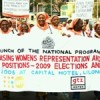
MALAWI: Women Candidates Desperate to Finance Freebies for Voters
Mable Malinda wants to contest the local government elections but the independent candidate who is using her life savings to fund her campaign only has 500 dollars left in her bank account. She has already spent three times as much buying handouts for voters – an unofficial requirement when contesting elections in Malawi.
SWAZILAND: Women MPs Limited by the Patriarchal System
Minah Ndzinisa spends every day selling fruit and vegetables at the outdoor Mbabane Market, braving the rain, wind and cold for almost 20 years. "I was in the same cold even in the 1990s when we used to have only one woman Member of Parliament."MADAGASCAR: Calls for Equality to be Written into New Constitution
Madagascan female activists are asking that the right of women to participate directly in politics be included in a new draft of the country’s Constitution, so that there can be 30 percent of female politicians in parliament by 2012 and 50 percent by 2015.ZAMBIA: Need to Mainstream Gender Equality into all Policies
Despite the adoption almost a decade ago of a national gender policy that aims to ensure fair participation of men and women in the development process, most of the Zambian government’s policies still remain gender blind, say civil society and women's rights associations.« Previous Page — Next Page »


In societies throughout the world, women’s participation in political and leadership roles is limited. Underrepresented as voters and position holders, women are restricted at local and at global levels. A variety of obstacles bar women’s political participation. Reduced access to education in many countries, as well as weaker political connections make it more difficult for women to enter the political stage. In addition, there are many discriminatory laws that severely reduce the opportunity for women to gain leadership positions. As has been seen, there are many individuals who have overcome these obstacles with great success. There have been great strides to increase women’s political participation. In the last 20 years, the percentage of women in parliamentary positions has nearly doubled. This promising, albeit slow progress, is necessary to empower women and reduce gender inequality. These articles look at various aspects of women’s participation politics.

The Week with IPS

Tracking global progress towards a sustainable world
