Languages
Wednesday, October 28, 2026



News and Views from the Global South
Women's Health
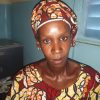
How Senegal is Providing Reproductive Health Services to those Who can Least Afford it
Pregnant with her second child, 30-year-old Ndiabou Niang was enduring pelvic pain, but couldn’t afford to access prenatal care in Diabe Salla, a village on the outskirts of the small town of Thilogne in north-east Senegal. Her husband was unemployed and her earnings of under CFAF 10,000 (17 USD) from selling seasonal fruits in the local market were insufficient to make ends meet.
Sudan, Where Illegal Abortions remain Dangerous and Deadly
Omnia Nabil*, a Sudanese doctor, who worked in one of the largest hospitals in Khartoum, the country’s capital, was devastated to witness the deaths of 50 young women who had unsafe abortions during a space of just three months.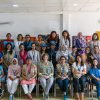
Women Leadership Is Key to Successful Post-COVID-19 Era, Says Cherie Blair
The impact of COVID-19 lockdowns falls heavily on the shoulders of women even in the global north. Women take the brunt of housework and caretaking duties, homes schooling, working from home and perhaps looking after elderly parents, says Cherie Blair.
Target Boys to Break Menstruation Taboos
An all-male panel assembled to discuss menstrual health on International Menstrual Hygiene Day sparked outrage on social media and a flurry of memes of all-female panels discussing male issues.
Unsung Heroines: Who Cares for the Carers?
Even before Covid-19, the world was facing a care crisis. The plight of often neglected, under-appreciated, under-protected and poorly equipped ‘frontline’ health personnel working to contain the pandemic has drawn attention to the tip of the care crisis iceberg.
Reproductive Rights of Women and Girls Under Lockdown
Health systems around the world are prioritising health care services and equipment to treat people diagnosed with Covid-19, which means that many procedures deemed to be elective and non-essential are being suspended or simply not provided. Abortion, for instance, has been categorised as a non-essential health service by some States, while others have removed certain restrictions to accessing abortion.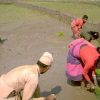
Women are Often an After-Thought in a Humanitarian Crisis
In an interview*, Bina Pradhan, an independent researcher, focuses on gender, macroeconomics and emerging issues of inequality. She is affiliated with the Federation of Business and Professional Women, Nepal (FBPWN), and has been working on the promotion and advancement of women in enterprise development and trade, post-earthquake community reconstruction, and rebuilding people’s lives and livelihoods with a focus on sustainability.
Kenya’s Adolescent Women Left Behind As More Married Women Access Contraception
It was only when 17-year-old Eva Muigai was in her final trimester that her family discovered she was pregnant. Muigai, a form three student who lives with her family in Gachie, Central Kenya, had spent her pregnancy wearing tight bodysuits and loose-fitting clothes that hid her growing baby bump.
Women Taking Charge during COVID-19
As the COVID-19 mayhem carries on in most countries, the role of mothers, daughters, and female caregivers have been affected the most. Besides looking after the household and home schooling children, they are also working on the front lines, actively or passively caring for their respective communities.
Why Reproductive Rights Must Be a Critical Part of Our Arsenal to Fight Pandemics
Sexual and reproductive health and pandemics might seem to be unrelated topics, but large and dense populations are drivers of the high velocity transmission of COVID-19, and there are lessons to be learned for the future.
**Correction**How the COVID-19 Pandemic is Affecting Women’s Sexual and Reproductive Health
A little over half of women across the globe are able to freely make choices about their sexual and reproductive health, according to a latest report based on data from 57 countries. However, as much of the world has gone into lockdown because of the coronavirus pandemic, with countries implementing social distancing and restricting the free movement of people, experts are concerned that even this small gain in sexual and reproductive health may suffer negatively.
Surviving Domestic Violence in times of Covid19
“I come from Baglung District, a part of Dhawalagiri Zone in Nepal. My house overlooks the river. Do you know, our district is known for the suspension bridges?”, her eyes glimmer for a fraction of a second and then she breathes a heavy sigh! Her right hand is still wrapped in a scarf, while with the other she pats her 17-month-old. “If I ever get a chance I will take you to my village, we have a lot of medicinal plants.” She pauses while tears roll down as she continues our Facetime session. “I was 16 when I had my first child and I was 17 when my arm was broken by my mother-in-law.”
Djibouti Intensifies Awareness-raising Efforts Against FGM
Female Genital Mutilation (FGM) is still widely practised in the African country of Djibouti. Despite efforts by the government and development agencies to curb this practice, culture, tradition and religion continue to slow down progress.
Never Give up on Women’s Rights – Edna Ismail
For Dr Edna Adan Ismail maternal health and midwifery is deeply personal. In an interview with Women Deliver Young Leader Musu Bakoto Sawo, Ismail recalls her mother’s devasting experiences which impacted on her own life’s choices.
Plagues and People – The Coronavirus in a Historical Perspective
The human factor is intimately involved in the origin, spread, and mitigation of the Coronavirus and we cannot afford to ignore that our future existence depends on compassion and cooperation. Response matters!
I Am Generation Equality: Storytelling for Equality
When you flip through grade one Bangla school textbooks there is very little written about the progress women have made in Bangladesh since the Beijing Conference for Women in 1995.
An Ambitious Year for Climate Action Is a Big Year for Women’s Empowerment
This year, the Paris Agreement’s effectiveness as a global response to the climate crisis is being tested as governments are preparing to submit more ambitious national targets for mitigation and adaptation.
U.S. President’s Global Gag Rule is Having Negative Impact on the Health of Malawians: Report
A report released last week has detailed the complex ways in which President Donald Trump’s ‘Global Gag Rule’ (GGR), that blocks U.S. global health assistance to foreign non-governmental facilities providing abortion or abortion-related services, is affecting the population in Malawi, a country already hard hit with numerous climate change disasters.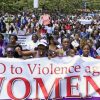
The Hammer of Justice for Sexual Assault Victims Must Be Swift, Loud and Consistent
Every year Valentines Day is celebrated with great relish & celebration. People show their affection for another person or people by sending cards, flowers or chocolates with messages of love.
Female Genital Mutilation: Not just an Emotional and Health Impact on Women but a $1.4 Billion Dollar Cost to Communities
When society doesn't act to prevent Female Genital Mutilation (FGM) it has a massive economic cost -- over $1 billion -- on communities globally. And while the practice is starting to become less common over time, experts say a large number of women and girls still remain affected.
UNFPA Highlights Need to Address Sexual and Reproductive Health of Women in Crisis Areas
The United Nations Population Fund (UNFPA) is appealing for $683million in their mission to address sexual and reproductive health services for women and girls in conflict areas in the world.« Previous Page — Next Page »





Worldwide, women’s health is a serious issue. The result of a wide diversity of factors, most notably insufficient access to education, women’s health issues must be addressed. Without access to proper schooling, many girls grow up without the necessary understanding of reproductive health. Due to this, reproductive issues and sexually transmitted infections plague women in developing countries. Women struggle to battle infections such as HIV. The lack of relevant services, coupled with the lack of women’s rights pertaining to their own health, are some of the serious issues that these stories seek to explain.

The Week with IPS

NEXT STOP - SDGs
Tracking global progress towards a sustainable world
Tracking global progress towards a sustainable world
