Languages
Monday, June 29, 2026



News and Views from the Global South
Women's Health
HEALTH-AFRICA: Cervical Cancer Strikes Poor Women Hardest
Of the 490,000 women worldwide who are diagnosed with cervical cancer each year, 80 percent live in the developing world. Every year, 55,000 women in sub-Saharan Africa alone develop this disease, which is ten times more likely to affect women living with HIV.URUGUAY: Congress Votes to Legalise Abortion, But Veto Likely
Uruguayan President Tabaré Vázquez and his cabinet have 10 days to promulgate or veto a bill that would decriminalise abortion in the first 12 weeks of pregnancy, which was passed Tuesday by the Senate.WEST AFRICA: Primary Health Care Key to MDGs
None of the 16 nations of West Africa will achieve the Millennium Development Goals (MDG) of reducing child mortality or improving maternal health without serious efforts to improve their health care systems, according to the World Health Organization (WHO).
Q&A: Fistula Turns Women Into Outcasts
Women suffering from obstetric fistula in Malawi received free medical care to reverse their condition during the country’s Fistula Week.HEALTH-AFRICA: Time for Joint Action on HIV/AIDS and Violence
The war against HIV/AIDS, it is emerging, will not be won unless sexual and gender-based violence is tackled.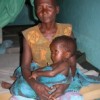
HEALTH-MALAWI: Help for Women with Obstetric Fistula
A group of 138 unhappy and mostly destitute women from Malawi’s lake district of Mangochi have something to look forward to this week: They will have a chance to restore their dignity and pride by accessing a medical service usually not available to them.POLITICS-US: Right-Wing Magnate Takes Up Anti-Abortion Banner
As the U.S. presidential race winds down and attack ads against Sen. Barack Obama intensify, Raymond Ruddy, a multi-millionaire conservative Catholic who over the years has been more comfortable operating in the backrooms of conservative philanthropy, appears to be coming out of the closet.MEXICO: Legalisation Fight Gains Ground as Illegal Abortions Increase
Legal access to abortion, available since April 2007 in the Mexican capital, should be extended to the rest of the country, where the rate of illegal abortions exceeds the average for developing countries and the total number reached 880,000 in 2006, up 64 percent from 1990.DEVELOPMENT: Presidents Boost Maternal and Child Health
As world leaders gather at the United Nations to discuss progress toward achieving the Millennium Development Goals (MDGs), Presidents Michelle Bachelet of Chile, Tarja Halonen of Finland, and Jakaya Mrisho Kikwete of Tanzania are calling for more attention to be paid to maternal and child health.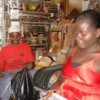
UGANDA: Women Wield Fair Trade Tools to Beat Poverty
Producing baskets and mats in central Uganda has traditionally been women’s work. Women made these items for use in homes. The National Association of Women Organisations in Uganda (NAWOU) has changed this practice into a powerful force fighting poverty.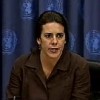
RIGHTS: Women Fight to Put Violence on Global Agenda
Joyce and Tanya - two women of different ages, nationalities, cultures and religions - share something: both became victims of a missing goal.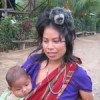
PERU: Birthing Houses Combine Native Traditions, Modern Medicine
"Ashaninka women give birth at home, in accordance with tradition," declares José Ponce, the head of the health committee in Puerto Ocopa, a village of 253 Ashaninka indigenous families deep in the central Peruvian jungle.MEXICO: Conservatives Lose Key Battle Against Abortion
The Mexican government, Catholic Church and conservative groups lost a crucial battle Wednesday in their fight against abortion, which was legalised in the capital in April 2007.
POLITICS-US: Women Take the Platform at Dem Convention
From the party platform ratified by delegates between speeches Monday, to primetime, headlining speeches by two heavy hitters in the election - Sen. Hillary Clinton and first-lady hopeful Michelle Obama - the initial two days of the Democratic National Convention were dominated by women.RIGHTS-SWAZILAND: Women Challenge King Mswati
Hard on the heels of the signing of the Gender Protocol at the Southern African Development Community (SADC) heads of state summit, Swazi women have challenged King Mswati III on the monarchy's lavish lifestyle in the face of abject poverty and disease.SIERRA LEONE: Commission Launches First Human Rights Report
A barefoot girl watches expressionless as men clad in expensive suits and women in designer clothes make their way on foot to the Community Centre in Kroo Bay, Freetown. They are here to launch the first ever State of Human Rights Report for Sierra Leone; Zainab, 12, is in the midst of another day on the narrow, muddy streets of the area, selling groundnuts to help support her family.HEALTH: Conflicts Make Women More Vulnerable to HIV
"I’m a survivor, and if I can live through all that has happened to me, so can other women," said Floride Nyiraneza, 42, who is HIV positive and a widowed mother of four.
HEALTH: Global Village or Sexual Minority Ghetto?
Dealing with transgenders (TGs) can be confusing. Even the organisers of the 17th International AIDS Conference underway in this city failed to accommodate the third gender by providing them separate toilets.
HEALTH: Time To Base Public Policy On Rights
Preaching abstinence to the young has not worked, nor has sex work been eradicated. Experts gathered here for the 17th International AIDS Conference say it is time to put public policies under the microscope and see why they have failed.
Q&A: “Condoms Have To Be Used To Be Useful”
Of the over 30 million people living with HIV, half are women and the rate of infections in women is rising, particularly in sub-Saharan Africa. What’s more, women’s rights groups say gender inequalities are fuelling the epidemic - there is an irrefutable feminisation of HIV.
POPULATION-KENYA: Women's Choices Change Cities
This year the world reaches an invisible but momentous milestone: for the first time in history, more than half its population will be living in urban areas. In Kenya, rapid urbanisation is creating deepening poverty among urban residents.« Previous Page — Next Page »


Worldwide, women’s health is a serious issue. The result of a wide diversity of factors, most notably insufficient access to education, women’s health issues must be addressed. Without access to proper schooling, many girls grow up without the necessary understanding of reproductive health. Due to this, reproductive issues and sexually transmitted infections plague women in developing countries. Women struggle to battle infections such as HIV. The lack of relevant services, coupled with the lack of women’s rights pertaining to their own health, are some of the serious issues that these stories seek to explain.

The Week with IPS

NEXT STOP - SDGs
Tracking global progress towards a sustainable world
Tracking global progress towards a sustainable world
