Languages
Wednesday, October 14, 2026



News and Views from the Global South
Education Cannot Wait. Future of Education is here

Education Cannot Wait Director Calls on Donors to Expand Support for Successful Programme Bringing Girls and Boys Back to Learning in Post-Conflict Areas of the Democratic Republic of the Congo
The Director of Education Cannot Wait (ECW), Yasmine Sherif, launched a strong call for public and private donors to step up funding, asking them to “show the same courage” she saw in the children she met during her week-long visit to the Democratic Republic of the Congo (DRC).
Education Cannot Wait and UNICEF, with Partners, Call for Substantial Increase in Funding for Crisis-Affected Children in the Democratic Republic of the Congo
The Director of Education Cannot Wait (ECW), Yasmine Sherif, and the UNICEF Representative, Grant Leaity, called on donors worldwide to provide US$45 million in urgent, additional funding to support ECW’s Multi-Year Resilience Programme in the Democratic Republic of Congo (DRC), a country facing one of the world’s most overlooked crises.
Education Cannot Wait Interviews Sigrid van Aken, CEO Novamedia/Postcode Lottery Group
Sigrid van Aken is the CEO of Novamedia/Postcode Lottery Group, a private company with a social purpose, that brings together business and ideals. It sets up and operates Postcode Lotteries worldwide to raise funds for charity. With a lucky winning postcode (zipcode), neighbours win together. At the same time, thanks to these player communities, vital funding is raised for charities and good causes (yearly €825 million), making the Postcode Lottery Group the 3rd largest private charity donor in the world after the Bill & Melinda Gates Foundation and the Wellcome Trust.

The LEGO Foundation Announces US$25 Million in New, Additional Funding to Education Cannot Wait at Global Citizen Festival, Bringing Total Contributions to US$65 Million
Taking the stage at this weekend’s Global Citizen Festival in New York’s Central Park, the LEGO Foundation CEO Anne-Birgitte Albrectsen announced a substantial new US$25 million contribution to Education Cannot Wait (ECW), the United Nations global fund for education in emergencies and protracted crises.
“Global Peace Education Day” can Play a Pivotal Role in Transforming Education
Just a week ago, the international community commemorated the adoption of the United Nations Declaration and Programme of Action on a Culture of Peace, a monumental document that transcends boundaries, cultures, societies, and nations.
UN Agencies Call to Commit to Transforming Education in Crises
Refugee youth advocate, Mary Maker, called on UN member states to honor their commitments to transform education from the foundation up to the top, starting with those living in the direst and fraught circumstances.
UN and Partners Called to Act Urgently with Education in Emergencies at Summit
Suicide bombings shattered Aisha Khurram’s school, and her university was attacked by terrorists – but despite learning in an environment where the walls were colored by blood spatter, it never shook her determination to be educated.
Transforming Education, Transforming The World
Leaders from across the world are uniting at the UN Secretary-General’s Transforming Education Summit to address a global education crisis that threatens to derail decades of development gains and is depriving millions of girls across the world of their inherent human right to access a quality education.
We Must Unite to Protect Education From Attack
Schools, students and teachers continue to be targeted and attacked in countries around the world. Over the past two years, we have seen a substantial increase in the number of attacks on education. Innocent children, adolescents and teachers are being killed, raped and abducted. Schools and universities are bombed, burned down and used for military purposes. Girls and boys are too scared to walk to school and face intimidation and other attacks. These are severe breaches of international humanitarian law and ultimately – and absolutely – inhumane.
Transforming Girls’ Education, Changing The World
As we approach this year’s Transforming Education Summit, global leaders can and must prioritize expertise and mobilize political will to support efforts to ensure inclusive and quality education for all, especially girls. This is at the heart of Sustainable Development Goal 4 in the 2030 Agenda for Sustainable Development, as well as the commitments made in the Charlevoix Declaration and the G7 Declaration on Girls’ Education.
Education Cannot Wait Interviews Martin Griffiths, Under-Secretary-General for Humanitarian Affairs and Emergency Relief Coordinator
United Nations Secretary General António Guterres appointed Martin Griffiths of the United Kingdom as Under-Secretary-General for Humanitarian Affairs and Emergency Relief Coordinator in May 2021.

Mental Health as a Human Right Left Behind for Children in Fragile and Humanitarian Settings
Hiding in basements during bombings, fleeing their homes, going hungry, and facing the devastating and life-transformative traumas of losing their loved ones as their childhoods go up in flames of war. These are the lived experiences of crisis-impacted children and adolescents.
Funding Urgently Needed for Children’s Education in Conflict Areas—ECW Director
Yasmine Sherif, Director of Education Cannot Wait (ECW) issued a wake-up call for the global community to support efforts on facilitating education in crisis areas. She was speaking at the United Nations at the launch of the global fund's annual report titled We Have Promises to Keep.
Keeping the Promise of Education for Crisis-Impacted Children and Adolescents
Syrian refugee children are among the most disadvantaged in Iraq. Even before the COVID-19 pandemic, only 53 percent of school-aged Syrian refugee children in the country were enrolled.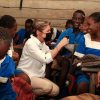
It Takes a Village to Raise and Support a Child in a Humanitarian Crisis
As we come together to celebrate people helping people on this year’s World Humanitarian Day, we honor the courageous and remarkable humanitarians delivering on the frontlines to help us achieve our goals for peace, universal human rights, and education for all.
Education Cannot Wait Proud to Participate in Global Citizen Festival 2022: Calling on World Leaders and Donors to Empower Girls and End Extreme Poverty Now
Education Cannot Wait (ECW) - the United Nations global fund for education in emergencies and protracted crises - is proud to support and participate in the 2022 Global Citizen Festival. Participants will call on world leaders at the UN General Assembly - and ahead of the G20 and COP27 in November - to step up and invest $600 million into the future of women and girls, close the annual $10 billion climate financing shortfall, deliver $500 million to help African farmers respond to the global food crisis, and provide relief from crushing debts to End Extreme Poverty Now.
ECW Interviews Three Inspiring #Youth4EiE Advocates on International Youth Day
On this International Youth Day, ECW interviewed three inspiring #Youth4EiE Advocates – Nataly Rivas, Angela Abizera, and Jean-Paul Saif. Nataly, Angela, and Jean-Paul are three Global Youth for Education in Emergencies panel members.
‘Aid Organizations Must Include the Youth Voice’ August 12, 2022—International Youth Day
Today marks International Youth Day, a global celebration of the transformative power of young people. Introduced by the United Nations General Assembly in 1999, the event was inaugurated not only to observe the power of the youth voice, but to serve as a promise from those in power to activate the power of youth across the development sector.
Education Cannot Wait Interviews USAID Deputy Administrator Isobel Coleman
Isobel Coleman was sworn in as Deputy Administrator for Policy and Programming at the United States Agency for International Development (USAID) in November 2021.

Urgent Global Call to Save 222 Million Dreams for Children Impacted by Crises
It is not enough that they were robbed of their childhoods and their shattered young lives defined by bombs, bloodshed and death. Now, crisis-impacted school-aged children are falling off the academic bridge that could lead them out of the carnage.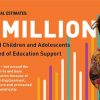
Education Cannot Wait: 222 Million Crisis-Impacted Children in Urgent Need of Educational Support According to New Study
The United Nations global fund for education in emergencies and protracted crises, Education Cannot Wait (ECW), released a shocking new report today that indicates the number of crisis-impacted school-aged children requiring educational support has grown from an estimated 75 million in 2016 to 222 million today.« Previous Page — Next Page »





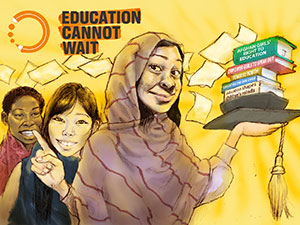
Education Cannot Wait has reached 5 million children and youth since its inception. Yet, the scale and the depth of the education emergency in crisis-affected countries needs to be matched by adeguate and scaled up financial investments to end the learning crisis for those left furthest behind, and to swiftly shift the course towards the SDGs. With 20 times more funding, the estimated 75 million children and youth can be reached. Indeed, financing stands between what is possible and what is not for these vulnerable girls and boys.
- Videos -
- Quote cards -


The Week with IPS

NEXT STOP - SDGs
Tracking global progress towards a sustainable world
Tracking global progress towards a sustainable world
