
Thursday, September 24, 2026



News and Views from the Global South
Food Security and Nutrition

Fundamental Changes Needed at UN Summit to Tackle Global Food Insecurity
COVID-19 has exposed numerous fractures in global food systems that leave millions at risk of food insecurity. Like the numerous political failures in dealing with COVID, the repercussions of food system failings are experienced by rich and poor countries alike, with the poorest and most marginalised paying the greatest price.
If Women Farmers were Politicians, the World Would be Fed, says Danielle Nierenberg
Women, key contributors to agriculture production, are missing at the decision table, with alarming consequences, says Food Tank President Danielle Nierenberg in an exclusive interview with IPS.
Barilla Foundation Report Highlights Need for Food Companies to Align with Sustainable Development Goals
In the backdrop of rising hunger, half of the world’s population living on unhealthy diets, a third of agricultural produce lost to postharvest events, and waste, poverty in farming communities, a pandemic that laid bare the vulnerability of food systems to external shocks and unsustainable food production, the Barilla Foundation for Food and Nutrition has published a report which introduces guidelines for the private sector to fulfil its role in transforming global food systems.
Southeast Asian Farmers Adapt, Insure against Growing Climate Risks
As incidents of drought and extreme rainfall increase, farmers in Southeast Asia are partnering with experts to develop targeted weather forecasts to work around the threats and, when adaptation becomes too costly, buy specially designed insurance to protect their livelihoods.
Food Systems Summit’s Scientistic Threat
Timely interventions by civil society, including concerned scientists, have prevented many likely abuses of next week’s UN Food Systems Summit (UNFSS). The Secretary General (UNSG) must now prevent UN endorsement of what remains of its prime movers’ corporate agenda.
The ARC Model: Proactive Disaster Risk Financing for a More Resilient Africa
The world faces multiple crises: climate change, extreme weather events, food security and biodiversity. For African nations, these issues are compounded by the COVID-19 pandemic and epidemic outbreaks that include Rift Valley Fever and Malaria. With 35 African Union Member States as signatories to its establishment Treaty, the African Risk Capacity (ARC) Group – comprising of ARC Agency and ARC Limited - works with Governments to help improve their capacities to better plan, prepare, and respond to extreme weather disasters and natural disasters.
Fiddling in Nairobi While Africa Goes Hungry
As the United Nations gears up for its Food Systems Summit September 23, the urgent need for structural changes in how we grow, harvest, distribute, and consume food has never been more apparent.
Smartphone App Helps Fijians to Grow and Eat Healthier Food
A smartphone app in Fiji is helping users to not only eat better but to help grow food that will contribute to a more nutritious diet.
Woman Farmer Shows Way as Small Island Developing State Battles Pandemic’s Impacts
A woman farmer in Samoa is using innovation and technology to overcome economic hardship as the Pacific Island nation seeks ways to adapt to the challenges resulting from the Covid-19 pandemic.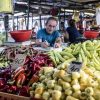
How to Feed the World Without Starving the Planet is a $15 Billion Question
A population of more than 9 billion people, hotter temperatures, decaying ecosystems and increasingly severe natural disasters. That is what our world is facing by 2050 because of climate change.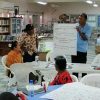
Bolstering Food Security in Marshall Islands
Forty schoolteachers and principals in the Republic of Marshall Islands (RMI) completed a five-day workshop last month equipping schools to play a key role in strengthening the food security efforts in the country.
Solar Energy Revitalises Indigenous and Farming Communities in Chile
Communities in Arica y Parinacota, the region in the extreme north of Chile, are using solar energy and are being empowered by projects for shrimp and trout farming, the production of yarn from camelid wool, the production of tomatoes and cheese, and even the sale of surplus solar power to the national electric grid.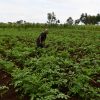
Digitisation Boosts Mechanised Farming Among Kenyan Farmers
When 33-year-old Kimani Mwaniki, an Irish potato farmer in Elburgon, Nakuru County in Kenya’s Rift Valley, heard about a farmer’s virtual school, he didn’t hesitate to enrol. He was keen to learn how the programme will enable him to get higher crop yields for his market in the capital city Nairobi and elsewhere.
Golden Rice: Triumph for Science
After almost two decades, Golden Rice was approved last week by the Philippines authorities for use as food. This together with the approval of the bioengineered Bt eggplant represents a landmark victory of science over misinformation; it will provide consumers with improved nutrition (Golden Rice) and safer food (Bt eggplant).
Protecting Plants Will Protect People and the Planet
Back-to-back droughts followed by plagues of locusts have pushed over a million people in southern Madagascar to the brink of starvation in recent months. In the worst famine in half a century, villagers have sold their possessions and are eating the locusts, raw cactus fruits, and wild leaves to survive.
Beware UN Food Systems Summit Trojan Horse
Undoubtedly, the world needs to reform existing food systems to better serve humanity and sustainable development. But the United Nations World Food Systems Summit (UNFSS) must be consistent with UN-led multilateralism. For the first time ever, the World Economic Forum (WEF), a partnership of some of the world’s most powerful corporations, is partnering the UN in launching the Summit, now scheduled for September, with its ‘Pre-Summit’ beginning today.
Rwandan Farmers Pin Hopes on New Tech to Tackle Food Losses
Rwanda is trying to reduce post-harvest loss by relying on new technologies to increase the amount of food available for consumption and help smallholder farmers confront some challenges caused by the overproduction of staple crops.
The Future of Food is in Our Hands
With its political and economic clout, the G20 should lead in delivering sustainable food systems as the world grapples with rising hunger, malnutrition and inequality.
Striving for Sustainability in Global Food Systems
As the global community gears up for the 2021 UN Food Systems Summit in September, it is significant that preparations are also underway by Global Reporting Initiative to deliver a new sector reporting standard for agriculture, aquaculture, and fishing.
“If Only the Fighting Would Stop “ A Sudanese Woman’s Wish
With her bare hands, Roda clears debris and forages scraps from her wrecked teashop after attackers scorched Gumuruk, a town in the Greater Jonglei region where conflict frequently disrupts daily life and stifles progress.
Q&A: UN Food Systems Summit Opportunity for the World to Unite on Healthy, Fair & Sustainable Food Systems
Before the COVID-19 pandemic upended every sphere of life, the world was lagging on a goal to end hunger by 2030. According to the United Nations, more than 820 million people had already been categorised as food insecure, meaning they lacked access to reliable and sufficient amounts of affordable, healthy food.« Previous Page — Next Page »


More than 820 million people in the world are still hungry today, underscoring the immense challenge of achieving the Zero Hunger target by 2030. Hunger is rising in almost all subregions of Africa and, to a lesser extent, in Latin America and Western Asia. There is great progress seen in Southern Asia in the last five years, but the prevalence of undernourishment in this subregion is still the highest in Asia. A disturbing fact is that about 2 billion people in the world experience moderate or severe food insecurity. The lack of regular access to nutritious and sufficient food that these people experience puts them at greater risk of malnutrition and poor health. Although primarily concentrated in low- and middle-income countries, moderate or severe food insecurity also affects 8 percent of the population in Northern America and Europe.
In every continent, the prevalence rate is slightly higher among women than men.
With regard to nutrition indicators, if current trends continue, the 2030 SDG Target to halve the number of stunted children will not be met nor the 2025 World Health Assembly target to reduce the prevalence of low birthweight by 30 percent. The trends of overweight and obesity are additional reason for concern, as they continue to rise in all regions, particularly among school-age children and adults. The most recent data show that obesity is contributing to 4 million deaths globally and is increasing the risk of morbidity for people in all age groups.
The State of Food Security and Nutrition in the World, a joint report by the United Nations agencies, FAO, IFAD, WFP, UNICEF and WHO reaffirms their commitment to working together to overcome emerging challenges and free the world from hunger, food insecurity and malnutrition. The report shows that the global level of the prevalence of undernourishment has stabilised; however, the absolute number of undernourished people continues to increase, albeit slowly.


The Week with IPS

Tracking global progress towards a sustainable world
