Languages
Tuesday, September 29, 2026



News and Views from the Global South

Ecobreves – BRAZIL: Studying the Impact of Climate Change on Estuary Birds
A project carried out by the Mater Natura Environmental Studies Institute of Brazil will assess the potential impacts of climate change on estuary birds and propose ways to conserve their habitat.Ecobreves – VENEZUELA: Miners Move Into Canaima National Park
Indigenous communities report that illegal gold mining has now penetrated into Canaima National Park, which covers 30,000 square kilometers in southeastern Venezuela.
Q&A: Cuba Advancing Towards a Dengue Vaccine
"We don’t like to talk about our specific goals," says Cuban virologist María Guadalupe Guzmán, as a subtle way to avoid going into too much detail about the research she is heading up to develop a dengue vaccine.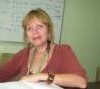
Cuba Advancing Towards a Dengue Vaccine
In Cuba it has been demonstrated that as a dengue epidemic advances, the number of serious cases increases and changes take place in the virus genome, reports the head of a Cuban team of researchers working on a vaccine.
A Rio+20 Activist Manifesto and Action Plan
If civil society activists create their own action plan to save the planet, there would be no need for governments to negotiate common standards for nations and communities widely unequal in wealth and technical capacity.Ecobreves – HONDURAS: Sustainable Production Program Targets Two Thousand Poor Families
Some 2,000 families in poor rural areas of Honduras will take part in pilot initiatives in ecotourism, sustainable agriculture and local marketing of their products thanks to 6.8 million dollars in financing from the Inter-American Development Bank (IDB).Ecobreves – ARGENTINA: Land Donation Conditioned on Creation of National Park
) The Conservation Land Trust (CLT) has conditioned the donation of 150,000 hectares from the Iberá Natural Reserve, in the northeastern Argentine province of Corrientes, on the government’s creation of a national park.Ecobreves – BRAZIL: New Marine Biology Image Bank Launched
Two researchers at the University of São Paulo have set up a public digital image bank comprising 260 videos and 11,000 super high-resolution photographs cataloguing Brazil’s marine biodiversity.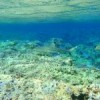
Climate Change Arouses Scientific Curiosity in Mexico
Climate change has inspired dozens of scientists at Mexican public universities to conduct research on its effects and seek ways to confront them.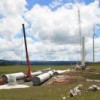
Brazilian Winds Fuel Green Job Creation
The term "green jobs", coined to describe employment that contributes in some way to preserving or restoring the environment, is increasingly entering the vocabulary of companies keen to respond to the social demand for a cleaner economy.Ecobreves – BRAZIL: Agriculture That Protects the Environment
A project based on planting trees in combination with crops is aimed at reducing water consumption and agrochemical use in agriculture in two rural areas of the southern Brazilian state of São Paulo.Ecobreves – CUBA: Japanese Funding for Waste Collection
The collection and treatment of household waste in the Cuban capital will be stepped up through a cooperation project funded by the Japanese government.Ecobreves – HONDURAS: Cleaner Production Policy Proposed
The Ministry of Environment of Honduras will present a draft public policy later this year aimed at cleaner production through the combined efforts of the state and private sectors in the development of measures to conserve energy, water and raw materials.
COLOMBIA: Amazonas 2030 – Indicators for the Climate Crisis
"It's great news" that the Colombian government is studying the cancellation of mining titles that have been granted in protected areas and in border zones declared national security areas, anthropologist Martín von Hildebrand, director of the Gaia Amazonas Foundation, told Tierrramérica.
EcoMobility Gaining Ground, Step by Step
Berlin is a big capital city of a country famed for making excellent automobiles, but it can no longer afford roads and is now moving people by transit, bike and especially through walking.Ecobreves – MEXICO: Mexico City Aquifer Could Be Recharged
The aquifer that supplies water to Mexico City could be recharged in eight areas, according to a new university research study.Ecobreves – LATIN AMERICA: Activists Call for Common Front to Defend Whales
More than 60 environmental organizations from throughout Latin America and the Caribbean have called on the region’s governments to use diplomatic action to stop Japan from beginning its annual whale hunt in the Southern Ocean this December.Ecobreves – HONDURAS: Proposal to Compensate National Park for Water Supply
This November the Honduran Congress will study a bill aimed at authorizing payment for environmental services to La Tigra National Park, the main green area and source of water for Tegucigalpa.
Amazonas 2030: Indicators for the Climate Crisis
Official figures on the Colombian Amazon region are so lacking that the researchers who developed a new regional sustainability index specified that "it was difficult to obtain a large part of the data."
EcoMobility is Gaining Ground, Step by Step
Cities around the world are embracing a new concept, “EcoMobility” or sustainable mobility: transportation without private vehicles.
Central America Slowly Learning the Value of Disaster Prevention
The growing frequency of weather-related disasters in Central America has led to greater organisational efforts for risk management and emergency response. But during the most recent storm in the region, the fruits of these efforts were still not visible.« Previous Page — Next Page »


Tierramérica is the main communications platform on sustainable development and the environment in Latin America and the Caribbean. It is produced by IPS Noticias, the agency’s Spanish-language service, which created it jointly with the United Nations Development Programme (UNDP) and the United Nations Environment Programme (UNEP), with later support from the World Bank. The weekly editions of Tierramérica are published in Spanish, Portuguese and English and are picked up and printed by dozens of media outlets in the region. Follow us on Facebook and Twitter.

From the Frontline of Environment
Supported by

Tierramérica en Español

Terramérica em Portuguese

