Languages
Sunday, September 27, 2026



News and Views from the Global South

Ecobreves – CUBA: Eco-Friendly Freezers
Cuba will begin production this year of solar-powered freezers, after successfully manufacturing a prototype in 2010. This appliance ensures considerable savings of electrical energy.
China and Brazil Flood Latin America with Dams
With green lights for major hydroelectric dam projects, Brazil and China are competing to create the conditions for making the most out of energy from Latin America's mighty rivers.Ecobreves – HONDURAS: Communities to Manage Sustainable Forest
Eight communities in the northern Honduran departments of Atlántida and Yoro will take charge in the next two months of 30,000 hectares of forest to carry out a sustainable management project.
Agave Sweetens Economic Prospects of Indigenous Women
The production of goods from the traditional agave crops through cooperatives has become the leading source of income for indigenous Otomí communities in central Mexico.Ecobreves – VENEZUELA: Fighting the Ashen Moth
Researchers at the Central University of Venezuela are proposing to develop the Beauveria Bassiania fungus in mangroves on the Paria Peninsula and other region in the country's northeast as a biological agent to control an onslaught of the ashen moth (Hylesia metabus).
PERU: Environmental Crime Doesn’t Pay
A legislative bill in Peru aims to channel the fines for environmental crimes to repair the damages to rivers, soils and other public goods that directly affect the population. Until now, the fines collected have ended up elsewhere in the government.
Q&A: “It’s Essential to Change the Energy Model”
Latin America could see more Spanish investment in renewable energy if this otherwise strong sector in Spain is hurt in the war being waged by fossil fuel interests, according to expert Sergio de Otto.Ecobreves – BRAZIL: Waters Run Dirty
Brazil's rivers are increasingly polluted, according to SOS Mata Atlântica, a non-governmental organization that tested water quality of many water sources in 12 states, plus the federal district of Brasilia.Ecobreves – HONDURAS: Preparing for Dam Construction
With plans to begin construction in February, the Patuca III hydroelectric complex, in the northeastern Honduran department of Olancho, will require an investment of 250 million dollars, according to official sources.Ecobreves – MEXICO: More Endangered Flora and Fauna
The number of species in danger of extinction increased in recent years in Mexico, and the government has failed to protect them, denounce environmental groups.
Environmental Crime Doesn't Pay in Peru
The Peruvian Environment Ministry's public prosecutor will present an initiative in February to channel fines to pay for the damaging effects of mining, logging and oil drilling.
“It's Essential to Change the Energy Model”
The global dispute between fossil fuel interests and those developing alternative technologies has spilled onto the Spanish battlefield.
ARGENTINA: Guarani Effort to Strengthen Culture Through Tourism
Since recovering part of their territory in 2005, an indigenous Guaraní community in the northeastern Argentine province of Misiones is working to maintain and expand a cultural tourism initiative.
Mexico Tempted to Shift From Tortillas to Ethanol
Farmers' protests and the rise in corn tortilla prices in late December put temporary brakes on the Mexican Senate, which was preparing to lift the national ban on utilising maize to make fuel alcohol, or ethanol.Ecobreves – VENEZUELA: Four-Wheeling Vandals Damage Great Savannah
In the period of late December 2010 to early January 2011, all-terrain vehicle enthusiasts caused severe damage in the Canaima National Park, an area of 30,000 square kilometers in southeast Venezuela.Ecobreves – BRASIL: Ethanol Also Comes from Eucalyptus Bark
The great volume of industrial waste from the paper pulp industry -- eucalyptus bark -- can be made into raw material for ethanol, according to a study by the Luiz de Queiroz Agricultural School at Brazil's University of São Paulo.Ecobreves – CUBA: Migratory Birds Studied in Guanahacabibes
Cuban scientists will delve deeper this year into the characteristics and provenance of the birds they find on the Guanahacabibes Peninsula, one of the major corridors for migratory species in Cuba.Ecobreves – HONDURAS: Plans for Law on Garbage Incineration
The Honduran authorities are seeking legislation on different approaches to solid waste management. Of the country's 298 municipalities, 260 do not have any waste treatment system, and the other 38 utilize incineration -- and most are poorly managed.Guaraní Effort to Strengthen Culture Through Tourism
In a jungle enclave in northeastern Argentina, a handful of indigenous peoples have set out to study their own Guaraní culture to test its tourism potential.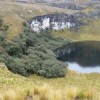
PERU: Local Communities Protect Their Amazon
San Martín is one of the three most deforested Amazon regions in Peru. But now local residents and non-governmental organisations have joined with local and regional authorities to defend the flora, fauna and water resources and halt the destruction of the rainforests.
Climate Change Could Be Worsening Effects of El Niño, La Niña
The strongest La Niña weather system in 50 years has brought historic flooding to Australia and drought to Argentina, Brazil and Uruguay, driving up food prices.« Previous Page — Next Page »


Tierramérica is the main communications platform on sustainable development and the environment in Latin America and the Caribbean. It is produced by IPS Noticias, the agency’s Spanish-language service, which created it jointly with the United Nations Development Programme (UNDP) and the United Nations Environment Programme (UNEP), with later support from the World Bank. The weekly editions of Tierramérica are published in Spanish, Portuguese and English and are picked up and printed by dozens of media outlets in the region. Follow us on Facebook and Twitter.

From the Frontline of Environment
Supported by

Tierramérica en Español

Terramérica em Portuguese

