Languages
Sunday, November 8, 2026



News and Views from the Global South

Ecobreves – CENTRAL AMERICA: Honduras and Guatemala to Protect Shared Ecosystems
The governments of Honduras and Guatemala signed a cooperation agreement on Aug. 27 to protect the natural resources the two countries share along their Caribbean coastlines.Ecobreves – ARGENTINA: Whales in the Schools
A plan for children to develop "a comprehensive appreciation of whales and their environment" will begin in late September in five schools of the southern Argentine province of Chubut.
Brazilian Ethanol Divides Agro-Industry
The "green tsunami" must be stopped, say leaders in Brazil's agribusiness sector, worried by the advance of sugarcane plantations to feed the demand for fuel alcohol.
Argentina Creates Its First Marine Park
The marine and coastal park of Argentina's southern Patagonia will protect biological and economic wealth, but will not completely ban its exploitation.
Careful with the Toys
The scandal of toxic China-made toys has cast doubt over the health safety of products for children around the world, and in Latin America in particular.
Brazil's 'Quilombos' Resist Exclusion
The historic melting-pots of Afro-Brazilian culture, "quilombos" persist, but they are marked by neglect.Ecobreves – BRAZIL: Amazon Deforestation Affects Everyone
Deforestation produces more harm than social or economic benefits in the Amazon region, concludes a report published by the Institute of Man and Environment of the Amazon.Ecobreves – VENEZUELA: A Bank for Depositing Garbage
A "garbage bank" will premiere this year in Santa Teresa del Tuy, a bedroom community southeast of Caracas where some 300,000 people live, and who generate 100 tons of solid waste each day, the project's main promoter, ecologist Oswaldo Alvarado, told Tierramérica.Ecobreves – CUBA: Pink Flamingos Return to Nest
Active nests of pink flamingoes (Phoenicopterus ruber ruber), which saw a sharp decline during the Cuban droughts of 2004 and 2005, underwent a boom last year when the rainfall returned to normal levels.Ecobreves – CHILE: Permaculture Is Coming
Permaculture, which promotes human habitat that follows the patterns of nature, will arrive in Chile with a meeting to take place in the capital in September.
Sad Tale of Argentina's Tercero River
Argentina's polluted rivers are not limited to Buenos Aires. The transparent waters that feed the Tercero River, in central Argentina, become a dark stew in just 300 kilometers.Ecobreves – MEXICO: Wanted: Logging Assassins
A Mexican peasant farming family, whose loved one was murdered by loggers in May, lives under death threats and the authorities are doing little about it, say activists.Ecobreves – LATIN AMERICA: Debate on Climate Change Risk and Adaptation
Coordinating efforts to confront the usual threats from the weather and finding ways to adapt to climate change were among the purposes of a Latin American workshop organized in the Uruguayan capital by the United Nations Development Program (UNDP).Ecobreves – ARGENTINA: Atuel River Case Before the Supreme Court
Entrepreneurs, trade unionists, farmers, environmentalists, politicians and students in the central Argentine province of La Pampa have denounced before the Supreme Court the abusive usage of the Atuel River in neighboring Mendoza province.Ecobreves – HONDURAS: An Indigenous Future in Eco-Tourism
Five communities in the Honduran jungle region of Mosquitia over the past four years have development micro-projects for ecological conservation that have drawn tourists but also generated jobs.Ecobreves – HONDURAS: Peasants Tested for Toxins from Mining
Thirty health experts finished tests of 62 inhabitants from El Pedernal, a village in the central Honduran valley of Siria, to determine if they have high levels of cyanide, lead, arsenic and mercury from mining operations nearby.Ecobreves – CHILE: Kids Protect Ozone Layer
Through the end of August, children in the fifth and sixth grades at schools in Chile's Tarapacá (north), Metropolitan (central) and Magallanes (south) regions can participate in a painting contest titled "I protect the ozone layer."Ecobreves – VENEZUELA: Producing Natural Fertilizers and Pesticides
In the Venezuelan southwest, near the Colombian border, the government has inaugurated the first of 21 laboratories to produce bio-pesticides and bio-fertilizers.
Satellites Show Logging Decline in Peruvian Amazon
Deforestation in the Peruvian Amazon, intense in zones near roads and mining operations, has had little impact in protected forests, say researchers.Ecobreves – URUGUAY: Climate Change Threatens Coastline
Uruguayan politicians and citizens must be aware of the threats of climate change, especially for the coastal areas, says Pablo Mandeville, the United Nations permanent representative in this small South American country.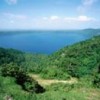
A Green Crusade in Nicaragua
Nicaragua is attempting to reverse the loss of water resources with a massive planting of trees, which are essential to capture rainfall in areas that recharge rivers and lakes.« Previous Page — Next Page »





Tierramérica is the main communications platform on sustainable development and the environment in Latin America and the Caribbean. It is produced by IPS Noticias, the agency’s Spanish-language service, which created it jointly with the United Nations Development Programme (UNDP) and the United Nations Environment Programme (UNEP), with later support from the World Bank. The weekly editions of Tierramérica are published in Spanish, Portuguese and English and are picked up and printed by dozens of media outlets in the region. Follow us on Facebook and Twitter.

From the Frontline of Environment
Supported by

Tierramérica en Español

Terramérica em Portuguese

