
Sunday, October 11, 2026



News and Views from the Global South
Trade and poverty: Facts beyond theory
TRADE-AFRICA: New Technology to Sever Timber’s Link to Conflict?
While conflict diamonds or blood diamonds, as they are known, have gained attention the world over in terms of the role illicit gems play in fuelling warfare, the role that the timber trade has played in abetting conflict has received considerably less consideration. That may be beginning to change.TRADE: ''Doha Collapse Won't Mean Suffering for The Poor''
At the heart of the collapse of the World Trade Organisation’s Doha Round last week are the different opinions on liberalisation and its relation to development. Developed countries promote the idea that liberalisation will bring about development and thus that the failure of the Round constitutes a blow for the poor.
TRADE-SOUTHERN AFRICA: Great Expectations For Expanded Customs Union
A top businessperson and some economists in Namibia are optimistic that the proposed Southern African Development Community (SADC) Customs Union will break down trade barriers in the region and create competition that will benefit the ordinary consumer.TRADE-AFRICA: Safeguards for Small Farmers Straw That Broke Doha
Safeguards to protect small farmers’ livelihoods in African and other developing states, as opposed to subsidies for commercial agricultural interests in rich countries, remained an insurmountable obstacle in the World Trade Organisation (WTO) talks, leading the Doha Round to collapse last week.TRADE-AFRICA: ‘‘Exports Are the Best Way to Develop’’
Lack of export orientation in the past has caused economic failures in African countries, which is why these countries should focus on exports to build industries.
GHANA: ‘‘You Have to Speak Up When Competition Destroys You’’
Business has been slow for many Ghanaian traders. They blame the situation on not only the influx of cheap Chinese products but also insufficient legal protection and corruption.AGRICULTURE-TANZANIA: Benefits of Cutting Out the Middleman
The Common Fund for Commodities plans to spend more than $100 million over five years helping farmers in the developing world to process their crops for added-value exports.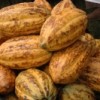
GHANA: Relations With China – Into The Claws of Another Predator?
More and more, China seems to be taking up any commodity that can be had from Ghana. From copper waste and scrap, timber and natural rubber to aluminium waste and scrap and vegetable products are being exported to the upcoming Asian superpower.TRADE: Zimbabwe Overshadowed Development Issues at EU-SA Summit
The friendly atmosphere at the first ever European Union-South Africa in Bordeaux, France, at the end of last week may largely be attributed to how South African President Thabo Mbeki had helped convince Robert Mugabe, his Zimbabwean counterpart, to negotiate directly with Morgan Tsvangirai, leader of the opposition Movement for Democratic Change, a few days earlier.TRADE: EU ''Rushing'' EPAs Lest African States Change Their Minds
Brussels is tempted to skip the translation of the interim economic partnership agreements (EPAs) into the 23 official European languages because of concerns that some African, Caribbean and Pacific (ACP) countries may change their minds about signing the final agreements.
CULTURE-SOUTH AFRICA: Made in Khayelitsha, Sold in New York
Entering the Monkeybiz shop, one is confronted with hundreds of brightly coloured beaded animals, dolls, place mats and pictures. You find yourself smiling involuntarily.AFRICA: Link Between Crop Failure and Climate Change Often Missed
Climate change has a profound effect on food security in Africa, as increasing temperatures and shifting rain patterns reduce access to food across the continent.
MAURITIUS: Workers Urged to Work Nightshift in ‘24-Seven Economy’
In this era of technological progress people should be working less, not more, says Ashok Subron.
AGRICULTURE-SOUTH AFRICA: Small Farmers Pushed to Plant GM Seed
Baphethile Mntambo has been farming organically for the past five years because she knows that avoiding chemicals will in the long-term benefit her yield. She decided not to plant genetically modified seeds because she has heard that they cannot be saved for the next season and will eventually deplete her soil. But she is not entirely sure how and why.TRADE-AFRICA: Senegal and South Africa Moving Closer?
Senegal’s opposition to United Nations sanctions against Zimbabwe aligns Pres. Abdoulaye Wade’s government with that of South Africa. This should boost the two countries’ bilateral relations, which have seemingly been improving in the wake of a recent bilateral trade treaty.ZIMBABWE: ‘‘Companies Cutting Ties Will Hit Average Person Most’’
As state violence in Zimbabwe worsens, economists in the capital Harare have warned that cutting international economic ties with the country will hit the average person the hardest.
ECONOMY-ZIMBABWE: ‘‘Basic Commodities Have Become Luxuries’’
Business has never been this bad, said Nomathemba Nkomo.TRADE: EU Still Targeting Poorest States for Inclusion in EPAs
The European Commission is still targeting those least developed countries that have resisted economic partnership agreements (EPAs) by opting for the Everything But Arms trade preference scheme.AFRICA: Russia Behind China and Brazil in Building Relations
The Soviet-era connections between Russia and some African states have collapsed into low levels of economic engagement between the former partners, with the arms trade remaining the exception.
AGRICULTURE-TANZANIA: Higher Crop Prices Bring Farmers No Joy
The six-foot tall corn stalks on Kastul Baha's homestead are the envy of his pastoral village in northern Tanzania. Baha was one of the fortunate farmers this crop season with $35 to buy a package of fertilizer to apply over his half-hectare field. He expects to more than double output to 10 bags of corn compared to four bags last year.TRADE: French Report Condemns EPAs as Anti-Development
The approach taken by the European Union (EU) in trade talks with Africa has been strongly criticised in an official report commissioned by France, the new holder of the EU’s rotating presidency.« Previous Page — Next Page »





Trade has historically been a geopolitical tool, creating significant economic imbalances in developing countries. However, many countries in East Asia and Latin America have been able to alleviate poverty due to increasing trade. Tackling poverty has proven to be much harder in low income countries in sub-Saharan Africa, Asia and Latin America, and their dismal trade performance is one important reason for that. They remain at the margins of world trade and indeed of the world economy. These articles are aimed at informing readers about the complexities of trade and its varying effects on development, with a special focus on the consequences of the global economic crisis, the potential of fair trade and the gender implications of trade policies.

The Week with IPS

Tracking global progress towards a sustainable world
