Languages
Sunday, November 22, 2026



News and Views from the Global South
Africa

MALAWI: Local Management the Tonic for Water Woes
Hop over a seep of filthy sludge behind a bathroom screened with ragged sacks, turn past the toilet with battered cardboard walls, crab between mud-brick shanties roofed with rusty metal... There: emerge into a small, neat yard where a dozen women and girls are filling plastic buckets from five water taps sticking out of concrete wall.
SOUTHERN AFRICA: Women Traders “Blocked” From the “Big Business”
"Africans do not believe women can do big business," fumes Zambian trader Angelica Rumsey.DEVELOPMENT-NIGER: Selling Sand to Survive
It's a trade that requires no capital, only courage and endurance. A group of 200 women are making ends meet - sometimes even a bit more - by selling sand.KENYA: Medical Smart Card Extended to Maternal Care
Kenyans can now save towards the cost of childbirth at the country's largest maternal hospital thanks to a medical smart card system.
Food Cartels Feast on Ramadan Profits
Opportunistic food traders have been blamed for soaring food prices across the Middle East that have added a financial burden on families observing the Islamic holy month of Ramadan.
SOUTHERN AFRICA: Land Reform Underfinanced and Failing
Mavis Muchena sits on the veranda of her mud hut, a middle-aged single mother of four with a face worn beyond her years and hands creased from working the soil. She should represent the future of a renewed farming boom in Zimbabwe, but instead she represents its failure.AFRICA: Shortage of Skills for Reproductive Health
Dr Geoffrey Kasembeli says he worked almost seven years without a day off: that's how severe the shortage of obstetricians and gynaecologists in Kenya is. A similar situation prevails across the continent, a symptom of the weakness of reproductive health care in Africa.
SOUTH SUDAN: Children Too Hungry to Return to Civilian Life
When Timothy was forced into the southern Sudan People’s Liberation Army (SPLA) at age 11, the first thing they did was beat him. Then they took him to a military base where his tasks were to carry other soldiers’ bags, wash their clothes, collect firewood for them, and cook their food.
DRC Farmers Welcome Support
Farmers in the southwestern Democratic Republic of Congo are looking forward to increased production after 16 tractors and 200 ox-drawn carts were distributed across three regions in the province of Bandundu.MALAWI: A Cellphone, a Bicycle and Sound Agricultural Advice
It is 11 am and Mary Jusa seems unconcerned by the sun beating hard on her back. Humming a traditional tune, she carries on uprooting weeds in her maize field between two water canals.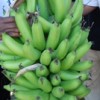
AFRICA: Modified Banana Could Cure Deadly Disease
An innovation by researchers in Nigeria could be a cure for the devastating Banana Xanthomonas Wilt (BXW) - responsible for annual losses in excess of 500 million dollars of crop across East and Central Africa. But it has also fuelled debate on the genetic engineering of crops in Africa.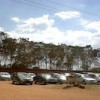
MALAWI: Used Car Dealers Seeing Red Over New Green Tax
Small-scale importers of used cars in Malawi are crying foul over a government decision to introduce higher duties on second-hand passenger vehicles aged eight years and older.
SOUTH AFRICA: “Children are Dying Needlessly”
By the time Thandi Khumalo* brought her seven-month-old daughter to the Red Cross Children’s Hospital in Cape Town, help came too late. The infant had developed acute diarrhoea and kwashiorkor, a condition caused by severe protein and calorie deficiency, and died a few days after being admitted.
WORLD CUP: ‘Now We Demand They Do It For the Poor’
Weak floodlights barely held back gathering darkness as Somalia met Serbia in the finals of the Poor People's World Cup. A small band of supporters were on hand to see an African side lift the cup in Cape Town's Vygieskraal Stadium.HEALTH-UGANDA: WHO Happy With Counterfeit Bill; Activists Not
The Uganda office of the World Health Organisation (WHO) and the country’s National Drug Authority are satisfied that the new version of the controversial Counterfeit Goods Bill does not threaten the importation and production of generic drugs by conflating them with fake drugs, as the first draft of the bill did. But health rights activists are not convinced.
EAST AFRICA: Deadly Cactus Good for Animal Feed
Joseph Ole Morijo is baffled by research findings that cactus plants can be used as animal fodder during drought. Not after he lost his entire herd of 152 goats and sheep to the said plant.
POLITICS-RWANDA: “Climate of Repression” as Voting Concludes
As voting concluded in Rwanda’s presidential elections, with incumbent President Paul Kagame expected to win by a landslide, fears remain that not all citizens will accept the results amidst claims the elections were neither free nor fair.ZIMBABWE: Questions Raised Over Water Treatment Funding
The memories of Zimbabwe's 2008-2009 cholera outbreak are fresh in the minds of everyone except the people who have the safety of the country's water in their hands.
Shark Slaughter Advances Into Red Sea
Six Yemeni fishing boats captured in Egyptian territorial waters in June might have gone unnoticed if not for their unusual cargo -- several kilometers of long lines and over 20 tons of dead sharks.
WORLD: Cooking Up a Climate Deal
Another round of negotiations towards a global treaty on climate change concluded in Bonn on Aug. 6, with activists calling on parties to rediscover a spirit of compromise and make offers rather than demands.AFRICA: Bring Water Into Climate Change Negotiations
Longer periods of drought, decreased river flow, higher rainfall variability and lower soil moisture content: water is at the heart of the impacts of climate change. Yet the precious commodity scarcely features in climate negotiations.« Previous Page — Next Page » *#*

The Week with IPS

NEXT STOP - SDGs
Tracking global progress towards a sustainable world
Tracking global progress towards a sustainable world
