Languages
Monday, November 23, 2026



News and Views from the Global South
Africa
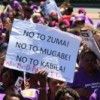
RIGHTS-SOUTH AFRICA: Election Campaign Silent on Violence Against Women
With its emphasis on gender equality, the South African constitution is regarded as a great example for many other developing countries. Yet, despite laws intended to protect the rights of women like the Sexual Abuse Act and the Domestic Violence Act, women in the country still suffer indignities at the hands of police and in court.
ENVIRONMENT-NAMIBIA: Ten Dollars for a 200-Year-Old Tree
Despite the investment of millions of donor dollars, the permit system in Namibia’s Community Forests has failed dismally, say biodiversity experts. Illegal logging in the inland Kavango is more alive than ever.
AGRICULTURE-AFRICA: Livestock Vital to Rural Livelihoods
The Nairobi-based International Livestock Research Institute estimates 250 million people in Africa - a quarter of the population - rely on livestock for their livelihoods, yet African governments invest almost nothing to support the sector.RIGHTS-MOROCCO: Renewed Efforts to End Violence Against Women
The campaign against violence towards women has been the focus of media attention in Morocco recently, in order to press for an end to gross abuses committed by men against women and make victims aware of the need to break the silence which allows it to continue.AFRICA: A Lot More Needed to Make South-South Trade Work
Trade experts are sceptical about the United Nations Conference on Trade and Development’s renewed emphasis on South-South trade to counter the global economic crisis.TRADE: Southern Africa Buckling Before EU Pressure to Sign EPA?
While South Africa plays for time, the signing of a finalised economic partnership agreement (EPA) between the European Union (EU) and the southern African countries seems imminent - despite regional trade fragmentation remaining a danger.
Q&A: “Zimbabwe Must Release Political Prisoners”
Nomboniso Gasa chairs South Africa's Commission for Gender Equality and is an independent gender research analyst. A committed feminist and political activist, she was first imprisoned in apartheid-era South Africa at age 14.POLITICS: Security Council Stalled Over Sudan Indictment
The political controversy that followed the indictment of Sudanese President Omar Hassan al-Bashir for war crimes in Darfur is expected to pick up steam once again with the arrival of an African Union (AU) delegation to press its case before the Security Council.EGYPT: Labour Strikes Point to Economic Pain
Egypt has seen a wave of labour strikes in recent weeks by workers in a range of professions from lawyers to truck drivers. Although strikers' specific demands vary, commentators generally attribute the phenomenon to increasingly difficult economic circumstances.BOTSWANA: Retrenchments Turn Villages Into “Little Hells”
The closure of two major mines and the scaling down of operations at most mines in Botswana have had a knock-on effect beyond miners in this southern African producer of diamonds.CULTURE: Ethiopian Film Takes Top Honours at FESPACO
Filmmaker Haile Gerima’s Ethiopian movie "Teza" has won the Golden Stallion of Yennenga at the 21st Panafrican Festival of Cinema and Television (Fespaco) in Ouagadougou, Burkina Faso.
ENVIRONMENT: 'Capital Shapes the Creation of Waste'
The South African government has been heavily criticised by environmental justice NGO groundWork for failing to produce accurate data on the production of waste in the country.ZIMBABWE: The Railways — From Public Utility to Public Liability
Zimbabwe’s poorly funded public transport utilities - which over the years have all but stopped functioning - are making it difficult for small and informal traders to import essential goods from neighbouring countries.
EAST AFRICA: Milk Trade War Spills Over Uganda and Kenya
Ugandan exporters of dairy products to Kenya are bitter. They are accusing their bigger neighbour of imposing non-tariff trade barriers to block their produce from entering markets in Kenya and elsewhere.AUSTRALIA: African Resources Behind Growing Links
With hundreds of Australian mining companies now involved in the extraction of natural resources in Africa, the Rudd government is also aiming to play a bigger role in the continent’s affairs.HEALTH-KENYA: Drug Shortages Threaten Public Health
When public health facilities are so often short of drugs that a community worker has to buy basic medicines like painkillers in bulk for use by the community, then there is a problem.
KENYA: Words that Reshape a Country’s Identity
The goal is ambitious: Kenya’s first literary journal, Kwani?, wants to bring new thinking to the country - and ultimately the continent - and reshape African identities. The journal aims to provoke, create, entertain and develop a literary community that isn’t afraid to question the status quo.ECONOMY: Microlenders and Swazi Government: Untidy Divorce
When the Swazi government announced that it would no longer deduct loan repayments from the salaries of civil servants on behalf of microlenders, the sector was thrown into chaos.
Q&A: Aid Effectiveness Undermined by EU and U.S. Trade Policy
Criticism against international development aid has been growing for several months, moving from down-right disapproval, shared by leftist and rightist commentators, experts and politicians in industrialised and poor countries, to partial reproaches for the fragmentation and lack of coherence in aid.
ZAMBIA: Food Vouchers Not Enough to Fight Hunger
In an attempt to mitigate rising food insecurity and malnutrition, the Zambian government and the World Food Programme (WFP) have started to hand out food vouchers to the country’s urban poor.DEVELOPMENT: Aid Fragmentation Worse Despite Paris Declaration
Civil society representatives agree with the recent finding of the Organisation for Economic Cooperation and Development (OECD) that fragmentation of international cooperation has increased instead of diminished, in direct contradiction to the so-called Paris Declaration where over 100 countries called for effective dispensing of aid.« Previous Page — Next Page » *#*

The Week with IPS

NEXT STOP - SDGs
Tracking global progress towards a sustainable world
