Languages
Monday, November 23, 2026



News and Views from the Global South
Africa

SOMALIA: Sharif Returns to Power as Militants Advance
A rare sense of optimism rose in Mogadishu in the early hours of Jan. 31 as people learnt that the leader of a moderate faction of the Union of Islamic Courts, Sheikh Sharif Ahmed, had been elected as head the Transitional Federal Government (TFG).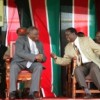
EAST AFRICA: Increasing Women's Participation in Government
Kenya’s poor record of improving percentage of women in decision making positions has come under scrutiny, but its neighbours are doing significantly better.BURKINA FASO: Grain Shortage Despite Record Harvest
Looking worried, Hadja Mamounata Belegda, commercial grain farmer, rubs the beads of her rosary between her fingers and ponders the consequences of grain shortages on the market in Burkina Faso.
SOMALIA: Counting the Cost After Ethiopia Withdraws
The suicide car bomb that struck Mogadishu Jan. 24, killing at least twenty people and injuring nearly fifty others is an explosive comment on the failure of the Ethiopian military deployment to Somalia two years ago to oust Islamist forces it believed represented "a clear and present danger" to Ethiopia.ZIMBABWE: MDC Bites the Bullet
The spirits of a nation were lifted when Morgan Tsvangirai, leader of the main section of the Movement for Democratic Change declared that his party would enter a unity government under terms negotiated at a special regional summit.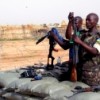
SUDAN: African Union Against Indictment of Al-Bashir
African governments have rallied behind Sudanese President Omar Al-Bashir in rejecting a possible international arrest warrant by the International Criminal Court on charges of orchestrating genocide in Sudan's volatile western region of Darfur.SWAZILAND: Simple Solution – Save Rainwater
It's so early, the frogs are still croaking, as women push forward holding firmly onto their buckets while dodging cattle that are also scrambling for water in the pond at Gebeni. It has rained only a few times since the wet season began in October, and competition for water begins as early as 5:00 am.
Q&A: World Social Forum is Not a Static Platform
Onyango Oloo was the national coordinator of the Kenyan Social Forum in 2007 when the last global World Social Forum (WSF)took place in Nairobi. As another gathering of activists from around the world unfolds in Belém, Brazil, IPS asked Oloo for his views on the Forum's past and future.
MAURITIUS-RIGHTS: Sceptical Welcome for Equality Law
Nobody shall suffer prejudice in his social life or his place of work because of his or her ethnic origin, religion, age, sexual orientation, political conviction or physical handicap. This is the challenge of Mauritius's new Equal Opportunities Act (EOA).TRADE: Russia Supplying Legal And ‘‘Illegal’’ Arms to Africa
Russia's state arms exporter, Rosoboronexport, plans to grow the volume of Russian armament and military equipment to Africa over the next four to five years. This comes on top of allegations that Russia is selling arms to smuggling and contraband rings, thereby contributing to conflict on the war-torn continent.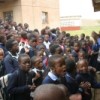
SWAZILAND: Free Education? Maybe Next Year…
Although the Swazi constitution stipulates free primary education from 2009, parents will have to pay school fees this year. Only three days before the start of the January term, the country's government announced it will continue to charge for primary education, contrary to the law.
ZIMBABWE: Unity Govt or Not, People Must Mobilise
Following an extraordinary Summit of SADC heads of state in Pretoria on Jan. 26-27, it was announced that a unity government is to be formed in Zimbabwe, apparently resolving months of disagreement following a power-sharing agreement in September 2008.
DEVELOPMENT: Urgent Aid Sought for Victims of “Silent” Crises
The United Nations children's agency UNICEF said Tuesday that it must raise over a billion dollars this year to meet the basic needs of women and children in disaster zones worldwide, most of them in sub-Saharan Africa.RIGHTS-ETHIOPIA: Strangling Criticism
The Ethiopian parliament has voted into law a controversial bill which bars any civil society organisation receiving more than 10 percent of its funding from foreign sources from engaging in human rights issues.RIGHTS-ZAMBIA: Vulnerable Children Must Fend For Themselves
There will be as many as one and a half million orphaned children in Zambia by 2010. Deprived of adult guardians by the AIDS pandemic, many of these children will end up living in the streets of the country's major towns and cities.ZIMBABWE: Government Scheme to Access Forex Blocks Small Business
The ZANU-PF government’s efforts to gain access to foreign exchange (also known as forex) by imposing an expensive licensing system on Zimbabwean enterprises, enforced with the threat of prosecution, is undermining one of the last remaining means of survival in the collapsing country.
POLITICS-ZIMBABWE: Little Hope at SADC Summit
After a 12-hour meeting behind closed doors, Southern African Development Community leaders emerged early on Jan. 27 to announce that bitter political rivals Robert Mugabe and Morgan Tsvangirai will form a unity government.RIGHTS-AFRICA: Extending Constitutional Justice
Jurisprudence in Africa has improved a lot since the early 1990s, but a lot of work still has to be done to improve justice structures across the continent.
ZIMBABWE: ‘‘Dollarisation’’ of Economy Hitting Poor Hard
The collapse of the Zimbabwean economy has led to the ‘‘dollarisation’’ of the economy – and even to what some, who have still maintained some sense of tragicomedy, call the ‘‘petrolisation’’ of the economy because of the re-emergence of barter trade.Q&A: Zimbabwe – Fighting Cholera on a Shoestring
Nearly 50,000 cases of cholera have been reported in Zimbabwe by the World Health Organisation; the death toll stood at 2,755 on Jan. 21.
Q&A: Unlocking the Power of Constitutional Rights
South Africa's constitution is often celebrated for its protection of social and economic rights; but how readily can this protection be invoked by the most vulnerable?« Previous Page — Next Page » *#*

The Week with IPS

NEXT STOP - SDGs
Tracking global progress towards a sustainable world
