Languages
Monday, October 26, 2026



News and Views from the Global South
Africa

Unveiling the Power Play: Non-Profit Funding as a Strategic Tool for Agenda Setting
In the realm of public discourse, non-profit organizations often serve as the torchbearers of societal change, championing causes ranging from environmental conservation to social justice. Yet, beneath the altruistic facade lies a complex interplay of interests, where non-profit funding emerges as a potent tool for shaping the narrative and driving the agenda.
Women, Girls Equal Partners in HIV Responses, Says Activist
UNAIDS Executive Director, Winnie Byanyima, recently made an impassioned call for governments to support women and girls from marginalized communities at the frontlines of the defence of human rights, to help ensure, among others, that global health is protected.
Start-ups Powering up Africa’s Solar Energy Ecosystem
Often referred to as the “Sun continent,” Africa receives more hours of bright sunlight than any other continent. But even with 60 per cent of the world’s solar resources, Africa has only one per cent of solar generation capacity, according to the International Energy Agency (IEA).
Africa’s Absence as Permanent Member a “Flagrant Injustice,” says UN Chief
As the UN continues its never-ending saga on the reform of the Security Council (UNSC), one of the political anomalies that keeps cropping up is the absence of Africa, among the five permanent members (P5)—a privilege bestowed only on the US, UK, France, China and the Russian Federation.
Proven Vector Control Interventions Needed to Stem Malaria Infections in Africa
Experts recommend that the current prevention of malaria in highly endemic countries in Africa should integrate "locally appropriate" control measures to cope with the highest burden of mosquito-borne disease on the continent.
Revolutionist Returnees: Fulfilling Dreams, Finding Freedom
In 1977, a record-breaking mini-series carved its place in the milestone of US history. Based on Alex Haley’s Pulitzer Prize-winning novel, Roots: The Saga of an American Family, the small-screen adaptation exposed the atrocities of the transatlantic slave trade and its impact on generations thereafter.
How Soil Microbes Could save the World
The 500 per cent increase in global agricultural productivity over the past 60 years has largely been made possible by the scientific advances of the “Green Revolution” – from the ability to breed higher yielding varieties to improvements in farm inputs, especially fertiliser.
In Africa, Witch Branding Destroys Elderly Women’s Lives
One day in October 2020, Serah Akpan, 70, was seated in her house at Boki Local Government in Cross River, southern Nigeria, when she heard the murmurings of irate youth outside. Before she could grasp what was really happening, they had broken into her house, bundled her outside, and threatened to kill her for allegedly being a witch.
Onerous Debt Making Poorest Poorer
Contractionary economic trends since 2008 and ‘geopolitical’ conflicts subverting international cooperation have worsened world conditions, especially in the poorest countries, mainly in Africa, leaving their poor worse off.
Blinken’s Visit to Africa: Is US Counterterrorism Counterproductive?
US Secretary of State Antony Blinken’s week-long tour across four African countries was aimed at strengthening the US-Africa relationship—a relationship, according to some commentators, already waning as China and Russia are increasing their influence.
Should We Attribute All Climate-Related Disasters Only to Global Warming?
The Republic of Mauritius, an island nation, experienced its latest flash floods since the last bad one in 2013. These floods resulted in the loss of lives and hefty bills for car insurers with over 3000 cars have been damaged.
ICJ Orders Israel to Take All Measures to Prevent Genocide in Gaza
The International Court of Justice today told Israel to take all measures within its power to prevent a genocide in the Gaza Strip. Judge Joan E. Donoghue, the court's president, read the order directing the State of Israel to abide by temporary measures to stop the humanitarian crisis facing the Palestinian population in Gaza from worsening.
International Court of Justice Set to Deliver Order in Genocide Case
The International Court of Justice will deliver it's order for provisional measures submitted by South Africa in the case of South Africa versus Israel today.
Under the Scorching Sun Kenyan Farmers Find New Ways to Beat Climate Change
In the tranquil village of Kotiang, perched on the shores of Lake Victoria in Kenya's lakeside region, Yvonne Atieno, a dedicated mother in her early thirties, tends to her fish pond under the relentless equatorial sun. Her young daughter eagerly joins her mother in this nurturing endeavor. Yvonne, a certified accountant by profession, reflects on how her decision to embrace regenerative farming has not only enriched her life but also imparted invaluable life lessons.
Zimbabweans Gambling for a Living Amid Escalating Hardships
Twenty years after completing high school in Zimbabwe, 38-year-old Tinago Mukono still has not found employment, and in order to survive, he has switched to betting, turning it into a form of employment. Every day throughout the week, Mukono leaves his home to join many others like him in betting clubs strewn across Harare, the Zimbabwean capital, with the hope of making it.
African Women on the Frontline of Peacekeeping
For over a year, a group of United Nations peacekeepers from Ghana led by Captain Esinam Baah regularly patrolled the “blue line” or the demarcation line between Lebanon and Israel, and visited neighbourhoods in the area, checking in with local families and making sure they were safe.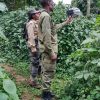
Rwanda’s Biodiversity Conservation Gains Momentum With Bird Sounds Recording
Claver Ntoyinkima wakes up early in the morning, at least three times a week, and goes into the Nyungwe rainforest to record bird vocalizations. Ntoyinkima is one of several community members in a remote village in rural southwestern Rwanda who volunteer with a group of scientists to help boost wildlife conservation.
Turning Protracted African Conflicts into Sustainable Peace
Among East Africa’s dozens of pastoral tribes, major conflicts have erupted repeatedly, largely over land and water disputes. Generational trauma and anger have built to create tensions and grievances that carry emotional weight even hundreds of years later.
Trapped and Trafficked—Fishers Tell of Forced Labor Horror
“The thing is that when you come from an African country, they know that you’re basically trapped,” says Noel Adabblah. “You have the wrong documents; you can’t go home because you’ve already borrowed money there to get here, and you won’t risk losing what work you have, no matter how bad, because of that. They know all the tricks.”
2024: A Year of Cautious Hope for African Economies Facing Worldwide Challenges
As African economies look to the new year, countries across the continent are poised to make moderate economic gains but must navigate the maze of domestic and international challenges.
Mozambique Insurgency Significantly Decreased, Say Experts
There is cautious optimism regarding the conflict that has been raging in northern Mozambique, largely in the province of Cabo Delgado, since 2017. There are encouraging indications that the Islamic State (IS)-driven insurgency has significantly decreased thanks to the deployment of the Mozambique Defense Armed Forces (FADM), Southern African Development Community (SAMIM) forces, and a contingent of Rwandan troops (RSF).« Previous Page — Next Page » *#*

The Week with IPS

NEXT STOP - SDGs
Tracking global progress towards a sustainable world
Tracking global progress towards a sustainable world
