Languages
Sunday, October 25, 2026



News and Views from the Global South
Africa

New Era: Unlocking Africa’s Agriculture Potential Through CGIAR TAAT Model
As hunger and food insecurity deepen, Africa is confronting an unprecedented food crisis. Estimates show that nearly 282 million people on the continent, or 20 percent of the population, are undernourished. Numerous challenges across the African continent threaten the race to achieve food security; research and innovative strategies are urgently needed to transform current systems as they are inadequate to address the food crisis.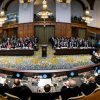
South Africa’s Genocide Case Flawed, Premature, Inaccurate, says Israel
Israel disputed both South Africa’s jurisdiction and the provisional measures that it demanded the International Court of Justice impose on the State of Israel to prevent genocide. Israel’s co-agent, Tal Becker, said in his opening address that Jewish people’s experience of the Holocaust meant that it was among “among the first states to ratify the Genocide Convention, without reservation, and to incorporate its provisions in its domestic legislation. For some, the promise of ‘never again for all people’ is a slogan. For Israel, it is the highest moral obligation.”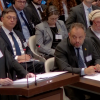
Palestine: Nothing Can Justify Genocide, It’s Not the Time for Silence
Far from the mayhem, destruction, and humanitarian crisis in Gaza, the South African government argued in the International Court of Justice in the Hague that it had an obligation and a right to bring a case to halt a genocide by the Israeli government and its military.
Technology Transfer Critical to Revolutionizing Africa’s Pharma Industry
An agreement signed between the Rwandan government and the Africa Pharmaceutical Technology Foundation (APTF) gives impetus to Africa’s domestic industry with the hope of helping the continent tackle vaccine inequity and fill the critical gap in vaccine manufacturing.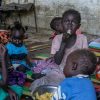
2024 Demands Swift Action to Stem Sudan’s Ruinous Conflict
Nearly nine months of war have tipped Sudan into a downward spiral that only grows more ruinous by the day. As the conflict spreads, human suffering is deepening, humanitarian access is shrinking, and hope is dwindling. This cannot continue.
Homeless Families Now a Growing Issue in Zimbabwe
It is do or die on the streets of Zimbabwe as homeless families battle for survival solely depending on begging. Such is the life of 69-year-old Gladys Mugabe, who lives with her disabled son in Harare Gardens, a well-known recreational park in the Zimbabwean capital, Harare. Over the decades, Zimbabwe’s economy has underperformed. It started in 2000 with the departure of white commercial farmers, and the country has experienced subsequent periods of hyperinflation, which the International Monetary Fund estimated reached 172% in July last year.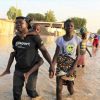
Nigeria Prioritizes Climate Action to Mitigate Natural Disasters
In 2022 alone, flooding killed at least 662 people, injured 3,174, displaced about 2.5 million, and destroyed 200,000 houses individuals. As far back as 2012, the World Bank reported that erosion was affecting over 6,000 square kilometres of land in the country, with about 3,400 square kilometres highly exposed.
Saving Energy, Saving Forests: How Kindle Stoves Are Changing Women’s Lives
Five years ago, farmer Sehlisiwe Sibanda would walk into a nearby forested area to fill a scotch cart with huge wood logs for cooking and heating; a pile of firewood would last her a week during the summer. But now she does not need a cartful of huge logs. Small branches and twigs are enough to last for more than a month.
Fundraising in Africa: How Looking Inward Makes the Difference
Across Africa, non-governmental organisations (NGOs) bearing different monikers such as community-based organisations (CBOs), civil society organisations (CSOs) and nonprofits have long borne the duty of designing and implementing developmental interventions to address varying challenges.
Sudan’s Conflict Needs Civil Society Solutions
It’s recently been reported that the two main protagonists of Sudan’s current conflict – leaders of the armed forces and militia at war since April – have agreed to face-to-face talks. The Intergovernmental Authority on Development (IGAD), an East African body, announced the potential breakthrough – although Sudan’s foreign ministry has since claimed IGAD’s statement is inaccurate, creating further uncertainty.
Africa’s Great Blue Wall
As an Islander from the Seychelles, Africa’s smallest country, I find that the ocean is intricately woven into my heritage. It not only defines my roots but also shapes the trajectory of my journey. When I think of the future, I can’t help but also look at the boundless possibilities reflected in the vast expanse of the ocean.
From Dancing ‘For a Living’ to Dancing For ‘Women’s Dignity’
At first, he danced for money, but later on, he realized the need to dance for sanitary pads in order to help poor girls and women. Now, 29-year-old Proud Mugunhu conducts dance tutorials that earn him 100 pads from each session.
Rise of the Global South Highlights Minamata Convention on Mercury COP5
As it strives to be the prototype environmental treaty of this era, the Minamata Convention on Mercury continues its razor-like focus on ending all major uses of mercury. Emerging as the force leading the charge is the Global South, particularly the Africa Region, whose proposals led to hard-charging changes addressing dental amalgam, mercury-based skin creams, and fluorescent lights.
It’s Time To Align Climate Finance and Social Justice, Says Youth Climate Activist
During his childhood, Joshua Amponsem spent a lot of time in his dry rural community collecting water from the streams. “It was normal,” the co-director of the Youth Climate Justice Fund says in an interview on the sidelines of COP28. “We didn’t talk about climate change.”
Africa’s Negotiators Urged to Leverage on African Science at COP28 High Table
African scientists and researchers are concerned that the data shows that the continent is being cornered by the spiraling effects of climate change, that the real impact of climate devastation is yet to unfold, and that the region is on the cusp of more severe and catastrophic consequences.
Farm to Fork: COP28 Provides RoadMap to Fix Africa’s Broken Food Systems – IFAD
In the absence of sufficient urgency to curb greenhouse gas emissions, it is becoming too hot to farm in Africa. Confronted by extreme, intense, and frequent climate events such as record-breaking prolonged dry spells, current agriculture and farming systems are ill equipped to adapt to or alleviate climate change.
Greening Education: Education Paying Highest Cost for Ongoing Climate Crisis
It is a global catastrophe of astounding proportions that millions of children are on the run today, forcibly displaced from their homes. As conflict and climate change increasingly become the most pressing challenges facing the world now, the number of displaced children has doubled in the last decade alone, reaching a record high of 43.3 million children.
For Africans, the Climate Debate Around the Role of Livestock Misses the Mark
Africa is contending with a climate crisis it did not create without sufficient recognition for the unique rights and needs of the world’s youngest and fastest-growing population. Not only is the continent least responsible for reducing greenhouse gas emissions, having historically produced just a tiny fraction, but it is also disproportionately impacted by the consequences of emissions generated elsewhere.
Emerging Climate Finance Infrastructure to Match Africa’s Green Bankable Solutions
Although long profiled as the face of climate change, a high-risk continent with a pipeline of unbankable green projects, there are areas where Africa is leading the world. The 1987 accidental discovery of the first deposit of natural hydrogen during a water drilling campaign in Bourakebougou village, Mali, is today proving that Africa can export viable green solutions.
Electrifying Cooking: Decarbonizing Africa’s Electricity Grid Towards Net Zero
Across the African continent, many first-born children in poor and vulnerable households do not go to school as they spend their school days collecting biomass fuel. The regional average of the amount of time spent collecting firewood is 2.1 hours, robbing women and girls in particular of hundreds of hours in a year and crippling their capacities to engage in learning and productive activities.
Ten African Countries to Benefit From USD 100 Million Released by Green Climate Fund
The Green Climate Fund (GCF) has announced the release of USD 100 million at the ongoing United Nations Framework Convention on Climate Change (UNFCCC) 28th Conference of Parties (COP 28) in Dubai, UAE, to support 10 African countries in adapting food loss reduction solutions.« Previous Page — Next Page » *#*

The Week with IPS

NEXT STOP - SDGs
Tracking global progress towards a sustainable world
Tracking global progress towards a sustainable world
