Languages
Sunday, November 15, 2026



News and Views from the Global South
Africa

Valuing Water Beyond the Money
Amid the worst drought in a century, South Africans are kick-starting a global consultative process to agree on the values of water in a bid to ensure more equitable use of the finite resource.
Time To Focus On ‘Hidden Hunger’
As World Hunger Day May 28 approaches, it is time for us all to redouble our efforts to reach the goal of Zero Hunger by prioritizing the battle against micronutrient deficiency. If the international community pulls together this year to incorporate proven solutions such as biofortifying crops into the UN framework for sustainable development, we could reduce malnutrition on a truly global scale.
Formalising Informal Trade – Good for African Women?
Women constitute the largest share of informal traders in Africa–about 70 per cent in Southern Africa and more than half in other parts of this vast continent made up of 54 states, home to over 1,200 billion people.
In a “World of Plenty,” G7 Must Fight Famine
World leaders must step up and take action in fighting famine to prevent further catastrophic levels of hunger and deaths, said Oxfam.
Africa – More than Just Conflicts, Corruption, Disasters
Natural and man-made disasters, armed conflicts, widespread corruption and deep social inequalities have been so far a dramatic source for most news coverage when it comes to Africa, the world's second-largest and second-most-populous continent on Earth, which hosts 54 states spreading over 30 million square kilometres that are home to over 1.2 billion people.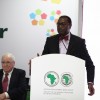
Nutrition Key to Developing Africa’s “Grey Matter Infrastructure”
Developing Africa’s ‘grey matter infrastructure’ through multi-sector investments in nutrition has been identified as a game changer for Africa’s sustainable development.
“Horrific” Increase in Worldwide Displacement
Over 30 million people were newly internally displaced in 2016 by conflict and disasters, according to a new report.
Agony of Mother Earth (II) World’s Forests Depleted for Fuel
Humankind is the biggest ever predator of natural resources. Just take the case of forests, the real lungs of Mother Earth, and learn that every 60 seconds humans cut down 15 hectares of trees primarily for food or energy production. And that as much as 45,000 hectares of rainforest are cleared for every million kilos of beef exported from South America.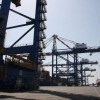
Africa and India – Sharing the Development Journey
Africa, like India, is a continent of rich and compelling diversity. Both continents share a similar landscape, a shared colonial history, and similar economic and demographic challenges. This helps both India and Africa work especially well with each other.
Agony of Mother Earth (I) The Unstoppable Destruction of Forests
The world’s forests are being degraded and lost at a staggering rate of 3.3 million hectares per year. While their steady destruction in many Asian countries continues apace, deforestation of the world's largest tropical forest - the Amazon - increased 29 per cent from last year’s numbers. And some of the most precious ecosystems in Africa are threatened by oil, gas and mineral exploration and exploitation.
Kenya’s Drought: Response Must Be Sustainable, Not Piecemeal
A malnutrition emergency Food security in Kenya has deteriorated significantly since the end of 2016. UNICEF reports a significant increase in severe acute malnutrition. Nearly 110,000 children under-five need treatment, up from 75,300 in August 2016.

Using Agriculture and Agribusiness to Bring About Industrialisation in Africa
No region of the world has ever moved to industrialised economy status without a transformation of the agricultural sector. Agriculture, which contributes 16.2% of the GDP of Africa, and gives some form of employment to over 60% of the population, holds the key to accelerated growth, diversification and job creation for African economies.
SLIDESHOW: Drought Highlights Ethiopia’s IDP Dilemma
 Displaced pastoralists gather around newly arrived drums of brown water as a water truck speeds off to make further deliveries to settlements that have sprung up along the main road running out of Gode, one of the major urban centers in Ethiopia’s Somali region.

Concerns Arise Over Freed Nigerian Abductees, Thousands Still Missing
Following the release of over 80 missing schoolgirls, human rights groups have expressed concerns about their rights and future.
Falling Between the Sun-Scorched Gaps: Drought Highlights Ethiopia’s IDP Dilemma
Displaced pastoralists gather around newly arrived drums of brown water as a water truck speeds off to make further deliveries to settlements that have sprung up along the main road running out of Gode, one of the major urban centers in Ethiopia’s Somali region.
Towards a Global Role for ACP?
The African, Caribbean and Pacific Group of States (ACP) met this week in Brussels for the 105th Session of its Council of Ministers to discuss the key question of how these 79 countries could play a more effective role for their own citizens and in the international arena.
Collective Amnesia in Famine Response and Resilience-Building
The emerging drought-induced humanitarian crisis—prevailing in countries from Niger in West Africa to Somalia in East Africa—and conflict-driven famine conditions in South Sudan, Somalia, and Northeast Nigeria, have become a regular phenomenon.
The Very Survival of Africa’s Indigenous Peoples ‘Seriously Threatened’
The cultures and very survival of indigenous peoples in Africa are seriously threatened. They are ignored, neglected and fall victims of land grabbing and land dispossession caused by extractive industries, agribusiness and other forms of business operations.
Kenya Is Doing Its Part to Battle Drought, We Must Too
After three years of drought and failed harvests, Kenya is in the grip of a national crisis. All eyes are on neighbouring Somalia and South Sudan – where the needs are indeed greater and more acute – but we must not forget the nearly 3 million Kenyans whose lives have been blighted by these extreme conditions.
Indigenous Women: The Frontline Protectors of the Environment
Indigenous women, while experiencing the first and worst effects of climate change globally, are often in the frontline in struggles to protect the environment.
Long Way to Go for Indigenous Rights Protection
Despite progress, many gaps remain in international indigenous rights protection, said representatives during an annual UN meeting.« Previous Page — Next Page » *#*

The Week with IPS

NEXT STOP - SDGs
Tracking global progress towards a sustainable world
Tracking global progress towards a sustainable world
