Languages
Thursday, November 19, 2026



News and Views from the Global South
Europe
COTE D’IVOIRE: A Call for Solidarity in Resolving Fate of Missing Reporter
Early one afternoon nearly four years ago, journalist Guy-André Kieffer was thrust into a waiting car by several armed men in a supermarket parking lot in Abidjan. He has not been seen since.CLIMATE CHANGE: Biofuels Scarce on Bali Menu
Green groups hoping that the social and environmental cost of biofuels would get an airing at the United Nations climate change conference here are a disappointed lot.TRADE: Caribbean Draws Line in the Sand with EU
Barbados is the venue for a new round of talks starting this week that could make or break efforts to forge an agreement between Caribbean nations and the 27-member European Union for a new trade and aid pact that must be concluded by the end of the month in order to comply with World Trade Organisation (WTO) rules.UKRAINE: At Odds with Russia over “Genocide”
Ukrainian President Viktor Yushchenko has been spearheading the country's efforts to see the world recognise Ukraine's 1932-1933 famine as an "act of genocide against the Ukrainian people." Russia begs to disagree.SERBIA: The Less You Can, The More You Pay
So what did you pay for it? Before they knew it, that question was no more the usual small talk among Serbs.HEALTH: Europe 'Forgetting' AIDS
AIDS has become a "forgotten disease" in the European Union, according to the man in charge of the bloc's public health policies.CLIMATE CHANGE: The Fossils Have Their Day
Whereas traditional rhetoric and diplomatic gimmicks characterise the official UN climate change conference, some of the environment activists are drawing the focus for their witty and irreverent take on Saudi Arabia and major industrialised countries.CLIMATE CHANGE: UN Goes ‘Climate Neutral’
The United Nations announced Wednesday it is joining the growing worldwide effort to go "climate neutral", an acronym for reducing or offsetting any greenhouse gases.TRADE-ZIMBABWE: EPAs ‘‘Bringing in Old Issues Through Back Door’’
With an economy tottering on the brink of collapse and an unenviable political situation, civil society organisations in Zimbabwe have every reason to worry about the implications of the interim agreement on trade in goods that their country has just signed as part of the economic partnership agreement (EPA) with the European Union (EU).Q&A: “It Can Be Hard to Deal with Subtle Xenophobia”
With waves of opposition to tides of immigrants in Europe, Peter Schatzer has his job cut out. And seeing that the Mediterranean is the favoured route for migration into Europe, whether documented or not, he is at the forefront of presenting the human face of migration before political opposition to it.Q&A: “In Most Conflicts We Know What Needs to Be Done”
There is hardly a trouble-shooter in the world today more trusted than Martti Ahtisaari, Chairman of the Crisis Management Initiative. Kosovo, the disputed southern province of Serbia, is the latest challenge he has taken on.Q&A: “Where Is the Democracy in International Relations?”
It's about the oldest dispute around, which is good enough reason to hear more on it from those who can influence a possible resolution. So when Abdelwahab Derbal, head of the mission in Brussels of the League of Arab States speaks of his anger over the Palestine issue, these may be words to listen to, whichever side of the divide (if any) you are on.BULGARIA: Street Barricades Fail to Save Nature
When the Bulgarian Parliament adopted the final list of nature sites to be protected, it excluded precisely those areas that are most spectacular, and most interesting for tourism developers.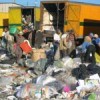
RIGHTS: For Some, Childhood Is Rubbish
"When I thought of my future, I saw my whole life picking through this rubbish dump," says 20-year-old Julia Castillo. "I never thought I'd get away."TRADE-GHANA: Mary Robinson Concerned About EU Approach to EPAs
This weekend an award will be presented to the best farmer in Ghana in recognition of the pivotal contribution that agriculture makes to the economy of this West African country.TURKEY: Political Graveyard May Get Extension
Turkey seems to have a far bigger 'cemetery' for political parties than many other democratic nations. Its next occupant could be a controversial pro-Kurdish party.AFRICA-EU: Dodging the (Human Rights) Issue
On the eve of the second Africa-European Union summit, there is broad agreement on the need to defend human rights, above all else. But academics, analysts and activists from both continents harbour serious doubts that this noble aim will find root in reality.BALKANS: Who Remembers Yugoslavia?
The meeting of several hundred World War II veterans last weekend would not have meant much, had it not been convened in a town that symbolises so many things about a country that no longer exists, Yugoslavia.KOSOVO: Ground Realities Make Talks Insignificant
The Troika mediating between Serbia and its breakaway southern province Kosovo has had to acknowledge that its 120-day mediation period has really led nowhere.RUSSIA: Putin Triumphs as Party
Notwithstanding accusations of vote manipulation and intimidation of opposition groups, the Dec. 2 vote for the state Duma has changed the political scenario in Russia: the Kremlin-backed United Russia has parliamentary majority, both the Communist and Liberal parties have strengthened their positions, and the Social Democrats - A Just Russia - enter the Duma for the first time.
MIGRATION-GERMANY: Women in a New Country Draw Together
"You try to adapt, but you become like a mute person," said Teresa, who was born in Colombia and has lived in Germany for over 20 years, describing what it feels like to be an immigrant.« Previous Page — Next Page »


The Week with IPS

NEXT STOP - SDGs
Tracking global progress towards a sustainable world
Tracking global progress towards a sustainable world
