Languages
Friday, October 2, 2026



News and Views from the Global South
Global

How to Put the ‘Sexy’ Back into Agriculture – Thoughts From CGIAR Science Week
This week presented a beacon of hope for young people so that the “girl from the South and the boy, of course” could stay in the developing world, Dr Ismahane Elouafi, Executive Managing Director of CGIAR, said during a press conference on the final day of the CGIAR Science Week.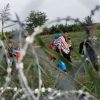
Migrant Smuggling: Europe Must Make a U-Turn
Europe must understand that the only reasonable and humane way to tackle migrant smuggling is to open regular routes for people to reach Europe in safety and dignity.
US Tariffs Threaten to Undermine World Trade Organization
As the Trump administration’s hostility towards the United Nations and other international organizations keeps growing, a New York Times columnist last week proposed what he frivolously described as “something a little incendiary”.
Insight to Impact: CGIAR Inaugural Flagship Report for Decision Makers Navigating Food System Science
"To have impact, it was crucial to understand what impact was wanted," CGIAR's Executive Managing Director Dr. Ismahane Elouafi said at the launch of the organization's flagship report, Insight to Impact: A decision-maker’s guide to navigating food system science.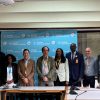
Strengthening One Health Approach in Agriculture Requires Cross-Sectoral Partnerships, Information
Increasingly, experts in the global health and agricultural sectors are finding the One Health approach effective for identifying and addressing health concerns that can influence facets of health. Implementing this approach worldwide will require partnerships across different sectors.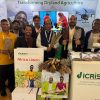
‘Act Before It Gets Worse’ – Experts Warn as Agrifood Problems in Global South Intensify
As agrifood systems in the Global South buckle under the weight of climate change, biodiversity, and even pollution, experts such as Dr. Himanshu Pathak call for urgent innovative solutions, as, at the current pace, the problems of the Global South are going to intensify with escalating climate change.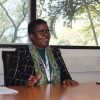
‘With Science, We Can Feed the World of 9.7 Billion by 2050′
Animal scientist Lindiwe Majele Sibanda became what her grandmother earnestly prayed for when she was growing up on a farm in southern Zimbabwe.
CGIAR Gender Impact Platform Needs a ‘Bold Approach’ in Agriculture Research
Women farmers face structural issues that prevent them from realizing their full potential, from societal perceptions that dictate their limitations to poor land. However, CGIAR's Gender Impact Platform Director, Nicoline de Haan, argues that leaning into a "victim" narrative does not serve them, especially when women are demonstrably more involved in agriculture.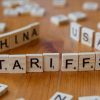
A Pressure on Silicon Valley: Is the U.S. Ready for a Shift in Tech Dominance?
While the U.S. argues over tariffs, China, Japan, and South Korea are quietly reshaping their tech markets, shifting towards regional dominance – signaling a potential turning point in global tech leadership.
Lessons from the Global South on Transforming AgriFood Systems
The state of food and nutrition security in the Global South masks the great strides and investments made to increase agricultural yields to feed a rapidly growing population. As discussions deepen at the ongoing CGIAR Science Week, plenary discussions on Wednesday (April 9) explored transformative strategies and innovations driving agricultural resilience across Africa, the Caribbean, and Latin America.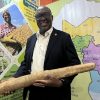
Farmers Need Science Solutions in Their Hands Sooner Than Later
Climate change is outpacing science and farmers are paying the price. Agricultural research innovations need to reach farmers before it is too late.
A Make-or-Break Moment for Global Development Finance—& the Role Philanthropy Must Play
This June, world leaders will gather in Seville for the Fourth International Conference on Financing for Development (FfD4), a milestone opportunity to reimagine how the global economy delivers for people and the planet. But the real question isn’t whether this historic convening will happen. It’s whether it will matter.
Growing Legacy: Raising Ambition in Agriculture Scientific Research as CGIAR Unveil New Portfolio
Global food and nutrition insecurity levels are hurtling towards a catastrophe. To counter these problems, leading world experts say science is the 'silver bullet.' That science will build climate-resilient agri-food systems, improve livelihoods across the value chain, and ensure more affordable, nutritious food while safeguarding the environment.
Behind the Feeding of the 5,000 (or Should That Be 10,000) at CGIAR Science Week
Good Food for All is the motto of The Chef's Manifesto, a project that brings together more than 1,500 chefs from around the world to explore how to ensure the food they prepare is planet-friendly and sustainable.
Healthy Beginnings, Hopeful Futures
Education is an essential investment in providing health to those left furthest behind. On World Health Day, we must connect the dots between education and health in humanitarian crisis settings. A child attending school gets vaccinations and healthcare, a nutritious meal and mental health and psychosocial services. By funding education, we optimize our investments to cover multiple sectors in one investment, such as health.
Welcoming Science: CGIAR Week-Long Focus on Innovation for Food, Climate-Secure Future
The world’s leading scientists and decision-makers in agriculture, climate, and health are meeting in Nairobi this week to promote innovation and partnerships towards a food, nutrition, and climate-secure future. As current agrifood systems buckle under multiple challenges, nearly one in 11 people globally and one in five people in Africa go hungry every day.
Digital Democracy at a Crossroads. Key Takeaways from RigthsCon2025
In an increasingly digital world, democratic practices are evolving to encompass new forms of participation. Digital democracy – the use of technology to enhance civic action, movement building and access to information – has become a crucial force in shaping local and global political landscapes.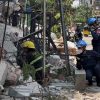
We Can Solve Global Challenges Through Global Public Investment
Watching on our screens the devastation wrought by the earthquake which struck South-East Asia last week has brought a stark reminder of our shared vulnerability in this interconnected world. It has exposed again, too, the weak beams of traditional funding models that struggle to ensure a timely response to disasters.
How to Agree an Armistice in Ukraine: Lessons from Korea
The armistice agreement that ended the Korean War in 1953 has been mentioned as a possible model for how to end the fighting in Ukraine. This makes sense. The Trump administration, however, seems to opt for a quick deal like the 1973 Paris agreement on Vietnam or the Minsk agreements of 2014–15, combining “ceasefires in place” with vain prospects of subsequently reaching a genuine peace agreement.

‘Energy Transfer’s Lawsuit Against Greenpeace Is an Attempt to Drain Our Resources and Silence Dissent’
CIVICUS speaks with Daniel Simons, Senior Legal Counsel Strategic Defence for Greenpeace International, about the lawsuit brought by an oil and gas company against Greenpeace and its broader implications for civil society. Greenpeace is a global network of environmental organisations campaigning on issues such as climate change, disarmament, forests, organic farming and peace.
Putting People First: Why SRHR Must Be Central to Health and Development Agendas
As global leaders prepare to convene for the Commission on Population and Development (CPD) in New York, April 7-11, the world finds itself at a critical crossroads. We can either recommit to human dignity, equality, and justice—or risk unraveling decades of progress in global health.« Previous Page — Next Page »


The Week with IPS

NEXT STOP - SDGs
Tracking global progress towards a sustainable world
Tracking global progress towards a sustainable world
