Languages
Sunday, October 18, 2026



News and Views from the Global South
Latin America & the Caribbean

Historical Expansion and Sustainability in Chile’s Main Port
The port of San Antonio, Chile's main port, is promoting a historic and sustainable expansion with its own investment and that of international consortiums, aiming to improve its current ninth place among the largest and busiest ports in Latin America.
Food Inflation: a Key Challenge To Sustain the Achievements of Latin America and the Caribbean
Just a few years ago, at the height of the COVID-19 pandemic, millions of families in Latin America and the Caribbean did not know whether they would have enough food for the next day. The shutdown of economies, massive job losses, and the sharp rise in prices pushed food insecurity to levels not seen in decades.
An Overdose of Renewables, New Energy Risk in Brazil
Wind and solar power sources, essential for the energy transition to mitigate the climate crisis, have become a risk of power outages in Brazil.
Food Insecurity Rising in Africa, Falling in Latin America and Caribbean
The 2025 State of Food Security and Nutrition in the World (SOFI) report shows a modest global decline in hunger since 2022, with 673 million people facing hunger in 2024, indicating a decrease of 22 million compared to 2022. While progress is seen in Asia and South America, hunger is rising in Africa and Western Asia.
‘The State Cannot Pardon Itself for Violating Human Rights’
CIVICUS discusses Peru's new amnesty law with Nadia Ramos Serrano, founder and researcher at the Leadership Centre for Women of the Americas, a civil society organisation working on democratic development and the role of women in politics.
Mexico Experiments With Residential Solar Panels, But They Are Still Insufficient
Over the past four months, Mexican researcher Nicolás Velázquez has paid around US$23 for electricity, thanks to the photovoltaic system installed in his home in the northern city of Mexicali.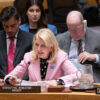
UN Warns of Escalating Humanitarian Emergency in Haiti As Armed Gang Violence and Aid Deepen Crisis
In recent months, the humanitarian crisis in Haiti has taken a considerable turn for the worse, with armed gangs continuing to exert dominance over nearly 90 percent of the capital, Port-Au-Prince. Rising violence, the collapse of essential services for millions, and severe cuts to humanitarian funding have left the international community struggling to provide immediate relief and find a sustainable, long-term solution.
Chile Aims to Become a Latin American Hub for Data Storage and Transmission
Chile wants to be a hub in Latin America in data storage and transmission by developing data centers, leveraging its wealth of renewable energy, and its optimal digital interconnection.
Climate Change is Deepening Child Poverty in Latin America and Caribbean
2025 has been marked by a significant escalation of the climate crisis and its effects on vulnerable populations, as the World Meteorological Organization (WMO) warn that average global temperatures could exceed the 1.5°C threshold within the next five years. In Latin America and the Caribbean, rising temperatures and emissions continue to strain access to essential services and deepen poverty, particularly among children.
Trump’s Tariff Tsunami Hits Brazil
Since January 2025, Donald Trump’s second presidency has been focused on securing the global supremacy of the United States. It justifies a package of international coercive and intimidatory measures, accompanied by an aggressive, arrogant rhetoric. Right at the outset, the new administration announced a veritable tsunami of tariffs and immediately implemented them as a sign of its new independence.
We Are Making Progress in the Fight Against Hunger, but Not Everyone Equally
In perspective, good news: world hunger is beginning to decline. The State of Food Security and Nutrition in the World 2025 (SOFI 2025) reported a drop in the proportion of people suffering from hunger, from 8.5% in 2023 to 8.2% in 2024. Latin America and the Caribbean has played a pivotal role in this progress.
‘Who Will Take the Mic at the United Nations When Doing so Might Cost Them Their Freedom?’
CIVICUS discusses civil society’s challenges in engaging with United Nations (UN) processes with an activist from a Salvadoran queer-led organisation who asked to remain anonymous for security reasons.

The Right to Care: A Feminist Legal Victory That Could Change the Americas
On 7 August, the Inter-American Court of Human Rights delivered a groundbreaking decision that could transform women’s lives across the Americas. For the first time in international law, an international tribunal recognised care as an autonomous human right. Advisory Opinion 31/25, issued in response to a request from Argentina, elevates care – long invisible and relegated to the private sphere – to the level of a universal enforceable entitlement.
Intensified Legal, Political, and Grassroots Battles Over Amazon Oil Expansion
A report has warned about the risks of expanding oil and gas exploration in the Colombian Amazon, which may undermine environmental goals, Indigenous rights, and long-term economic stability, unless the government pivots toward sustainable development pathways.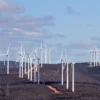
Rare Earths, a New Technological and Industrial Dream in Brazil
Brazil, which stands out for exporting basic products such as iron ore, oil, coffee, and soybeans, rather than industrialized goods with higher added value, now intends to make a shift regarding rare earths, a key component in new technologies that it has in abundance.
From Endurance to Resilience: The Future of Development in Latin America & the Caribbean
The development trajectory of Latin America and the Caribbean is going through a period of unprecedented vulnerability and uncertainty. The significant achievements of past decades, as well as the possibility of continuing to make progress, are under threat from the impact of growing geopolitical tensions, unresolved structural challenges, and an increase in crises of various kinds—environmental, political, health, technological, and social.
Government Constructions Hit Water Recharge Area in El Salvador
Two construction projects pushed by the government of El Salvador, in a water recharge area adjacent to the country's capital, on the slopes of the San Salvador volcano, threaten to make the area more vulnerable and increase the risk of flooding in the city's poor neighborhoods downstream.
From the Margins to the Courts: St Lucia Joins Caribbean Fight to Dismantle Anti-LGBTQI+ Colonial Laws
When Kenita Placide co-founded United and Strong, St Lucia’s first LGBTQI+ organisation in 2001, death threats were routine. Over the years, several friends were murdered for being gay. But 24 years on, Kenita’s Caribbean island nation has become the latest to overturn a colonial legacy that criminalised LGBTQI+ people.
Solar-Powered Fish Farming Feeds Indigenous Communities in the Peruvian Amazon
"Our organization is showing that it is indeed possible to move toward energy transition and not depend on oil," said Elaina Shajian, president of the Regional Coordinator of Indigenous Peoples of San Lorenzo (Corpi-SL), in the Peruvian Amazon.
Latin America’s Electric Mobility on China’s Path
Residents near the port of Itajaí in southern Brazil celebrated the arrival of 7,292 electric and hybrid vehicles from China aboard the ship BYD Shenzhen on May 28 as a "historic event," with unloading taking four days.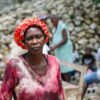
Haiti Faces a ‘Critical Turning Point’ Amid Escalated Violence and Funding Cuts
The humanitarian situation in Haiti has deteriorated significantly in the past few weeks, with the United Nations (UN) underscoring a growing list of abuses committed by armed groups, including killings, kidnappings, and sexual violence. The gap between the vast scale of needs and the supply of available resources has widened, leaving millions of Haitians in dire need of humanitarian support.« Previous Page — Next Page » *#*

The Week with IPS

NEXT STOP - SDGs
Tracking global progress towards a sustainable world
Tracking global progress towards a sustainable world

