Languages
Thursday, November 19, 2026



News and Views from the Global South
North America
U.S. House Clears Haiti Trade Bill
The U.S. House of Representatives Wednesday approved a major trade bill designed to boost U.S. and other investment in Haiti's textile and apparel industry following January's devastating earthquake in which at least 200,000 people are believed to have been killed.US-CUBA: Radio, TV Marti Seen as Bust
Despite spending more than half a billion dollars over the last quarter century, U.S. government broadcasts to Cuba have gained only a tiny audience and have had virtually no effect on the island's politics, according to a new report by the Senate Foreign Relations Committee.
U.S.: Offshore Drilling Badly Tarnished by Gulf Oil Leak
As oil seeps into the environmentally and economically critical Gulf of Mexico following an explosion on a rig there two weeks ago, some groups are saying this catastrophe should mark the end of offshore drilling for oil - and be a "clarion call" for moving away from fossil fuels.Will Arizona Give Immigration Reform a Shot in the Arm?
Advocates for comprehensive immigration reform are working against time to transform a groundswell of popular support into concrete legislation that the U.S. Congress can pass this year.NPT Meet Draws Thousands of Anti-Nukes Activists
Japanese women in kimonos carrying signs urging "No More Hiroshima", an 80-year-old grandmother, and 18 mayors from around the world were just some of the almost 15,000 people who marched in New York City Sunday to rally for the abolition of nuclear weapons.U.S. States Consider Starting Their Own Banks
At least eight U.S. states are considering proposals to start state-run banks in the wake of an economic crisis where many private banks ceased or greatly decreased their lending, literally shrinking the money pool available in state economies.Pentagon Map Shows Wide Taliban Zone in the South
The Pentagon was still trying to spin its report on the war in Afghanistan issued this week as holding out hope because the instability had leveled off, even as some news outlets were noting that it documents the continued expansion of Taliban capabilities and operations.
Q&A: Nuclear Non-Proliferation Regime Has Triple Standards
The abolition of nuclear weapons - and a halt to the spread of the deadly armaments - will be a major talking point at the month-long Review Conference on the Nuclear Non-Proliferation Treaty (NPT), scheduled to take place at the United Nations beginning next week.Climate Concerns Spur Changes in U.S. Military
Though some conservative politicians and activists in Washington remain unconvinced of the need for action, the U.S. military is taking the effects of climate change increasingly seriously.
Citizen Scientists on the Trail of Disappearing Bees
It's the world's worst-kept secret: bees are in a state of crisis. One of nature's most benign pollinators is dying in record numbers, much to the alarm of beekeepers and gardeners.Native Delegates Challenge Development Orthodoxy
While aboriginal peoples represent approximately five percent of the world's population, they are 10 percent of the world's poor, according to a new World Bank report on "Indigenous Peoples, Poverty and Development".Mexico, Journey of Terror for Central American Migrants
"The fifth time I tried to get to the United States I left Guatemala, crossed the border into Mexico, and on a bus I was assaulted by five police officers," Guatemalan migrant José Donis said Wednesday.U.S./IRAN: Sanctions Debate Heats Up
Wednesday's highly unusual public launch of a "conference committee" of both houses of Congress to hash out differences in long-pending legislation to impose unilateral sanctions on Iran marks a new stage in the escalating debate over what to do about Tehran's nuclear programme.
MIGRATION-US: “You’re a Criminal Just Because You’re Brown-Skinned”
Critics of Arizona's new immigration law, which requires police to question people they suspect to be undocumented immigrants, say "reasonable suspicion" boils down to having brown skin and looking Latino.US-Japan Airbase Spat May Have Regional Ripples
A protest of more than 90,000 Okinawans Sunday over the proposed relocation of a U.S. Marine Corps airbase in the southern Japanese prefecture has fueled speculation in Washington that the U.S.-Japanese alliance may be facing a serious test with the election of the Democratic Party of Japan (DPJ), and that such strains might have serious implications for the U.S.'s ability to balance Chinese naval power in East Asia.U.S.: Protests Mount Against Immigrant Crackdown
Three civil rights organisations are suing the U.S. government to obtain records related to a little-known programme known as "Secure Communities" that further involves local and state police in federal immigration enforcement.Mexico on the Alert Over Massive Oil Spill
Mexico is gearing up for the environmental effects of the oil spill caused by last week's sinking of a BP-owned deepwater drilling rig in the Gulf of Mexico, off the coast of the U.S. state of Louisiana.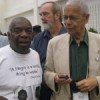
U.S. Civil Rights Veterans Pass Torch to Younger Generation
Robert Moses, 75, a legendary leader and organiser in the 1960s U.S. civil rights movement, was huddled with a dozen people discussing plans for a campaign to make quality education a constitutional right. On one side was his son Omowale, 38. Next to Omo was John Doar, 89, head of the civil rights division of the U.S. Justice Department in 1960-67 and prosecutor of the major civil rights cases of that era.U.S.-MIDEAST: To Peace Plan or Not to Peace Plan, and When?
Reports earlier this month that President Barack Obama may present a comprehensive U.S. peace plan for resolving the longstanding Israeli-Palestinian conflict have spurred a growing public debate over its wisdom and timing.
Q&A: “It’s a Complete Reboot of How We See Things”
The blockbuster, critically acclaimed film 'Avatar' portrays the ruthless plundering of a pristine ecosystem on a distant planet by greedy corporate interests – a scenario that is all too familiar to many indigenous communities here on Earth.U.S. to Face Litany of Complaints at UN Human Rights Council
Human rights groups are telling the United Nations that the United States is failing to hold corporations, including private government contractors, accountable for human rights abuses ranging from human trafficking to murder.« Previous Page — Next Page »






The Week with IPS

NEXT STOP - SDGs
Tracking global progress towards a sustainable world
Tracking global progress towards a sustainable world
