Languages
Thursday, September 24, 2026



News and Views from the Global South
IBSA
DEVELOPMENT: IBSA Fund Packs Small But Sustainable Punches
Despite only three million dollars a year coming into the India-Brazil-South Africa (IBSA) Fund for Poverty and Hunger Alleviation, it aims to pack punches above its weight with small but sustainable projects.DEVELOPMENT: IBSA’s South-South Funding With No Strings Attached
Development donors typically impose strict conditions on recipient countries. Now a different South-South approach to funding is taking shape through the India-Brazil-South Africa (IBSA) Fund for Poverty and Hunger Alleviation.
Emerging Powers Harnessing Neighbours’ Hydroelectricity
Emerging countries like Brazil and China are building numerous hydroelectric dams at home and abroad to help drive their economic growth. But while in Latin America the phenomenon is touted as an integration process, in Asia it has generated tension over the shared use of rivers.
BRAZIL: Sugar Cane Fields Turned into Industry in Sertãozinho
"A disappointment" was his first impression of his new city. It was small, half the size of his hometown of Barretos, and had "weak lights," says Marcelo Pelegrini, remembering his family's move to this southern Brazilian city when he was nine years old, after his father got a job transfer.DEVELOPMENT: India and South Africa — Ever-Tightening Relations
Much is made about China’s footprint in Africa but what about its emerging markets rival India?
BRAZIL: Belo Monte Dam Faces Endless Hurdles and Controversies
The Xingu river flows around small isles and islands and across rapids and waterfalls in Brazil's Amazon jungle, and has a dramatically reduced flow during dry season. Navigating it presents constant hurdles and risks.DEVELOPMENT: BRICS to Promote More Inclusive Global Partnership
At the upcoming Brazil, Russia, India, China and South Africa (BRICS) summit, to be held on the tropical Chinese island of Hainan Apr. 14, discussion will focus not only on deepening economic ties among members, but will also likely touch on global political events, including the crisis in the Middle East and North Africa. But China insists the club has no political agenda.
IBSA States Do Not Always Have Common Positions on Trade Issues
"IBSA what?" is the question you most often get in Geneva when enquiring about the India-Brazil-South Africa (IBSA) dialogue forum, established in 2003 between these three multicultural democracies and emerging markets "to contribute to the construction of a new international architecture".
WORLD HEALTH DAY-BRAZIL: First Map of Clusters of Antibiotic Resistance
Scientists in Brazil have created the first map of clusters of antibiotic resistance in Brazil, linking the phenomenon to abuse of the drug and opening doors to guide public policies for antibiotic prescription and sales.
Brazil Beefs Up Nuclear Emergency Plans
The Brazilian government is tightening safety procedures at its two nuclear power stations. Although this South American country is not prone to earthquakes or tsunamis, it is not exempt from natural disasters like landslides and flooding that could jeopardise evacuation plans if a radiation leak occurred.
Swaziland’s Middle-Income Status Reflects Only King’s Lifestyle
While Swaziland struggles to alleviate its fiscal crisis with foreign aid because of its World Bank classification as a lower middle-income country, the government has increased the budget for King Mswati III, Africa’s last remaining absolute monarch and one of the richest royals in the world.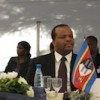
TRADE: Southern African Rulers Eyeing the Money, Not Development
A new revenue sharing formula in the Southern African Customs Union (SACU) could boost development but has met with resistance from the governments of poorer states in the sub-region that are interested in "just getting the money".SOUTH AFRICA: Who Says Research Can’t Be Dramatic?
In the early 1990s, a group of researchers set off for a small rural village in the eastern part of South Africa. Their intention was simple: teach the community how to rehydrate sick babies.
INDIA: EU Trade Deal May Curb Affordable Drug Supply
As India prepares to seal a sweeping trade and investment deal with the European Union (EU) in April, civil society groups are campaigning to limit the agreement's repercussions within the local generic drug industry here upon which millions of people around the globe depend.
Questions Abound Over Whether IBSA and BRICS Can be Complementary
The IBSA Dialogue Forum, a South-South alliance of India, Brazil and South Africa, could be better suited to the needs of Southern Africa for South-South cooperation than the BRICS (Brazil-Russia-India-China-South Africa) loose alliance of emerging economies. But Southern Africa will have to beef up its markets to truly benefit.
Sugar Cane and Ethanol Boom Drives Development in Southern Brazil
The roads are exceptionally good and numerous here, in contrast with other parts of Brazil, but the monotony of the landscape is not inviting to tourists. Sugar cane fields stretch to the horizon along a 400-km stretch of highway to the north of São Paulo.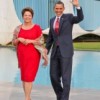
BRAZIL-US: Libya Attack Sours Obama-Rousseff Meeting
The first black president of the United States visited the first woman president of Brazil: their meeting resulted in modest progress in bilateral relations, but a bitter taste could not be avoided over the announcement, in Brazil, of the U.S.-led air attack on Libya.
INDIA: Engaging Africa With Software and Soft Power
India cannot match China’s massive investments in Africa, but it is using its information technology capabilities and its affordable university courses to stay relevant on the continent.
TRADE: Chic Carpets Link Mozambique, Denmark and, Soon, Brazil
In two rooms in a small Mozambican coastal town, 70 women are cutting, weaving and packaging fabric carpets destined for eclectic design and homeware stores in Denmark and, soon, Brazil and South Africa.
SOUTHERN AFRICA: Non-Tariff Trade Barriers Springing Up
Despite regional initiatives that even include the eventual possibility of a ‘‘Cape- to-Cairo’’ free trade area, protectionist impulses have caused non-tariff barriers to spring up across Southern Africa.IBSA Together in Resisting No-fly Zone
India has found backing at this week's India-Brazil-South Africa (IBSA) ministers meeting for its stance that a no-fly zone over Libya must follow multilateral consultations.« Previous Page — Next Page »


The Week with IPS

NEXT STOP - SDGs
Tracking global progress towards a sustainable world
Tracking global progress towards a sustainable world
