Languages
Thursday, November 26, 2026



News and Views from the Global South


Joint efforts to Strengthen Collaboration in Afghanistan on Returns and Reintegration
The International Organization for Migration (IOM) and the United Nations High Commissioner for Refugees (UNHCR) in Afghanistan are working closely to ensure sustainable return and reintegration in Afghanistan in close collaboration with the Government of Afghanistan and other partners.
First They Came for the Rohingya
In recent months, international media coverage of Myanmar has focused on the plight of the Rohingya people in the west of the country. And for good reason: Since August 2017, brutal army attacks on this Muslim ethnic minority have sent more than 750,000 people — 90 percent of the Rohingya population living in Rakhine state — fleeing over the border to Bangladesh, in what can only be described as a coordinated campaign of genocide.
Death Sentences Keep Sliding, Says Amnesty International
As the United Nations continues to lead the global fight to abolish the death penalty, countries in sub-Saharan Africa have recorded a significant decrease in death sentences, according to a new report released by Amnesty International (AI). In its 2017 global review of the death penalty, AI has singled out Guinea, Kenya, Burkina Faso and Chad for their positive steps amongst abolitionist states in sub-Saharan Africa.
Caribbean Eyes Untapped Potential of World’s Largest Climate Fund
The Caribbean Community Climate Change Centre (CCCCC) also known as the 5Cs, is looking for ways to boost the region’s access to the Green Climate Fund (GCF).
The UN tells private enterprise leaders that “Business as Usual Won’t Work”.
As global citizens face an array of issues from unemployment to discrimination, affecting their livelihoods and potential, a UN agency called upon businesses to employ a new, sustainable, and inclusive model that benefits all.
UN Migration Agency Co-hosts Hong Kong Workshop on Public-Private Sector Partnerships to Combat Human Trafficking
IOM, the UN Migration Agency, in partnership with Justice Centre Hong Kong, today (11/04) hosted a workshop to help private sector companies understand how they can work better with civil society and IOM to meet internationally recognized human rights standards, particularly relating to labour exploitation, including modern day slavery and human trafficking.
KSrelief Chief Visits Rohingya Refugee Camps in Bangladesh: Saudis Will Help IOM to Deliver Vital Aid During Monsoon
The Supervisor General of Ksrelief – Saudi Arabia’s King Salman Humanitarian Aid & Relief Centre - Dr Abdullah bin Abdulaziz Al Rabeeah, today (11/04) visited IOM’s relief operations for Rohingya refugees in Cox’s Bazar, Bangladesh.
UN’s Zero Hunger Goal Remains a Daunting Challenge
The United Nations, which is battling some of the world’s worst humanitarian crises in Asia, the Middle East and Africa, still remains focused on one of its equally daunting undertakings: how to achieve Zero Hunger by 2030.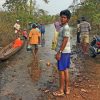
Drowning for Progress in Cambodia
Suddenly the road ends. The cart track disappears under the water. A vast lake stretches out in front of me. I have to transfer from a motorbike to a canoe. "Tuk laang," my guide says coolly. "The water is rising."
International Community Ramps Up Action on Venezuela Crisis
One year into the most recent series of protests and a humanitarian crisis with no end in sight, international groups have called for action to help protect Venezuelans. A complex political and economic crisis in Venezuela has left millions without access to basic services and resources, prompting UN agencies and human rights groups like Human Rights Watch to speak up and urge action.
Ten reflections on today’s crisis
It is now clearly evident that w e are in a period of transition, even though we remain uncertain as to its outcome. The political, economic and social system that has accompanied us since the end of the Second World War is no longer sustainable.
Japan, IOM Help to Bring Safe Water to 30,000 Rohingya Refugees in Bangladesh
Cox’s Bazar – Some 30,000 Rohingya refugees living in Cox’s Bazar will soon have easier access to safe water with the inauguration of a major new borehole project this week. It is the first part of a high capacity water production and supply system designed to meet spiraling water needs in Ukhiya sub district, which suffers frequent water shortages.
UN Migration Agency Launches Regional Action Plan to Strengthen Response to Venezuelan Outflows
IOM, the UN Migration Agency, today (10/04) launches a Regional Action Plan, detailing its support to Governments hosting Venezuelan nationals in the Americas and the Caribbean. The Action Plan aims at strengthening the regional response to large-scale flows of Venezuelans, supporting the efforts that governments have initiated across the region.
Africa Lags Behind in Bridging Inequalities
“If you wish to move mountains tomorrow, you must start by lifting stones today”—so goes an African proverb, crystallising the solutions to the continent’s socio-economic inequalities.
Freedom of Speech Guaranteed, Says Aliyev, as Azerbaijan Blocks News Websites
President Ilham Aliyev claims that in Azerbaijan the internet is free and press freedom is guaranteed. But ahead of the April 11 snap elections, authorities have systematically silenced critical voices online through amending laws and blocking news websites, and hackers have attacked independent news outlets.
Is There Data Privacy & Protection to Poor Customers?
Research increasingly demonstrates that poor customers, just like other customers, value their privacy and care deeply about the protection of their personal data. But what do providers think about obtaining, using, storing and sharing personally identifiable information?
The Cover up Culture: Sexual Abuse & Harassment in the UN
Under-Secretary-General Jan Beagle recently spoke at an event at the International Peace Institute on the subject of ‘Combating Sexual Harassment in the United Nations.’ She spoke eloquently and coherently, but what she said, unfortunately, was largely an exercise in distraction and futility.
For Many Migrants, No Land Is Sweeter Than Home
Most migrants to Europe, Australia and the United States from Rangpur in northern Bangladesh leave home at a young age and return when they have just passed middle age.
Micro Gardening Scheme to Help Feed Rohingya Refugees, Bangladeshi Local Communities
IOM, the UN Migration Agency, and the UN Food and Agriculture Organization (FAO) are distributing 50,000 vegetable gardening kits to tackle malnutrition and improve the diet of people affected by the Rohingya refugee crisis in Cox’s Bazar, Bangladesh.
UN Development Goals Cannot be Achieved if Bombs Keep Falling From the Sky
I am honoured to pay a visit to the Non-Aligned Movement (NAM) to address this Ministerial Meeting. I would like to use this opportunity to commend the role of the Non-Aligned Movement in promoting peace, security and development around the world. I also want to start by acknowledging the commitment of Venezuela, as Chair of the Non-Aligned Movement. I also thank Azerbaijan for welcoming us all to Baku, as the host of this conference.
How Global Emissions Have Changed Since 1850
Which countries have emitted the most greenhouse gases? The quick answer is, "It depends." A more definitive response is tougher than you may expect. Many factors inform the answer.« Previous Page — Next Page »


Want to keep up with the latest news and views from the Global South? Sign up for IPS Daily News Report for daily emails with our top stories about international development, climate change, gender and more. (Formerly IPS TerraViva since 1993).

The Week with IPS

NEXT STOP - SDGs
Tracking global progress towards a sustainable world
