Languages
Tuesday, August 4, 2026



News and Views from the Global South


Make Use of all Urban Waste, a Utopia in Brazil?
In 2014, Santa Catarina became the first and only state free of open-air garbage dumps in Brazil. Now, 14 of its municipalities are seeking to also free themselves from landfills and make use of nearly all urban solid waste.
France Rallies World Leaders to Seal Ocean Protection Deal at UN Conference in Nice
With the future of the world’s oceans hanging in the balance, global leaders, scientists, and activists gathered in the French Riviera city of Nice this week for the historic UN Ocean Conference, where France declared a new era of high seas governance and marine protection.
UN Ocean Conference Closes with Historic Commitments, But Activists Demand Action Beyond Words
The third United Nations Ocean Conference (UNOC3) concluded today in Nice with an urgent call for governments to translate bold words into concrete action to protect the world’s oceans. Co-hosted by France and Costa Rica, the summit brought together more than 15,000 participants, including 50 heads of state and government, civil society leaders, scientists, youth, and Indigenous communities in an 11-day event hailed as both a milestone for ocean diplomacy and a test of global resolve.
Reviving Mangroves at the Edge of Mozambique Channel
Just before dawn, a flotilla of wooden canoes drifts silently through mangrove-tangled channels where roots sprout from the black mud of the lagoon. Here, at the edge between sea and forest, lies a story of restoration.
Victims of Japan’s Eugenic Protection Law Sterilized and Mutilated Without Consent
Victims of Japan's costly Eugenic Protection Law took to the stage sharing their life stories, offering their tragedies of sterilization and mutilation, in return for the hopes of “a society without discrimination”. At a side event on International Sharing of the Experiences and Lessons of Japan's Former Eugenic Protection Law held on June 10th, The Conference of Parties on the Convention of the Rights of People with Disabilities Discussed the struggle for Anti eugenic ideology. Hosted by the Japan Disability Forum along with several legal defence teams for the victims, an outline of ideology, policy, and retribution was displayed, in an attempt to fight against “eugenics-based discrimination”.
Biggest-Ever Aid Cut by G7 Members a Death Sentence for Millions of People
Aid cuts could cost millions of lives and leave girls, boys, women and men without access to enough food, water, education, health treatment. G7 countries are making deliberate and deadly choices by cutting life-saving aid, enabling atrocities, and reneging on their international commitments
Mexico, Spain, East Africa, Awarded For their Ecosystem Restoration Programs
At the 2025 United Nations Ocean Conference (UNOC3), the United Nations Environment Programme (UNEP) and the Food and Agriculture Organization (FAO) recognized three countries and regions for their large-scale programs to restore their native ecosystems.
Ocean Action Boosted in Africa as Biodiversity Leaders Call for Urgent Synergy, Funding Reform
As the curtains draw on the UN Ocean Conference, a flurry of voluntary commitments and political declarations has injected fresh impetus into global efforts to conserve marine biodiversity. With the world’s oceans facing unprecedented threats, high-level biodiversity officials and negotiators are sounding the alarm and calling for renewed momentum—and funding—to deliver on long-standing promises.
‘Truth and Justice Have No Statute of Limitations; The State Must Assume Its Responsibility’
CIVICUS discusses struggles for historical justice with Graciela Montes de Oca, a member of Mothers and Relatives of Detained and Disappeared Uruguayans, a Uruguayan civil society organisation that seeks truth, justice and prevention of future crimes like those committed under dictatorship.

US Threatens UN Members Seeking a Two-State Solution to the Israeli-Palestine Conflict
The United States, a longstanding and unyielding Israeli ally, is threatening UN member states urging them to keep off an upcoming high-level meeting aimed at recognizing a two-state solution for the Israeli-Palestine conflict. The meeting, to be co-chaired by France, a permanent member of the UN Security Council, and Saudi Arabia, a strong political ally of the US, is scheduled to take place June 17-20.
Nia Tero: Indigenous Guardianship the ‘Only Time-Tested Approach’ To Healthy Ocean Ecosystems
The 2025 UN Ocean Conference (UNOC3) has seen a significant presence from Indigenous peoples, who insist that their perspective and guidance be taken into account in the global efforts for sustainable ocean use and conservation. The sense of responsibility to the ocean and recognition of its history is an example that the international community can learn from.
From Villain to Vanguard: How the Shipping Industry Could Help Save Our Seas
Once cast as a culprit of ocean degradation, the global shipping industry is quietly reshaping its image—with experts now betting on it as a key ally in saving our seas.
Atoll Nation of Tuvalu Faces Climate Existential Crisis, Frustration With Slow Funding
Prime Minister of Tuvalu, Feleti Teo, describes himself as an optimist—despite the existential crisis his atoll nation faces with climate change-induced sea level rise and frustration with existing international financial mechanisms to fund adaptation and mitigation.
UNOC3: A Cry for Global Action to Save Small-Scale Fisheries
Just before dawn, the worn wooden dhows begin gliding toward the shore at Magogoni fish market in Tanzania’s port city of Dar es Salaam. Their tattered sails flutter against the orange sky. Exhausted fishers step out onto the muddy sand, hauling frayed nets and plastic crates, their sun-creased faces tight with fatigue.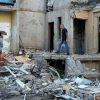
Military Conflicts at Historic High as US Signals Retreat from World Stage
The world is experiencing a surge in violence not seen since the post-World War II era. 2024 marked a grim new record: the highest number of state-based armed conflicts in over seven decades.
‘A Wake-Up Call from the Womb’—Indigenous People Rally for a Binding Plastics Treaty
As the sun peeked through the French Riviera clouds and a dozen reporters sipped orange juice aboard the WWF Panda Boat docked at Port Lympia, Frankie Orona, a Native American rights advocate from the Society of Native Nations in San Antonio, Texas, stunned the room into a moment of absolute stillness.
Artificial Intelligence Presents Risks and Opportunities for the Disabled
On June 10, the United Nations (UN) held a conference titled Artificial Intelligence for Inclusion: Strengthening Workforce Participation for Persons with Disabilities. This conference, which was organized by the Permanent Mission of Canada to the UN, featured a discussion by a panel of experts from various sectors, looking to shed light on the ways AI tools can be used to create inclusive workforces that maximize fairness and accessibility.
Vanuatu Anticipates New Era With Climate Change Reparations
To the outside world, a sea level rise of 34 cm (or slightly longer than a child’s ruler) may not seem dramatic, but it’s an existential threat to the Pacific island state of Vanuatu.
Beating Plastic Pollution in Our Food Systems
Each year, more than 12.5 million tonnes of plastic are used in agriculture alone, and another 37 million tonnes become food packaging. Very little gets recycled.
Chumbe Island: How Tanzania is Leading the Charge to Save Our Oceans
Under the surface of Tanzania’s turquoise waters, a miracle unfolds quietly every day.
Pacific Leaders Call for Bold Climate Action in Ocean Conference
“There is no climate action without ocean action,” President Hilda Heine of the Marshall Islands told reporters, as she and other representatives of Pacific island states reiterated that countries must honor their climate action agreements.« Previous Page — Next Page »


Want to keep up with the latest news and views from the Global South? Sign up for IPS Daily News Report for daily emails with our top stories about international development, climate change, gender and more. (Formerly IPS TerraViva since 1993).

The Week with IPS

NEXT STOP - SDGs
Tracking global progress towards a sustainable world
Tracking global progress towards a sustainable world
