Languages
Tuesday, August 4, 2026



News and Views from the Global South


South Korea‘s Democracy Renewed
On a resounding 79.4 per cent turnout, South Korean voters have delivered a clear mandate for change. Lee Jae-myung of the centrist Democratic Party of Korea (DPK) decisively won the 3 June election, becoming the country’s new president after a turbulent time for South Korean democracy.
Euro-visions: A Larger Global Role for the Euro?
In a recent speech, Christine Lagarde, president of the European Central Bank (ECB), articulated a clear desire for the euro to play a more significant role as an international currency.
From Deterrence to Disarmament: Global Advocates Call for Justice and Peace
Marking 80 years since the dawn of the nuclear age, peace advocates, diplomats, educators, and atomic bomb survivors from around the world gathered for the “Choose Hope” symposium on March 12–13, 2025, in Santa Barbara, California. Co-organized by the Nuclear Age Peace Foundation (NAPF) and Soka Gakkai International (SGI), the event was held at the Music Academy of the West.
The Cost of Conservation—How Tanzania Is Erasing the Maasai Identity
On the vast plains of Tanzania’s Ngorongoro Conservation Area (NCA), the sight of young Maasai men in bright shawls, wielding sticks as they herd cattle, has long symbolized peaceful coexistence with nature. These herders, moving in harmony with zebras and wildebeests, are inseparable from the landscape. But today, that very identity—nurtured for generations—is under siege.
Tanzania and Uganda: Bad Places To Be an Opposition Politician
In East Africa's Tanzania and Uganda, political tensions are rising as they prepare for the next elections. Tanzania goes to the polls in October 2025, while Uganda’s presidential and general elections will take place early in 2026.
Time to Rethink Health Financing: It’s Not Just a Public Sector Concern
As G7 leaders of the world’s wealthiest nations wrapped up their summit in Kananaskis June 16, a critical issue was absent from the agenda: the future of global health financing.
The Fallout from Losing a UN Job
Ten years ago, I lost more than a job. When my post was abolished, there was no warning, no closure, no golden parachute—just a quiet erasure. Overnight, I went from a UN professional with decades of service to an invisible statistic in a system that eats its own.
‘Live Facial Recognition Treats Everyone as a Potential Suspect, Undermining Privacy and Eroding Presumed Innocence’
CIVICUS discusses the dangers of live facial recognition technology with Madeleine Stone, Senior Advocacy Officer at Big Brother Watch, a civil society organisation that campaigns against mass surveillance and for digital rights in the UK.

Where the Thunder Dragon Breathes: Bhutan’s Bold Bet on Climate, Culture and Contentment
“I can’t get this anywhere else,” says Tshering Lhamo, a 29-year-old shopkeeper in Thimphu, as she gestures toward the clean Himalayan air outside her thangka shop. She once studied in Kuala Lumpur but came back to Bhutan for the peace—and the purity. Her friend, Kezan Jatsho, who has never left the country, adds, “I cherish the peace here,” even as many of their peers migrate abroad.
The Global Mental Health Crisis Surges Amid $200 Billion Funding Gap
Although access to mental health and psychosocial support services is considered a fundamental human right by the United Nations (UN), hundreds of millions of people experience limited or inadequate access to mental health and psychosocial support services.
Israel’s Attack on Iran and Its Potential Fallout
Israel’s attack on Iran’s nuclear facilities may be justified if one takes Netanyahu’s explanation at face value. I doubt, however, if he and Trump have fully considered the ominous regional ramifications of the attack and whether negotiations to limit Iran’s nuclear program would have led to much more positive results.
Regaining Progress on Birth Registration Is Critical to Child Protection
Registering the birth of a newborn, which is taken for granted in many countries, has profound lifelong repercussions for a child’s health, protection, and well-being. But after initially increasing this century, the global birth registration rate has declined in the past ten years, with some countries in the Pacific and Sub-Saharan Africa facing significant challenges. Embracing new registration technologies, increasing political will, and increasing parents’ understanding of its importance are paramount to reversing the trend.
Tanzania Champions Aquatic Foods at UN Ocean Conference in Nice
With less than six harvest seasons left to meet the Sustainable Development Goals (SDGs), the urgency to find transformative solutions to end hunger, protect the oceans, and build climate resilience dominated the ninth panel session at the 2025 United Nations Ocean Conference in Nice, France.
Ocean Protection is a Multi-Billion Dollar Opportunity
The services the ocean provides are the backbone of our collective health, wealth and food security, yet today just 2.7% of the ocean has been assessed and deemed to be effectively protected. In failing to establish adequate safeguards, not only are we condemning communities and ecosystems across the world to decline and collapse, we are also overlooking a significant economic opportunity.
Weaponizing Food Worsens Starvation
Wars, economic shocks, planetary heating and aid cuts have worsened food crises in recent years, with almost 300 million people now threatened by starvation.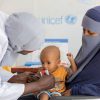
The Risk of Famine Looms Throughout Multiple Sudanese Counties
Over the course of 2025, the food security situation in Sudan has taken a considerable turn for the worst. Compounded by the Sudanese Civil War, millions of civilians face alarming levels of food insecurity and are at risk of experiencing famine. Humanitarian experts have described the situation in Sudan as being the worst hunger crisis in the world today.
Disaster Risk Reduction: The Insurance That Always Pays Off
Floods, earthquakes, and droughts are striking the wallets of the world harder than any other time in history. According to the Global Assessment Report on Disaster Risk Reduction, the cost of disasters is only growing, with annual expenditures exceeding 2.3$ trillion; accounting for over 2% of global GDP, and if represented as a nation, it would have the seventh largest GDP.
A Step Closer to Justice For Slain Journalist Daphne Caruana Galizia
“We didn’t want revenge. We want justice—justice for Daphne and for the [crimes exposed in] her stories.”
El Salvador: Bukele’s Authoritarianism Goes Global
At a White House meeting, presidents Nayib Bukele and Donald Trump exchanged praises and joked about mass incarceration while discussing an unprecedented agreement: the USA would pay El Salvador US$6 million a year to house deportees – of any nationality, potentially including US citizens – in its Centre for Terrorism Confinement (CECOT), a notorious mega-prison. This agreement marked the evolution of Bukele’s authoritarian model from a domestic experiment to an exportable commodity for strongmen worldwide.
Private Sector Key to Unlocking the Future of Development
Geopolitical tensions – from deepening rivalries between major powers to regional conflicts – have placed acute pressure on the international development agenda. Development assistance from major funders has been on the decline. The world is becoming more unpredictable.
Broadcasting Hope: Women’s Voice Radio Helps Afghan Teen Reclaim Her Future
Mehrangiz is a sixteen-year-old girl from Badakhshan, a province in the northeastern Afghanistan famed for its rubies, jewels, and a land of love and beauty.« Previous Page — Next Page »


Want to keep up with the latest news and views from the Global South? Sign up for IPS Daily News Report for daily emails with our top stories about international development, climate change, gender and more. (Formerly IPS TerraViva since 1993).

The Week with IPS

NEXT STOP - SDGs
Tracking global progress towards a sustainable world
Tracking global progress towards a sustainable world
