Languages
Thursday, October 15, 2026



News and Views from the Global South
Asia-Pacific
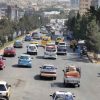
Small-Scale Enterprise Becomes a Beacon of Hope for Afghan Women
It was a sunny winter day in Kabul. I decided to step out and take a stroll around my surroundings. With my long dress and hijab on, I left the house. Since I was not too far from home, I did not need the company of a Mahram, a male guard, by my side – a strict restriction placed on Afghan women by the Taliban.
WMO Warns That Asia is Warming at Twice the Average Global Rate
On June 23, the World Meteorological Organization (WMO) released their State of the Climate in Asia 2024 report, detailing the acceleration of the climate crisis in Asia. The report underscores the rapid rises in temperatures recorded across the continent and their implications on economies, ecosystems, and livelihoods.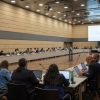
How Many Developing Countries Are Forging Paths to Climate Accountability at SB62
A packed conference room buzzing with the energy of over 300 national experts, negotiators, and implementers discussed their submissions of the First Biennial Transparency Reports (BTRs) during the 62nd session of the Subsidiary Body for Implementation (SB62) negotiations taking place in Bonn, Germany.
Women in Afghanistan Face a Total Lack of Autonomy
Nearly four years ago, the Taliban took control of Afghanistan and issued a series of edicts that significantly restricted women’s rights nationwide. This has resulted in a multifaceted humanitarian crisis, one marked by a notable decline in civic freedoms, stunted national development, and a widespread lack of basic services.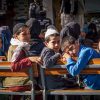
Afghanistan’s Children in Dire Need of an ‘Acceleration in Nutrition Action’
Afghanistan is burdened with one of the highest rates of child wasting globally, with 3.5 million children under five years suffering from a severe form of malnutrition, leaving them dangerously underweight and unable to grow or thrive.
Extreme Weather Will Place Toll on Asia’s Economies and Ecosystems, Says World Meteorological Organization
Asia is heading towards more extreme weather events with a possibility of heavy toll on the region’s economies, ecosystems, and societies, says the World Meteorological Organization (WMO).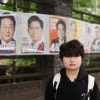
South Korea‘s Democracy Renewed
On a resounding 79.4 per cent turnout, South Korean voters have delivered a clear mandate for change. Lee Jae-myung of the centrist Democratic Party of Korea (DPK) decisively won the 3 June election, becoming the country’s new president after a turbulent time for South Korean democracy.
Where the Thunder Dragon Breathes: Bhutan’s Bold Bet on Climate, Culture and Contentment
“I can’t get this anywhere else,” says Tshering Lhamo, a 29-year-old shopkeeper in Thimphu, as she gestures toward the clean Himalayan air outside her thangka shop. She once studied in Kuala Lumpur but came back to Bhutan for the peace—and the purity. Her friend, Kezan Jatsho, who has never left the country, adds, “I cherish the peace here,” even as many of their peers migrate abroad.
Regaining Progress on Birth Registration Is Critical to Child Protection
Registering the birth of a newborn, which is taken for granted in many countries, has profound lifelong repercussions for a child’s health, protection, and well-being. But after initially increasing this century, the global birth registration rate has declined in the past ten years, with some countries in the Pacific and Sub-Saharan Africa facing significant challenges. Embracing new registration technologies, increasing political will, and increasing parents’ understanding of its importance are paramount to reversing the trend.
Broadcasting Hope: Women’s Voice Radio Helps Afghan Teen Reclaim Her Future
Mehrangiz is a sixteen-year-old girl from Badakhshan, a province in the northeastern Afghanistan famed for its rubies, jewels, and a land of love and beauty.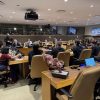
Victims of Japan’s Eugenic Protection Law Sterilized and Mutilated Without Consent
Victims of Japan's costly Eugenic Protection Law took to the stage sharing their life stories, offering their tragedies of sterilization and mutilation, in return for the hopes of “a society without discrimination”. At a side event on International Sharing of the Experiences and Lessons of Japan's Former Eugenic Protection Law held on June 10th, The Conference of Parties on the Convention of the Rights of People with Disabilities Discussed the struggle for Anti eugenic ideology. Hosted by the Japan Disability Forum along with several legal defence teams for the victims, an outline of ideology, policy, and retribution was displayed, in an attempt to fight against “eugenics-based discrimination”.
Biggest-Ever Aid Cut by G7 Members a Death Sentence for Millions of People
Aid cuts could cost millions of lives and leave girls, boys, women and men without access to enough food, water, education, health treatment. G7 countries are making deliberate and deadly choices by cutting life-saving aid, enabling atrocities, and reneging on their international commitments
Atoll Nation of Tuvalu Faces Climate Existential Crisis, Frustration With Slow Funding
Prime Minister of Tuvalu, Feleti Teo, describes himself as an optimist—despite the existential crisis his atoll nation faces with climate change-induced sea level rise and frustration with existing international financial mechanisms to fund adaptation and mitigation.
Vanuatu Anticipates New Era With Climate Change Reparations
To the outside world, a sea level rise of 34 cm (or slightly longer than a child’s ruler) may not seem dramatic, but it’s an existential threat to the Pacific island state of Vanuatu.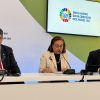
Pacific Leaders Call for Bold Climate Action in Ocean Conference
“There is no climate action without ocean action,” President Hilda Heine of the Marshall Islands told reporters, as she and other representatives of Pacific island states reiterated that countries must honor their climate action agreements.
Pacific States, Territories Gift the World its ‘Largest Conservation Project’
While the island states in the Pacific may be modest, the ocean that surrounds them represents a huge oceanic state—an area equivalent to the entire European Continent.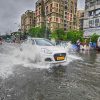
What Can We See About Climate Change in Macroeconomic Data?
Year by year researchers improve and deepen our understanding of economic activity. The primary example, and probably the most commonly used, is the detailed data and analysis available on gross domestic product (GDP).
UN Ocean Decade vs. Coastal Reality: ‘They Took Our Sea,’ Say Vizhinjam Fishworkers
As the UN Ocean Conference (UNOC) approaches, bringing renewed attention to SDG 14 (Life Below Water) and the rights of ocean-dependent communities, India’s Vizhinjam coast highlights the environmental injustice and human cost of unchecked coastal development.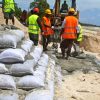
South-West Pacific Communities Threatened by Ocean Heat, Sea-Level Rise
The South-West Pacific experienced unprecedented warming in 2024, according to a World Meteorological Organization (WMO) report released today (June 5)—threatening islands in a region where half the population lives close to the coast.
Kazakhstan’s Path From Tragedy to Tolerance: Interfaith Dialogue, Peace, and Disarmament
On the windswept steppe west of Astana, President Kassym-Jomart Tokayev led a solemn ceremony this week to mark Kazakhstan’s Day of Remembrance for the Victims of Political Repressions and Famine—an annual reflection on one of the nation’s darkest chapters.
Noor Mukadam Got Justice, But Why Does Pakistan’s Legal System Fail Its Women?
“It’s brought me some closure,” said Shafaq Zaidi, a school friend of Noor Mukadam, reacting to the Supreme Court’s May 20 verdict upholding both the life sentence and death penalty for Noor’s killer, Zahir Jaffer.« Previous Page — Next Page »





The Week with IPS

NEXT STOP - SDGs
Tracking global progress towards a sustainable world
Tracking global progress towards a sustainable world
