Languages
Sunday, October 4, 2026



News and Views from the Global South
Asia-Pacific

Cambodia at a Tipping Point: Authenticity Makes Way for Progress
Modernity is arriving rapidly in Cambodia, observes journalist Kris Janssens (48), who has lived and worked in the country since 2016. The predominantly young population is eager to move forward, embracing technology over traditional agriculture or fishing. Can Cambodians unite their country's authentic soul with their aspirations for progress?
Kashmir Frontier Woman Leads the Way in Breaking Down Patriarchy
Smelling the toxic smoke coming from burned powder kegs and helplessly watching fields turn into smoke and ash is traumatic. Rushing to the government's safe houses and leaving your homes, belongings and cattle behind whenever the armies of India and Pakistan trade fire is inexplicable. Then came climate-change-induced weather unpredictability.
Thailand’s LGBTQI+ Rights Breakthrough
At the height of 2024 Pride season, decades of civil society campaigning came to fruition in Thailand. With 130 votes for and only four against, on 18 June the Senate passed the Marriage Equality Bill. With a few strokes of the pen, the bill tweaked the language of the Civil and Commercial Code, replacing gendered references such as ‘man’ and ‘woman’ with gender-neutral ones such as ‘persons’ and ‘spouses’. It now goes for formal assent to King Maha Vajiralongkorn and will take effect 120 days after publication in the official bulletin.
Women Warriors Winning Fight to Bring Back Indigenous Food Traditions
As the school lunch bell goes off, 40 eager little bodies—41 if you count the school dog—burst out onto the veranda. Awaiting them are a stack of steel platters, into which will be ladled a nutritious and delicious lunch, all of it indigenous cuisine.
New Caledonia: Time to Talk about Decolonisation
The violence that rocked New Caledonia last month has subsided. French President Emmanuel Macron has recently announced the suspension of changes to voting rights in the Pacific island nation, annexed by his country in 1853. His attempt to introduce these changes sparked weeks of violence.
Conflict Deprives Children of Education in Northern Syrian IDP Camps
Twelve-year-old Walid Al-Hussein, displaced from the city of Kafranbel to a camp for internally displaced people (IDP) in northern Idlib on the border with Turkey, has given up his dream of becoming a lawyer. "The distance of schools from our home (in the camp) made me leave education and give up my dream and my mother's dream of becoming a lawyer who defends the rights of the oppressed," Al-Hussein told IPS.
Sawantwadi’s Traditional Handmade Toys Struggle for Survival
Sawantwadi in Maharashtra, on the western coast of India, bordering Goa, has always been known for its wooden toys. A picturesque town amid hills and lush greenery, Sawantwadi retains an old-world charm to this day. The regal Sawantwadi Palace holds pride of place, with colleges, schools, and temples cloistered around the periphery of the lake, which was once an extension of the royal grounds. In the centre of the town is the Ubha Bazaar, or Hanging Market, which houses rows of shops selling the iconic wooden toys that are a hallmark of Sawantwadi.
Bangladesh Can Boost Growth & Climate Resilience by Investing in Women
Bangladesh has made major gains for its population, the world’s eighth largest with more than 170 million people. Per capita incomes, one of the best measures of broad economic well-being, have risen seven-fold in the past three decades while poverty has been reduced to a fraction of former levels.
1,000 Days—Afghan Girls’ Voices Campaign Enters Second Phase
The global community is marking a tragic milestone for human rights, children's rights, and girls' rights, as it has been 1,000 days since girls were banned from attending secondary school in Afghanistan. The ban has wiped out decades’ worth of education and development gains, as approximately 80 percent of school-aged Afghan girls and young women are out of school.
Indignity, Disease, Death—The Life of a Sewer Worker in Pakistan
A dark head emerges, followed by the torso. The balding man heaves himself up, hands on the sides of the manhole, as he is helped by two men. Gasping for breath, the man, who seems to be in his late 40s, sits on the edge, wearing just a pair of dark pants, the same color as the putrid swirling water he comes out from.
Lawmakers Deliberate on ICPD30, Water Security at Tajikistan Conference
It's been 30 years since the International Conference on Population and Development Programme of Action (ICPD30) was adopted in Cairo, transforming policy and thinking on population and development issues.
Climate Change, Pollution Push Karnaphuli Fishers Out of the Profession
Jishuram Das, a sexagenarian who was born in Jelepara, located in Chattogram, has been catching fish from the Karnaphuli River since his childhood. But nowadays, he often sits idle without going to catch fish, as their catches have drastically fallen.
Explainer: What You Need to Know About Climate Change and Blue Carbon
The area where land meets the sea, known as coastal ecosystems, could be the key to reducing the effects of climate change. What is blue carbon? Blue carbon refers to the carbon dioxide (CO2) stored within marine or coastal ecosystems worldwide. These ecosystems include coastal plants such as mangroves, seagrasses, and salt marshes, which trap CO2 in their seabeds.
India’s Election: Cracks Start to Show in Authoritarian Rule
India’s Hindu nationalist strongman Narendra Modi has won his third prime ministerial term. But the result of the country’s April-to-June election fell short of the sweeping triumph that seemed within his grasp. Modi’s Bharatiya Janata Party (BJP) has shed seats compared to the 2019 election, losing its parliamentary majority. Modi remains prime minister thanks to coalition partners. It’s a long way from the 400-seat supermajority Modi proclaimed he wanted – which would have given him power to rewrite the constitution.
Explainer: How India’s Political Parties Neglect Climate Change
As India's 968.8 million voters were gripped by election fever, the worst-ever heat wave held the country in its clutches.
Commonwealth Secretary-General Calls for Concrete Finance Commitments for Small Island Developing States
Commonwealth Secretary-General Baroness Patricia Scotland is calling for concrete commitments to climate finance that will acknowledge the multi-dimensional vulnerability faced by the world’s small island developing states (SIDS).
UN, International Partners Coordinate Aid to Papua New Guinea Landslide Disaster
As the communities of Enga province in Papua New Guinea contend with the landslide that has devastated the residents of Yambani, the United Nations and its partners have been active on the ground addressing the immediate humanitarian needs, according to agencies.Papua New Guinea’s prime minister, James Marape, says “extraordinary rainfall” and weather pattern changes were responsible for multiple disasters in the Pacific Island nation this year, including the landslide last Friday.
Explainer: Why GLOFs Are Growing Concern in the Himalaya
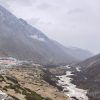
Phu Chhettar Sherpa, who worked as an icefall doctor (a Sherpa who fixes ropes for climbers) for seven years from 2015 to 2021 on Mt. Everest, vividly recalls his fear of possible flash floods after the huge earthquake in Nepal in 2015.
Small Island Nations Demand Urgent Global Action at SIDS4 Conference
“This year has been the hottest in history in practically every corner of the globe, foretelling severe impacts on our ecosystems and starkly underscoring the urgency of our predicament. We are gathered here not merely to reiterate our challenges, but to demand and enact solutions,” declared Antigua and Barbuda Prime Minister Gaston Brown at the opening of the Fourth International Conference on Small Island Developing States on May 27.
Slovakia PM Assassination Attempt Sparks Journalists’ Safety Fears
Fears for the safety of journalists in Slovakia are growing in the wake of an assassination attempt on the country’s prime minister, which some politicians are blaming in part on local independent media. Relations between some media and members of the governing coalition, led by Prime Minister Robert Fico’s Smer party, have become increasingly tense since the government came to power in October last year.
Empowering Women Could Boost Fertility, & Economic Growth in Japan and Korea
Women in Japan and Korea face especially tough challenges juggling career and family. Many young women witness their peers encountering promotion delays after marriage and childbirth, dealing with problems splitting housework responsibilities, and having difficulty finding adequate childcare.« Previous Page — Next Page »


The Week with IPS

NEXT STOP - SDGs
Tracking global progress towards a sustainable world
Tracking global progress towards a sustainable world
