Languages
Monday, October 5, 2026



News and Views from the Global South
Asia-Pacific

Empowering Women Could Boost Fertility, & Economic Growth in Japan and Korea
Women in Japan and Korea face especially tough challenges juggling career and family. Many young women witness their peers encountering promotion delays after marriage and childbirth, dealing with problems splitting housework responsibilities, and having difficulty finding adequate childcare.
More Diversified Trade Can Make Middle East & Central Asia More Resilient
Dislocations from the pandemic, geoeconomic fragmentation, and Russia’s war in Ukraine have shifted world trade dynamics. While this has created challenges, the redirection of trade has also generated new opportunities, particularly for the Caucasus and Central Asia.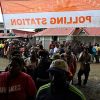
Solomon Islands: A Change More in Style than Substance
There’s change at the top in Solomon Islands – but civil society will be watching closely to see whether that means a government that’s grown hostile will start doing things differently.
The World Must Not Abandon the Mothers of Gaza
As millions of children and families celebrate their mothers, my thoughts turn to the pregnant women and new mothers our teams at UNFPA, the United Nations sexual and reproductive health agency, support in more than 130 countries around the world. And I hold in my heart all those who, tragically, will never live to see their newborns.
LDCs Need Concessional Grants, Not Loans, Say Experts
Olaide Bankole was born and raised in Nigeria, and he observed how climate change was evident in the country with temperature rises and rainfall variability and how drought, desertification, and sea level rises have been affecting its people. He is also aware of how rising sea levels threaten southern Nigerian cities like Lagos and coastal areas, increasing their vulnerability to flooding and waterborne diseases.
‘I Couldn’t Remain Silent’: Son Fights for Uyghur Journalist’s Release from Chinese Prison
The last time Bahram Sintash saw his journalist father was in 2017. Qurban Mamut, an influential Uyghur editor had come to the United States for a visit but upon his return to Xinjiang in northwest China, he disappeared.
Transgender Health Rights Boosted by Hospitals’ ‘Separate Room’ Policy
Transgender people and civil society organizations have welcomed the decision of the chief minister in Khyber Pakhtunkhwa, Pakistan, to allocate separate rooms in hospitals for the transgender community so they can avail themselves of uninterrupted healthcare. “We demand that all provinces follow suit and announce facilities for more than 500,000 transgender people in the country,” Farzana Shah, president of the Khyber Pakhtunkhwa (KP) Transgender Association, told IPS.
Lao PDR Lawmakers Meet to Further ICPD25 Programme of Action
A recent workshop of lawmakers heard that targeted interventions would be necessary to meet the International Conference on Population and Development (ICPD), its Programme of Action (PoA), and Lao PDR's national commitments to ICPD25 at the Nairobi Summit 2019.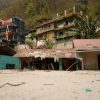
Climate Crisis in Mountains: Borderless Struggle for Frontline Communities
For the last three years, Sambhunath Guragain has been waking up every morning to a view he doesn't want to see: discarded agricultural land where he and his family used to grow food, including rice, but the flood in 2021 changed everything. “We don’t have any crops now, but we are farmers,” Guragain said in November 2021, while looking towards a quietly flowing Melamchi river. This was six months after the massive flash flood in Helambu-Melamchi in Sindhupalchowk district in Nepal. After three years, the situation hasn’t changed.
Afghan Women’s Voices Stifled as Taliban Tightens Media Controls
Since the Taliban regained control of Afghanistan in 2021, the space for women in the public sphere has significantly narrowed, with successive orders further restricting their presence in various sectors, including the media.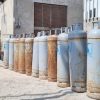
Fine, Sanctions, or Waiver: Iranian Gas Will Come at a Price for Pakistan
When Iranian President Ebrahim Raisi visits Pakistan this week (April 22, 2024), experts say the two issues topmost on his mind that he will want to discuss with his Pakistani counterpart, President Asif Ali Zardari, will be border security and the Iran-Pakistan gas pipeline.
Pioneering Digital Initiative Empowers Pacific Islands to Tackle Climate Disasters
Winning a battle for survival requires understanding the opponent. And, for the peoples of 22 island nations and territories scattered across more than 155 million square kilometres of Pacific Ocean, the volatility and wrath of the climate are their greatest threats.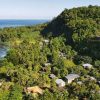
Climate Governance, Adaptation, and Digital Solutions
Let's take a moment to reflect on a critical question: In the decade since the Third International Conference on Small Island Developing States (SIDS3), what tangible progress have we made in addressing the challenges faced by our SIDS?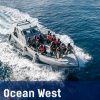
China, India & Sri Lanka Embroiled in the Geo-Politics of the Indian Ocean
Unfortunately, a rivalry that should not exist and did not exist historically between China and India is being stoked by the media and some policy makers, especially in the West. It is not too difficult to discern the Machiavellian geo-strategic objectives of this complex game plan.
Civil Registration is Shaping World’s Largest Election Year With 76 Nations Going to the Polls
Over four billion people will take to the polls in 2024 as 76 countries are set to hold elections. In Asia, this includes populous countries such as Bangladesh, India, Indonesia, Pakistan, and Russia.
Can Preserving Goa’s Khazans Address Climate Threats?
Growing up in a khazan ecosystem, the traditional agricultural practice followed in the south-western Indian state of Goa, Elsa Fernandes would love sitting in a koddo, a woven bamboo structure for storing paddy. Her family members would pour paddy around her and with the growing pile, she would rise to the top and then jump down with joy.
Tensions with China Drive Investors Towards Vietnam
In recent months, several European representatives embarked on trade missions to Vietnam. German President Steinmeier visited Hanoi in January. The Netherlands sent Prime Minister Mark Rutte, with the Dutch royal couple, King Willem-Alexander and Queen Máxima, soon to follow suit. Notably, the Netherlands stands as the most significant European investor in Vietnam.
India’s Farmers Could Use Better Monsoon Forecasts
Agriculture in India need not 'gamble' with the monsoons if accurate weather and climate forecasts are proactively made available to farmers, according to the results of a new experimental study conducted by the University of Chicago.
Food Security Issues in Asia
Asia has about 60% of the World’s population but only about a third of the world’s arable land. This region additionally has some of the most economically active countries with increasing urbanisation and a growing middle class. Asia is also home to some of the most affected countries by climate change. For these and other reasons, food security in Asia affects global food security through many inter-links. A new book, “Food Security Issues in Asia”, edited by Paul Teng and with multiple authors, explicates many of the key issues continuing to cause food insecurity in Asia as well as discourses on exciting developments. Through its twenty-seven chapters, the book, published by World Scientific Publishers Singapore was launched on 27 March 2024 in Singapore by Ambassador Ong Keng Yong, former ASEAN Secretary General.
Climate Change: the Partnership with Asian & Pacific Small Island Developing States
Stories of growing vulnerability make regular headlines across all Asian and Pacific small island developing States (SIDS). With tens of thousands of people displaced every year due to climate and disaster-related events, there are continued concerns about the costs of climate-related hazards.
Why Farmers in India and Pakistan Are Shifting to Natural or Regenerative Farming
Nine years ago, farmer Sultan Ahmed Bhatti gave up tilling the soil and using most fertilizers and pesticides on his farm in Doober Bhattian, Pakistan. His brothers at first derided him. But soon, his first experiment with growing wheat on raised beds was a runaway success. “We produced more wheat than what we grew on ploughed, flat land,” he said.« Previous Page — Next Page »


The Week with IPS

NEXT STOP - SDGs
Tracking global progress towards a sustainable world
Tracking global progress towards a sustainable world
