Languages
Monday, October 12, 2026



News and Views from the Global South
Europe

Migrant’s Compact Mischaracterized for Political Reasons
The fact that a handful of countries have indicated their intention not to come to Marrakesh to endorse the compact signifies how the issue of migration has been politicized and become a political flashpoint.
US Blasts Migrant’s Compact – Even as 150+ Countries Embrace it
As UN delegates met in Morocco to adopt a global compact to protect the rights and safety of refugees and migrants (GCM), the Trump administration launched a blistering attack condemning it as a violation of national sovereignty.
Citizen Action in Europe’s Periphery: “An Antidote to Powerlessness”
Unjustified extra charges on drinking water, exploitation of labourers in the countryside and uncontrolled property speculation. In Europe’s periphery, citizens' initiatives show how all too prevalent modern-day ailments can be tackled successfully. More often than not with the help of artists.
‘Antimicrobial Resistance Knows No Boundaries’
European Union officials and global health bodies have called for help for poorer countries as growing resistance to antibiotics threatens to become a ‘global health tragedy’ and jeopardises Sustainable Development Goals in some parts of the world.
Why I Became a Disaster Expert
Thirty years ago, a powerful earthquake ripped through my home country of Armenia, leaving 25,000 dead, 500,000 homeless and annihilating an estimated 40 percent of the national economy.
Editorial Changes at Cumhuriyet: the Loss of a Major Independent Voice in Turkey?
Censorship, controversial judicial proceedings and imprisonment: such is the current risk run by independently-thinking journalists in Turkey.
“Governments are Starting to See that Organic Food Policy Works”
Many countries and farmers around the world are not readily making the switch to organic farming. But the small Himalayan mountain state of Sikkim, which borders Tibet, Nepal and Bhutan, is the first 100 percent organic farming state in the world.
Did post-Soviet Russians drink themselves to death?
Although initially obscured by The Economist, among others, the sudden and unprecedented increase in Russian adult male mortality during 1992-1994 is no longer denied. Instead, the debate is now over why? Having advocated ‘shock therapy’, a ‘big bang’, ‘sudden’ or rapid post-Soviet transition, Jeffrey Sachs and others have claimed that the sudden collapse in Russian adult male life expectancy was due to a sudden increase in alcohol consumption, playing into popular foreign images of vodka-binging Russian men.
Caribbean-American Artist Blazes in New Show
When Jean-Michel Basquiat’s paintings were shown in France a few years ago, a visitor overheard a teenager remarking that the artwork seemed to have come from “a very angry little boy”.
An Urgent Need to Turn Down Rhetoric Against Migrants & Refugees
Migration has become a focus of debate in recent years. From United States President Donald Trump’s vehemently anti-migrant and anti-Muslim rhetoric to Denmark’s new ‘ghetto laws’, the language has become increasingly heated.
Global Warming Threatens Europe’s Public Health
Climate change and health experts are warning of the growing threat to public health in Europe from global warming as rising temperatures help potentially lethal diseases spread easily across the continent.
International Law Experts Warn Europe’s ‘Pull Back’ of Migrants is Illegal – Part 2
“The Italian and other European authorities are engaging – on the migration issue – in a policy which has the foreseeable results of numerous deaths.” It is a grim warning from expert on international law, refugees and migration issues, and member of the Global Legal Action Network (GLAN), Itamar Mann.
Climate Change Becomes a Reality Check for the North
“This season, the month of May was particularly hot and dry,” says Leo De Jong, a commercial farmer in Zeewolde, in Flevopolder, the Netherlands. Flevopolder is in the province of Flevoland, the largest site of land reclamation in the world. Here a hectare of land costs up to 100,000 Euros. “At the moment, we are spending between 20,000 and 25,000 Euros per week on irrigation.”
Crisis alla Turca
The meltdown of the Turkish currency over a matter of a few days in August 2018 has elicited various reactions and interpretations both at home and abroad, and created widespread concern that it could mark the beginning of a series of crisis in emerging economies exposed to a reassessment of risks by international investors and lenders as well as a rapid normalization of monetary policy in the United States.
I am a Nigerian Migrant, Struggling to Live the ‘European Dream’ – Part 1
Jim*, a 34-year-old Nigerian, has been living in Italy for the last eight years. And even though he has a legal permit to reside in the country, he is yet to find steady employment. Instead, for three days a week you will find him begging for alms in front of a supermarket in Rome.
Mediterranean Migrant Arrivals Reach 61,517 in 2018; Deaths Reach 1,524
IOM, the UN Migration Agency, reports that 61,517 migrants and refugees entered Europe by sea in 2018 through 12 August. This compares with 118,436 arrivals across the region through the same period last year, and 265,640 in 2016.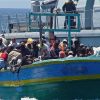
Save the Children Warns Untraceable Minors in Italy May be Trafficked
Thousands of migrant minors placed in reception facilities upon arrival in Italy, as a first step in identification and later relocation into other structures for asylum seekers, are untraceable and feared trafficked.
Global Compact & the Art of Cherry-Picking Refugees
When Secretary-General Antonio Guterres was asked about the legality of the UN’s much-ballyhooed Global Compact for Migration, he was initially evasive in his response. “I’m not a lawyer”, he told reporters July 12, “and I presume that this question might be better asked from a lawyer”.
‘Agromafia’ Exploits Hundreds of Thousands of Agricultural Workers in Italy
In Italy, over 400,000 agricultural labourers risk being illegally employed by mafia-like organisations, and more than 132,000 work in extremely vulnerable conditions, enduring high occupational suffering, warns the fourth report on Agromafie and Caporalato.
Benin – the Launchpad and Home for African Migrants
Last year, Mohamed Keita returned home to Mali after living and working in Libya for six years. Eighteen months ago he was arrested by security forces in Libya as he and other migrants tried to cross the Mediterranean Sea to Europe via a makeshift boat. After spending a traumatising six months in jail, he was transported back to Mali. But as soon as he arrived he immediately knew that it would be difficult for him to stay put.
Immigration, Lot of Myths and Little Reality
According to the latest statistics, the total flow of immigrants that reached Europe so far in 2018 is 50.000 people, compared with 186,768 last year, 1,259,955 in 2016 and 1,327,825 in 2015. The difference between reality and perceptions is so astonishing, we are clearly witnessing one of the most brilliant manipulations in history.« Previous Page — Next Page »





The Week with IPS

NEXT STOP - SDGs
Tracking global progress towards a sustainable world
Tracking global progress towards a sustainable world
