Languages
Sunday, November 8, 2026



News and Views from the Global South
Europe
BALKANS: EU Abandons Boundaries, Serbia Wants Them
As the European Union (EU) drops boundaries between its countries and its people, Serbia plans to introduce new ones against its disputed southern province, Kosovo.SLOVAKIA: Governance Gets Ever Messier
The disputes within Slovakia's governing coalition have almost caused the government's collapse. Additional trouble can be expected, but the powerful Prime Minister's extraordinary popularity and the weakness of the opposition are holding the coalition together.CHALLENGES 2007-2008: EU Rich in Events, Poor on Results
For the European Union, 2007 was a year rich in events, but poor on results. Next year promises to be as turbulent as this one, and probably as unremarkable in its outcome.SPAIN: Tough Blow for Weakened ETA
A high court in Spain sentenced 14 leaders of political groups to prison Wednesday on the grounds that they also held positions of responsibility in the Basque separatist group ETA.UKRAINE: The Orange Look Gets Another Chance
With the appointment of Yuliya Timoshenko as Prime Minister of Ukraine, the pro-Western 'Orange' forces have been granted a second opportunity to prove that their political programme is stronger than narrow power ambitions.RUSSIA: The Meat of the Polish Dispute is Politics
When Russia agreed to lift its ban on import of Polish meat and dairy products, it was something of a diplomatic breakthrough.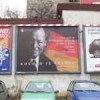
SERBIA: Too Late, Billboards Show a Way
The Serbian government has began an unusual billboard campaign to mobilise its people under the slogan 'Kosovo is Serbia' ahead of crucial developments that might lead to independence of the southern, ethnic Albanian populated province.UKRAINE: At Odds with Russia over “Genocide”
Ukrainian President Viktor Yushchenko has been spearheading the country's efforts to see the world recognise Ukraine's 1932-1933 famine as an "act of genocide against the Ukrainian people." Russia begs to disagree.SERBIA: The Less You Can, The More You Pay
So what did you pay for it? Before they knew it, that question was no more the usual small talk among Serbs.HEALTH: Europe 'Forgetting' AIDS
AIDS has become a "forgotten disease" in the European Union, according to the man in charge of the bloc's public health policies.BULGARIA: Street Barricades Fail to Save Nature
When the Bulgarian Parliament adopted the final list of nature sites to be protected, it excluded precisely those areas that are most spectacular, and most interesting for tourism developers.BALKANS: Who Remembers Yugoslavia?
The meeting of several hundred World War II veterans last weekend would not have meant much, had it not been convened in a town that symbolises so many things about a country that no longer exists, Yugoslavia.KOSOVO: Ground Realities Make Talks Insignificant
The Troika mediating between Serbia and its breakaway southern province Kosovo has had to acknowledge that its 120-day mediation period has really led nowhere.RUSSIA: Putin Triumphs as Party
Notwithstanding accusations of vote manipulation and intimidation of opposition groups, the Dec. 2 vote for the state Duma has changed the political scenario in Russia: the Kremlin-backed United Russia has parliamentary majority, both the Communist and Liberal parties have strengthened their positions, and the Social Democrats - A Just Russia - enter the Duma for the first time.KYRGYZSTAN: Election Hurdles Leave Sparse Field
For the first time in the modern history of Kyrgyzstan, the parliament, called the Jogorku Kenesh, will be formed under a proportional system in which voters select a party rather than cast ballots for individual candidates.RUSSIA: Putin Stronger After ‘Farcical’ Election
The Kremlin-backed United Russia party overwhelmingly won Sunday's parliamentary elections, paving the way for President Vladimir Putin to remain in control after his term expires next May.
RUSSIA: Little Suspense Ahead of Election Day
Russians are voting this Sunday in legislative elections that President Vladimir Putin's United Russia party is expected to win by a landslide, and which opposition parties, human rights groups and academics say have already been marred by crackdowns on opposition parties and voter coercion.ROMANIA-BULGARIA: New MEPs Change Face of EU Parliament
Half a year after Bulgaria elected its representatives to the European Parliament (EP), Romania has voted in its first European elections. The vote in Romania marked a defeat of populist forces and coincided with the collapse of the far- right block in the EP.UKRAINE-RUSSIA: Gloomy Prospects for Black Sea
The recent spill of more than 1,000-tonnes of fuel oil into the Black Sea could have severe long-term environmental consequences say ecologists, stressing that authorities are busy trading accusations instead of stepping up cleaning efforts.MACEDONIA: Tensions Simmer After Police Raid
At first sight, the ethnically mixed city of Tetovo, 40 kilometres northwest of the Macedonian capital of Skopje, seems like an average, if economically depressed, town.POLAND: Gov’t Vows Socially Conscious Liberalism
Prime Minister Donald Tusk's newly formed cabinet in Warsaw has promised a new Poland in the wake of two years of staunch conservatism, but his party’s liberal enthusiasm will have to adapt to pragmatic considerations.« Previous Page — Next Page »





The Week with IPS

NEXT STOP - SDGs
Tracking global progress towards a sustainable world
Tracking global progress towards a sustainable world
