Languages
Monday, October 5, 2026



News and Views from the Global South
Global

UN Needs to Protect its Vital, Yet Underfunded, Human Rights Work
Major-power cutbacks and delayed payments amidst conflict and insecurity are testing the very principles and frameworks upon which the international human rights infrastructure was built nearly 80 years ago.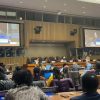
Speaking Out for SRHR: Why Lived Experiences Must Shape Policy and Practice
Just a month ago, I found myself in a hospital, anxiously waiting for my son to be attended to. As we sat quietly in one of the waiting rooms, an emergency case was wheeled in — a young woman, barely out of her teens. Her face contorted in visible pain. Her dress was soaked with blood, which had begun to pool beneath the wheelchair and trickle onto the floor.
World Press Freedom Day 2025
Call to Protect Elections from AI ‘Information Pollution’
The prevalence of artificial intelligence (AI) is changing the flow and access of information, which has a wider influence on how freedom of expression is affected. National and local elections can demonstrate the particular strengths and vulnerabilities that can be exploited as AI is used to influence voters and political campaigns. As people grow more critical of institutions and the information they receive, governments and tech companies must exercise their responsibility to protect freedom of expression during elections. 
New Forms of Power-Sharing are Needed to Uphold Rights of Indigenous Peoples
A UN groundbreaking report published in 1982 laid the legal ground for defining the inalienable rights of Indigenous Peoples. The document, written by José Martínez Cobo, a United Nations Special Rapporteur, analyzed the complex discrimination patterns faced by Indigenous Peoples.
Does the UN’s Restructuring Negotiations Leave the Staff Union Out in the Cold?
The UN’s proposed plans for restructuring the world body, currently under discussion at the highest echelons of the Secretariat, have provoked a protest from the UN Staff Union (UNSU) in New York which claims it is being left out of the ongoing negotiations.
Third LDC Future Forum Concludes with Ambitious Plans to Build Resilience in Least Developed Countries
The 3rd LDC Future Forum, held from April 1-3, 2025, in Zambia, brought together global leaders, policymakers, and experts to address the urgent need for resilience in the world’s 44 Least Developed Countries (LDCs).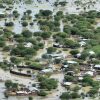
Uncertainty Looms for Kenya Following Tense IMF/World Bank Spring Meetings
Reflecting on this year’s IMF/World Bank Spring Meetings, one word lingers in my mind: uncertainty. The shifting global geopolitical landscape loomed large—none more so than the US administration’s initial threat to withdraw from the Bretton Woods institutions.
A Feminist Future for the UN: Why the Next Secretary-General Must Champion Civil Society
Climate change is threatening to engulf small island states such as Maldives and the Marshall Islands. Gender apartheid is still practiced in theocratic states such as Afghanistan and Saudi Arabia. War crimes and genocide are taking place in the Occupied Palestinian Territories and Sudan.
World Press Freedom Day 2025
Global Press Freedom Index Falls to Critical Low
Global press freedom across the world is at a “critical moment,” campaigners have warned, as a major index mapping the state of global press freedom hits an unprecedented low.

Press Freedom Is Being Buried but How Many Really Know or Care?
Pressures on the press are piling up. Like an avalanche gaining speed yet unnoticed by most people in the valley below, freedom of the press is being relentlessly trampled over - despite the valiant efforts of a few.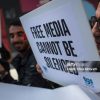
Trump’s First 100 Days Portend Long-Lasting Damage to Press Freedom
Press freedom is no longer a given in the United States 100 days into President Donald Trump’s second term as journalists and newsrooms face mounting pressures that threaten their ability to report freely and the public’s right to know.
US Cutbacks Lead to Growing Anxiety Among UN Staffers–& its Impact on Mental Health
The Trump administration’s on-again-off-again threats against the United Nations, and US withdrawals from several UN agencies aggravated further by financial cutbacks, have left most staffers with growing apprehension and uncertainty about their future--- and their mental health.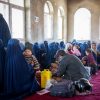
World Immunization Week Highlights the Urgency of Global Vaccine Access
For 2025, the theme of World Health Immunization Week (24-30 April), “Immunization for All is Humanly Possible”, emphasizes the need to eradicate disparities in access to vaccines, particularly for children. By encouraging governments to implement vaccination programs at the local and national levels, the World Health Organization (WHO) seeks t0 ensure worldwide access to life-saving vaccines.
The World Bank, at 80, and the True Goals of Multilateral Cooperation and Global Development
The Rogun Dam in the mountains of Southern Tajikistan, if ever completed, would be the tallest dam in the world. Late last year, the World Bank committed almost $3 billion to finance its development, claiming the project would benefit locals.
Germany’s Role in International Security: Time to Match Words with Deeds
For the first time ever in its history, the United Nations Peacekeeping Ministerial (PKM) will take place in Berlin from 13 to 14 May. The aim of the meeting is to discuss the future of UN peace missions. These biennial meetings serve as a gauge of the continuing political support for such missions, which are, of course, just one of the tools in the UN’s comprehensive ‘toolkit’ for handling conflict — alongside general conflict prevention, mediation missions and peacebuilding measures.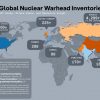
If the US Nuclear Umbrella Collapses, Will it Trigger a Euro-Bomb?
The Trump administration’s hostile attitude towards Western Europe—and the threat to pullout of the 32-member military alliance, the North Atlantic Treaty Organization (NATO) – signifies the danger of losing the longstanding protection of the US nuclear umbrella over Europe. Jana Puglierin, director of the German office of the European Council on Foreign Relations, was quoted as saying: “Trump may, or may not, want to leave NATO officially, but he has every means to undermine NATO”.
Reclaiming Equity: Why G20 Must Center Women, Children & Adolescents in the UHC Agenda
As the G20 Health Working Group convened in KwaZulu-Natal under South Africa’s presidency earlier this year, a central question echoed across plenaries: How can we accelerate universal health coverage (UHC) in an increasingly unequal world?
Financing for Whom? The Financing for Development Summit Must Address Social Dimensions
The Fourth International Conference on Financing for Development (FfD4) will bring world leaders together to forge a new international consensus on how to finance a better future for all. Yet, in practice, the first drafts of its outcome reveal a glaring omission: people. Despite rhetoric about inclusivity, the drafts are strikingly weak on social issues, as if financing and macroeconomic policies exist in a vacuum, detached from the lives they impact.
The Growth of One-Person Households
In much of the past, few people lived alone. At the start of the 20th century, one-person households were relatively rare and are estimated to have accounted for less than 10% of all households worldwide.
UN Chief, Brazil Gather World Leaders to Reaffirm Commitments Paris Agreement
UN Secretary-General António Guterres and President Lula da Silva of Brazil on Wednesday, April 23, held a closed-door meeting with heads of state to discuss strengthening global efforts against the climate crisis and to ensure a just energy transition.
Climate Groups Report 2025 Is Unlikely To Be Hotter Than 2024
On March 19, the World Meteorological Organization (WMO) and the Copernicus Climate Change Service (C3S) issued a report on the State of Global Climate in 2024, detailing the numerous heightened natural disasters that were a consequence of human-induced climate change. With the past three years having been recorded as the three hottest years in human history, climate scientists are optimistic that 2025 will see slightly cooler global temperatures.« Previous Page — Next Page »


The Week with IPS

NEXT STOP - SDGs
Tracking global progress towards a sustainable world
Tracking global progress towards a sustainable world
