Languages
Monday, October 5, 2026



News and Views from the Global South
Global

The Country with the Lowest Fertility?
Many countries around the world have a fertility rate below the replacement level of 2.1 births per woman, but one country stands out with its exceptionally low fertility rate.
Agenda for Nuclear Non-Proliferation Review Conference Still Unclear
The Treaty on the Non-Proliferation of Nuclear Weapons must not be allowed to collapse under the weight of geopolitical cynicism, the preparatory committee at the UN heard.
UN Ocean Conference Must Inspire Global Ambition
The United Nations Ocean Conference (UNOC) takes place every three years and in just a few weeks, the international community will gather in Nice, France, at a time when the International Science Council has called for the world to address the new reality of a disrupted Earth system.
Fostering Dialogue for Disarmament Ahead of Non-Proliferation of Nuclear Weapons Review Conference
The argument for nuclear disarmament is perhaps more relevant than it has been since the end of World War II, especially in a world where there is a growing gulf between nuclear states and between nuclear states and those who don't have the weapons.
Explainer: How Germs Outsmart Antimicrobials and Why It’s Making Us Sicker
More people are dying from once treatable infections because the medicines we rely on are no longer working as they should. The culprit? A growing health threat called antimicrobial resistance (AMR).
A Revolution in the Working Culture at the UN
How would the UN80 Initiative, designed to mark the 80th Anniversary of the United Nations, turned out to be, if Kamala Harris had won the American presidential election in November last year?
‘Our Legal Challenge of the Funding Freeze Is Testing the Judiciary’s Ability to Check Executive Power’
CIVICUS speaks with Eric Bjornlund, President and CEO of Democracy International, about the impacts of the US foreign aid freeze and the resulting legal challenges the Trump administration is facing. Democracy International is a global civil society organisation (CSO) that works for a more peaceful and democratic world.
Seafood Without Transparency is a Recipe for Disaster
Seafood is a staple in my house – fish tacos, paella, sushi. But no matter how good it tastes, I can’t help but wonder: was my fish caught responsibly? Or did something go horribly wrong before it ever reached my plate?
Health Workers in Conflict Zones Experience an Epidemic of Violence
The international community must take action to uphold international humanitarian law, say healthcare and rights advocates, as attacks on healthcare in war zones reached a record high last year.
How Should the United Nations Respond to Its Funding Crisis?
The United Nations has been called many things in its time:
Following COVID-19 Pandemic, Child Wellbeing Rates in Decline
Due to the lingering effects of the COVID-19 pandemic, millions of children, particularly in some of the world’s wealthiest countries, experienced declines in their overall health and academic performances.
Mask Off – Recapping the 2025 World Bank Land Conference
Last week, at its annual Land Conference in Washington D.C., (May 5-8), the World Bank showed allegiance to the new US administration by dropping the pretense of promoting land reform for climate action and confirming that its land agenda is about boosting corporate profits.
Bye-Bye Marriage, Hello Cohabitation
Until the middle of the 20th century, marriage between men and women was the societal norm among countries, and the cohabitation of couples was uncommon and stigmatized. In the subsequent decades, however, that situation changed significantly worldwide.
A Natural Disaster that Has Affected More People Worldwide Than Any Other
Here’s a question: Over the past 40 years, what natural disaster has affected more people around the globe than any other?
UN80 Initiative: Equipping the Organization in an Era of Extraordinary Uncertainty
Next month marks the 80th anniversary of the United Nations Charter. The Charter is our roadmap to a better world – our owner’s manual setting out purposes and principles – and our practical guide to advancing the three pillars of our work: peace and security, development and human rights.
UN’s Proposed Structural Changes Laid Out in a “Strictly Confidential” Internal Document
A six-page internal document, marked “STRICTLY CONFIDENTIAL” on every single page – indicating restricted access to protect sensitive information-- is one of the most comprehensive “compilation of non-attributable suggestions by the UN80 Task Force” on the proposed restructuring of the world body.
Staff Union Demands Full & Active Participation in Ongoing Negotiations on UN Reforms
As discussions on the restructuring of the United Nations-- including a possible merger of UN agencies and staff lay-offs system-wide -- continue at the highest levels of the Secretariat—the Staff Union (UNSU) is demanding an active presence in the ongoing talks. A proposed resolution, which is expected to be adopted at the UNSU general meeting on May 14, is very specific in its demands.
Transitioning to a Circular Economy: The Future We Cannot Afford to Delay
From environmental degradation to biodiversity loss and mounting waste, we are facing the dire consequences of a reckless economic model that extracts, consumes, and discards. But there is an urgent alternative—one that is not just possible, but essential.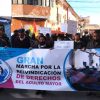
Rights with No Age Limit: Hopes for a Convention on the Rights of Older People
The world’s population is ageing. Global life expectancy has leapt to 73.3 years, up from under 65 in 1995. Around the world, there are now 1.1 billion people aged 60-plus, expected to rise to 1.4 billion by 2030 and 2.1 billion by 2050. This demographic shift is a triumph, reflecting public health successes, medical advances and better nutrition. But it brings human rights challenges.
From Pledges to Action: EU Ocean Leadership on the Line
If one so wished, it would be entirely possible to spend a lifetime travelling from one international environmental conference to the next, without ever returning home. But the relentless pace of these meetings does not always translate into equally rapid action.
UN Needs to Protect its Vital, Yet Underfunded, Human Rights Work
Major-power cutbacks and delayed payments amidst conflict and insecurity are testing the very principles and frameworks upon which the international human rights infrastructure was built nearly 80 years ago.« Previous Page — Next Page »


The Week with IPS

NEXT STOP - SDGs
Tracking global progress towards a sustainable world
Tracking global progress towards a sustainable world
