Languages
Monday, October 26, 2026



News and Views from the Global South
Global

When the Man Who Built the Bombs Met the Man Who Dropped the Bombs…
The award-winning Hollywood movie Oppenheimer portrays the life of J. Robert Oppenheimer, who helped create the atomic bomb, which claimed the lives of an estimated 140,000 to 226,000 people and devastated the two Japanese cities of Hiroshima and Nagasaki in August 1945.
IPCI 2024: Oslo Conference Focuses on Parliamentary Power over Reproductive Rights
Gearing up for the 30th anniversary of the International Conference on Population and Development (ICPD), the world’s parliamentarians and ministers are meeting in Oslo to determine the course of action needed to promote sexual and reproductive human rights (SRHR).
Carbon Markets Biased, Distorted, Undermined
Carbon dioxide emission taxes, prices and markets have been touted as key to stopping global heating. However, carbon markets have failed mainly because they favour the rich and powerful.
UN Staff Warned Against Public Comments on the Devastating Conflict in Gaza
The deadly six-month-old Israeli-Hamas war, which has claimed the lives of more than 32,000 Palestinians in Gaza and over 1,200 in Israel, has sharply divided the world with vociferous protestors on both sides of the conflict. But the United Nations is no exception with some of the estimated 35,000 staffers—both in New York and UN affiliates worldwide-- have been increasingly vocal, mostly on social media, critical of either Israel or Hamas.
Following Asian Countries’ Leads, Climate Action Opportunity for Developing Nations
In the deserts of Gujarat, something remarkable is happening. On my recent visit I saw hundreds of trucks moving under the warm Indian sun. Thousands of hardworking young people from all corners of Bharat, as Indians now often call their nation, are turning around the previously empty and harsh landscape.
Social Protection, a Key Solution for Directing Climate Finance To Poor Small-Scale Farmers
Climate change is exacerbating inequalities between and within countries, disproportionately affecting poor households in rural areas. In fact, we know that more than half of the resources of the poor – a large part of whom are small-scale farmers - are lost due to climatic hazards. This has negative impacts on the incomes of these people and their ability to meet their essential needs, including food.
Has the World Progressed or Regressed, 30 Years After a Landmark Population Conference?
As the world commemorates the 30th anniversary of the landmark International Conference on Population and Development (ICPD) held in Cairo in 1994, one lingering question remains: Has the world progressed-- or regressed-- in implementing some of the recommendations in the Programme of Action (PoA) approved by 179 UN member states.
Taking Charge: Three Actions to Help Combat Climate Change and Save Amazonia
Climate change is the defining crisis of our time––it is the ultimate equalizer from which no one is immune. The Earth's ecosystems are on the brink of collapse, threatening biodiversity and human societies in unprecedented ways at a global scale.
‘The World Is Bigger than 5’
The title of this piece is not mine. It’s from the President of Turkiye calling for a reform of the United Nations Security Council. It has since become a motto in the UN reform campaign encapsulating the shared resentment at a global system that gives the five Permanent members – The P5 of the UN Security Council – the United States, France, Britain, China and Russia – unfair and often destructive veto powers that undermines the very ideals for which the UN was established.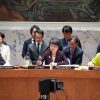
UN Security Council Holds Rare Nuclear Disarmament Debate
Japan chaired a rare, high-level UN Security Council meeting on nuclear disarmament and nonproliferation on March 18. Although the meeting underscored the urgency of addressing the growing threats posed by nuclear weapons, it also highlighted the chronic divisions among key states on disarmament and nonproliferation issues.
Developing Countries’ Government Debt Crises Loom Larger
Developing countries are being blamed for having borrowed and spent irresponsibly. But they have only been doing what foreign powers and financial interests have urged them to do.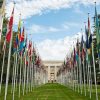
UN in Geneva to Partially Shut Down— for Second Time— Due to Cash Flow Crisis
Faced with a continued cash flow crisis, the United Nations in Geneva (UNOG) will partially close down – for the second time since December last year— as it scales back its operations, including building closures, official travel restrictions, and budgetary cuts on spending. The UN is studying plans to close the Palais des Nations beginning 22 April. Only conferences would run, but some of the offices would shut.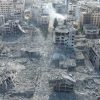
Biden Quietly OKs More 2,000-Pound Bombs & Warplanes for Israel
Despite growing worldwide calls for an arms embargo, the Biden administration in recent days has approved the transfer of billions of dollars worth of new weapons shipments to Israel, including warplanes and 2,000-pound bombs that have been dropped on densely populated areas of Gaza with devastating results.
WHO Calls for More Data on Violence Against Older Women and Women With Disabilities
Older women and women with disabilities experience abuse that is unique to their demographics, yet they are underrepresented in national and global databases, according to findings shared by the World Health Organization (WHO).
Ahead of UN Summit of the Future, Mobilizing Youth for Change
In a significant precursor to the United Nations Summit of the Future slated for September, the "Future Action Festival" convened at Tokyo's National Stadium on March 24, drawing a crowd of approximately 66,000 attendees and reaching over half a million viewers via live streaming. The event, a collaborative effort by youth and citizen groups, aimed to foster a deeper understanding and proactive stance among young people on nuclear disarmament and climate change solutions.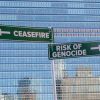
Global Governance: Time for Reform
At last the UN Security Council has passed a resolution calling for an immediate ceasefire in Gaza. While stopping short of demanding a permanent end to the violence, it goes further than the world’s peak peace and security body had so far managed since the start of the current brutal phase of conflict in October. But the time it’s taken to get to this point signals an ongoing failure of global institutions to uphold human rights.
IMF Urges Non-alignment in Second Cold War
The IMF no. 2 recommends non-alignment as the best option for developing countries in the second Cold War as geopolitics threatens already dismal prospects for the world economy and wellbeing.
Governments Worldwide Prioritize School Feeding for Its Multiple Benefits
 Before COVID-19 hit, in January 2020, 388 million children worldwide were being fed every day at school. Soon after lockdowns began, that number plummeted to 18 million, but just two years later, in 2022, it had recovered, and more — school feeding had reached 420 million children.
Parents Harness Pedal and Wind Power To Demand Climate Action
Extreme sports are not just for young people. Climate activism isn’t either. Yamandù Pagliano is proof.
Will Israel Defy Another Security Council Resolution?
The UN Security Council (UNSC) resolution for a temporary cease-fire in the ongoing conflict in Gaza— adopted by a 14-0 vote with the US abstaining –- marks a significant step forward in momentarily halting the five-month-old fighting which has claimed the lives of over 32,000 Palestinians and 1,200 inside Israel. But a lingering question remains: how will Israel respond? Clearly, Israel has had a longstanding notoriety for flouting UNSC resolutions ---and still never having to pay a price for such violations—primarily because of the unyielding support of the United States.
World’s Democracies Threatened by Disinformation Generated by Artificial Intelligence
Speaking at the third Summit for Democracy in South Korea last week, US Secretary of State Antony Blinken warned that a malicious "flood" of disinformation is threatening the world's democracies—triggered in part by the rise of artificial intelligence (AI). But AI is also a critical arena in which democracy is being challenged. “So, while we seek to harness the power of AI and other digital technologies for good, some governments are abusing those same technologies to do just the opposite,” he said.« Previous Page — Next Page »





The Week with IPS

NEXT STOP - SDGs
Tracking global progress towards a sustainable world
Tracking global progress towards a sustainable world
