Languages
Sunday, October 11, 2026



News and Views from the Global South
Global
A UN Secretary-General who Defied the US – and Suffered a Backlash
When Egypt’s onetime Foreign Minister Boutros Boutros-Ghali was running for the post of U.N. Secretary-General in late 1991, he had to contend with the rival candidacy of Bernard Chidzero, then foreign minister of Zimbabwe.
‘We Came for Action, Not Promises’: Developing Nations Voice Frustration as Bonn Talks Conclude
The United Nations June Climate Meetings (SB64) ended in Bonn with sharp disagreements between developed and developing countries over climate finance, adaptation support and emissions reductions, leaving negotiators with significant unresolved issues ahead of the COP31 climate summit in Antalya, Türkiye.
RightsCon’s Cancellation Signals a Growing Threat to Human Rights and Digital Freedoms
RightsCon, the world’s leading summit on human rights in the digital age, has served for over a decade as a vital global gathering, bringing together civil society, academics, technologists, policymakers, and the private sector in cross-border collaboration. The abrupt cancellation of RightsCon 2026, following intervention by Zambia’s government just days before the convening was due to commence in Lusaka, should concern us all.
Will US Opposition to UN’s Socio-Economic Goals Play a Decisive Role in the Vote for Next Secretary-General?
As the campaign for a new UN secretary-general gathers momentum, will the US exercise the decisive vote -- or the veto-- in the final selection?
Global Economy Endures War Shock—So Far
More than three months into the war in the Middle East, the global economy appears to be holding up. Commodity prices, inflation and expectations for it, and financial conditions have all been impacted—but not yet in ways that signal a global slowdown. And we have seen strong economic momentum in the world’s biggest economies, the United States and China.
GLOBAL TAX TREATY: ‘Without Sustained Pressure from Organised Movements, the Political Space to Win Simply Doesn’t Open’
CIVICUS discusses a proposed United Nations (UN) tax treaty with Jenny Ricks, General Secretary of Fight Inequality Alliance, a global movement that organises to counter the concentration of power and wealth in the hands of a small elite.

Fiscal Reform Needs More Than Strong Finance Ministries
In the human body, connective tissue rarely gets the attention given to the heart, lungs or brain. But without it, even the strongest organs cannot function as a system. It binds, supports and connects a healthy body. Fiscal systems work in a similar way.
UNICEF: Overlapping Climate Hazards Threaten Children’s Quality of Life
A new report from the United Nations Children’s Fund (UNICEF) highlights the vast, overlapping climate threats affecting children worldwide, which is leaving them increasingly vulnerable to escalating risks across health, security, and education.
How the G7 Can Reset Global Finance
When G7 leaders arrive in Evian-les-Bains this month, France will host more than another summit. It will host a test of whether rich-country coordination can still solve problems that no country can manage alone. Aid budgets are shrinking, debt-service bills are crowding out investment, climate shocks are damaging infrastructure, and private capital remains scarce and expensive where it is needed most.
Chatbots & AI Companions: From Science Fiction to Everyday Reality
AI chatbots and AI companions designed to simulate human-like conversation and provide relationships and companionship through generative artificial intelligence (AI) have rapidly evolved from science fiction into everyday reality.
Nuclear Nonproliferation Outcomes Stall in Backdrop of Geopolitical Strife
On principle, the nonproliferation of nuclear weapons is an issue that unites the international community. But for a select few states, these principles came with conditions and a refusal to compromise on their security strategy.
Ocean Economy Reaches $2.5 Trillion as Services Become the Largest Share of Ocean Trade
The global ocean economy continues its expansion, with ocean-related trade reaching USD 2.5 trillion as of 2025. Ocean services now make up the majority of the ocean trade, accounting for 58.9 percent of the composition, up from 47.8 percent in 2020.
Papua New Guinea Bets on Indigenous Communities to Protect 700,000 Hectares of Highlands
The Global Environment Facility (GEF) has approved USD 6.4 million for a new conservation initiative in Papua New Guinea that seeks to protect 700,000 hectares of critical highland ecosystems by placing Indigenous Peoples and local communities at the centre of conserving and managing their ancestral lands.
The World Cup of Human Rights
This planet’s biggest sporting event—the FIFA Men’s World Cup—will soon kick off. Millions of people around the world will sit up, bleary eyed, watching matches at unreasonable hours and inventing feeble excuses for why we won’t be at work in the morning. More than one billion are expected to watch the finale on TV in mid-July. That’s a bigger audience than any Olympic sporting event and more than the number of people who have viewed Squid Game on Netflix.
Fossil Fuel Wealth Fails to Deliver Development in Africa – Report
A new report examining the economic impact of oil and gas production in Africa has found that fossil fuels have failed to deliver sustained or inclusive economic development, observing that the resources have contributed to economic vulnerability and inequality and have constrained growth through prohibitive commodity prices, inflation, and weak local currencies.
Central Asia Bets on a New Water–Land Pact to Survive Environmental Degradation
As ministers, diplomats and development officials assembled in Samarkand Congress Centre for a ceremonial family photograph, the mood carried unusual symbolism. Behind the smiles and formalities stood a region confronting a harder reality: rivers are shrinking, soils are tiring, temperatures are rising, and the old ways of managing land and water are no longer working.
Trump Administration Weaponises Sanctions Against Human Rights
For a few days in May, Francesca Albanese could live more easily. On 13 May, a US federal judge ruled that sanctions the Trump administration imposed on her violated her right to free expression. The government was forced to remove the UN Special Rapporteur on the Occupied Palestinian Territories from its sanctions list. But the reprieve lasted barely a week. On 27 May, after an appeals court suspended the ruling, the US Treasury restored sanctions.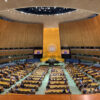
The Moral, Practical, Necessary Invigoration of Nuclear Sanity
Martin Luther King Jr. , when he received the Nobel Peace Prize, reminded us of “The fact that most of the time human beings put the truth about the nature and risks of the nuclear war out of their minds because it is too painful and therefore not ‘acceptable’, does not alter the nature and risks of such war. The device of ‘rejection’ may temporarily cover up anxiety, but it does not bestow peace of mind and emotional security.” I have devoted many decades of my life to not ignoring the risk of nuclear annihilation and since 1995 have attended every Review Conference of the Nuclear Nonproliferation Treaty to learn and hopefully contributed to a saner safer world.
Amid Rising Military Tension in War Zones, World’s Nuclear Powers are Modernizing Their Arsenals
As ongoing military conflicts in Europe and the Middle East continue with no signsof winding down, there is increasing focus on nuclear weaponsamid heightened risks of escalation.
New Geopolitics Threatens More Food Crises
Recent geopolitical trends threaten more food crises, especially in developing countries. A new IPES-Food report urges a strategy of ‘resilient self-reliance’, proposing available opportunities to improve equity, sustainability and solidarity.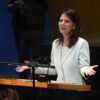
Downfall of a Superstar
This is the downfall of a diplomatic superstar. Germany’s defeat in the election to the UN Security Council is the consequence of a foreign policy that has proven disastrous in recent times, failing to uphold either the values or the interests of the Federal Republic.« Previous Page — Next Page »





The Week with IPS

NEXT STOP - SDGs
Tracking global progress towards a sustainable world
Tracking global progress towards a sustainable world
