Languages
Sunday, October 4, 2026



News and Views from the Global South
Global

‘Ticking Time Bombs’ for the Most Defenceless: The Children (II)
While the world’s biggest powers and their giant private corporations continue to attach high priority to their military –and commercial– dominance, both of them being shockingly profitable, entire generations are being lost to deadly armed conflicts, devastating climate catastrophes, diseases, hunger and more imposed impoverishment.
How Emerging Economies Are Reshaping the International Financial System
It’s been 25 years since the 1997 Asian financial crisis led to the creation of the G20 forum for finance ministers; and 15 years since this became a leader-level meeting following the global financial crisis. During this period, there has been significant shift in the global finance and economic landscape.
‘Ticking Time Bombs’ for the Most Defenceless: The Children (I)
Today, there are more children in need of desperate humanitarian assistance than at any other time since World War II.
A Vital Partnership for the 2030 Agenda
Flexible and predictable funding allows UN agencies to respond promptly and with agility in times of crisis. In countries such as Afghanistan, Yemen, and Ukraine, UNDP implements projects and programmes that help protect livelihoods and enhance the resilience of vulnerable communities.
Fear of Population Ageing
Fear of population ageing is all over the news media and in government offices of country capitals worldwide. Planet Earth is becoming “planet ageing”.
A Last-Ditch Effort to Save a High Seas Treaty from Sinking
When the United Nations began negotiations on a legally binding treaty to protect and regulate the high seas, one diplomat pointedly remarked: “It’s a jungle out there”—characterizing a wide-open ocean degraded by illegal and over-fishing, plastics pollution, indiscriminate sea bed mining and the destruction of marine eco-systems.
Climate Crisis is a Child Crisis and Climate-Resilient Children, Teachers and Schools Must Become Top International Agenda
From southern Ethiopia to northern Kenya and Somalia, the most severe drought in the last 40 years is unfolding. It is simply too hot to go to school on an empty stomach, and close to 3 million children are out of school, with an additional 4 million at risk of dropping out entirely across the Horn of Africa.
When Two Elephants Fight: How the Global South Uses Non-Alignment To Avoid Great Power Rivalries
An African proverb notes that “when two elephants fight, it is the grass underneath that suffers”. Many states in the global south are, therefore, seeking to avoid getting caught in the middle of any future battles between the US and China. Instead, they are calling for a renewal of the concept of non-alignment. This was an approach employed in the 1950s by newly independent countries to balance between the two ideological power blocs of east and west during the era of the Cold War
‘Hate Speech Loads the Gun, Misinformation Pulls the Trigger’ – And It Is Profitable
In this world of wars, massive weapons production, sales and use; of sharpening inequalities and deadly climate emergencies, hate speech and its inhumane impact, is being amplified at ‘unprecedented scale’ by new technologies.
Taking a Stance on Feminists’ Prejudice Against Religious Minority Women
Since researching the experiences of gender discrimination against women in poverty who belong to religious minorities, many fellow feminists have turned their back on me.
ECW High-Level Financing Conference Raises More than 826 Million USD to Keep Crisis-Impacted Children in School
As an unparalleled, unprecedented global education crisis unfolds, an estimated 222 million crisis-impacted children are desperate to learn. As barriers to accessing education increase, darkness beckons, and education is their last hope.
World Leaders, Private Sector Urged to Establish an International Green Bank to Win Climate Change Battle
As the effects of climate change escalate and natural disasters such as earthquakes, floods, and droughts become more frequent and severe, threatening lives and livelihoods, humanity is losing the climate battle.
China and Russia Fail to Defund UN Human Rights Work
United Nations member states agreed to fully fund UN human rights mechanisms that China, Russia, and their allies had sought to defund in the 2023 budget. This should set a precedent for UN human rights funding in the future.
Outlook for 2023: Children in ‘Polycrisis’
The year 2022 was incredibly difficult for people around the world. We were confronted by a series of major crises, including a continuing pandemic, a major war in Europe, an energy crisis, rising inflation and food insecurity.
Let’s Eat Plastics!
With one in ten people in the world going hungry, food prices hitting record highs, and the worsening conditions of the environment and climate, it’s time for the world’s population of 8 billion to eat something that is available, abundant and inexpensive: plastics.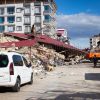
Humanitarian Aid to Earthquake Victims Hindered by Politics– & Limited Access
As the toll in last week’s earthquakes in Turkey and Syria exceeds a staggering 28,000 people dead and more than 78,000 injured--and counting-- the United Nations is in an emergency-footing struggling to provide humanitarian aid, along with several international humanitarian organizations.
Food Industry Exposes Five Billion People to Toxic Chemicals that Kill
The food industry continues to intensively use toxic chemicals in their products, some of them provoking heart diseases and death. Trans fat is just one of them, adding to contaminating fertilisers, pesticides, microplastics and a long etcetera.
The Opioid Addiction Crisis & U.S. National Security
The opioid addiction crisis in the United States is an acute public health emergency and a profound threat to national security – which is caused by the over-prescription, misuse, illegal production, and criminal trafficking and sale of opioid pharmaceutical drugs to Americans. It is estimated that over 130 people die every day from opioid overdoses in the U.S.
Rigidity and Tolerance within the Vatican
When the Pope Emeritus Benedict XIV/Ratzinger died on the last day of 2022 it did not cause much of a stir in the global newsfeed. Maybe a sign that religion has ceased to play a decisive role in modern society Nevertheless, religious hierarchies are still highly influential, not least for the world’s 1, 4 billion baptized Catholics, and a pope’s policies have a bearing not only on morals, but also on political and economic issues. By contrast, there are more Muslims in the world, 1.9 billion, though adherents are not so centrally controlled and supervised as Catholics and hierarchies do not have a comparable influence on global affairs.
NGOs Campaign for a Torture-Free UN Trade Treaty
Hinting at “Western hypocrisy”, a senior UN official once told a group of reporters, perhaps half-jokingly: “When you go on one of those sight-seeing tours in Europe, they will show you their palaces and castles-- but never their medieval prisons or torture chambers.”
Australia Leads Against Large Multinational Corporations’ Tax Dodging
Australia is set to become the first country or jurisdiction to require large multinational corporations (MNCs), with a global consolidated income of at least AU$1 billion, to publicly report country-by-country (CbC) tax information. The new Labor Government announced on 25 October, 2022 in its budget paper that MNC’s public CbC tax reporting will begin from 1 July, 2023. Australia’s public CbC reporting rules will apply to all companies headquartered in Australia and companies headquartered elsewhere with sufficient nexus in the country.« Previous Page — Next Page »


The Week with IPS

NEXT STOP - SDGs
Tracking global progress towards a sustainable world
Tracking global progress towards a sustainable world
