Languages
Thursday, November 26, 2026



News and Views from the Global South
Latin America & the Caribbean
BOLIVIA: Water, Energy Everywhere – But Not for Locals
Peasant farmers in 42 villages along the Zongo valley in western Bolivia stand by and watch as the flourishing electricity industry harnesses the swift-flowing river while, paradoxically, their own farms are languishing from lack of water and energy.PERU: Mobilising to Hold President to His Promises
Social movements, trade unions, peasant farmer and indigenous organisations are holding strikes and demonstrations to demand that Peruvian President Alan García fulfil the social commitments he has made, in writing and at negotiating tables.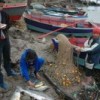
ARGENTINA: Guardians of the River
"There is no water...there are no fish," says Olga Ledesma, her skin weathered from 40 years of small-scale fishing, as the boat slowly winds its way along a branch of the Paraná river, South America’s second-longest river.HONDURAS: Government Advertising Allocation as “Subtle Censorship”
Government practices for allocating official advertising to the Honduran media include reward and punishment policies, payments to individual journalists, and even denial of access to public information - mechanisms that interfere with freedom of expression and the right to information, according to experts.
DOMINICAN REPUBLIC: Dreams of Being a Regional Breadbasket
On the second day of a conference here on agricultural development, Dr. Rene Villarreal awakened hundreds of technicians and farmers from a siesta, leaving the dais and walking from table to table, using a remote microphone.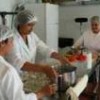
ARGENTINA: Women Create Food and Jobs in Wetlands
Wearing a cap and a white apron, Melina Lucero cuts the heads and tails off fish caught in the Paraná River, before skilfully filleting them. Her co-workers will process and package the fish to sell as traditional, small-scale fish preserves at food fairs along the banks of the river in Argentina.ECONOMY-LATAM: Crisis Means Slower Growth Ahead
The financial crisis shaking the United States will have repercussions in the rest of the world, which means "tough times lie ahead for Latin America," the permanent secretary for the Latin American Economic System (SELA), José Rivera, told IPS.RIGHTS-MEXICO: Tlatelolco Massacre – 40 Years of Impunity
The rivers of ink that have been spilled in investigations, trials and the collection of testimony on the Oct. 2, 1968 massacre of student demonstrators in Tlatelolco square in Mexico City have made it clear that the state was responsible. But not one person has been sentenced, and no one even knows exactly how many young protesters died.MEXICO: Marching On the Capital
Dozens of indigenous people walking naked along a main avenue in support of their demand for land, or thousands of stick-wielding teachers blocking main streets at rush hour, are almost daily occurrences in the Mexican capital.RIGHTS-ARGENTINA: New Methods to Identify Dictatorship’s Missing Children
DNA testing and court resolutions in Argentina have been key factors in speeding up the work of establishing the true identities of the children who were stolen from their parents, victims of forced disappearance, and given to other families to raise during the 1976-1983 military dictatorship.ECUADOR: Correa May Cancel Payment of Some “Illegitimate” Debt
The day after the new constitution promoted by his government won 63 percent support in a referendum, according to the preliminary returns, Ecuadorean President Rafael Correa said Monday that he may cancel payment of some loans, but that the country would not default on its foreign debt.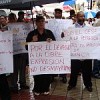
DOMINICAN REPUBLIC: Media Targeted for Threats, Lawsuits
Media rights groups in the Dominican Republic are protesting what they say is a climate of legal and physical intimidation of journalists throughout the country.ENERGY-LATIN AMERICA: PDVSA’s Growing Presence
Central America, Cuba, the Dominican Republic and islands in the eastern Caribbean are receiving more and more oil from Venezuela, while major refineries are planned in South America - at Pernambuco in northeastern Brazil, and at El Aromo, on Ecuador's Pacific coast.ECUADOR: Gearing Up for a New Constitution
Voters in Ecuador are getting ready to go to the polls Sunday, where they are expected to approve a new constitution that recognises ethnic diversity and expands social and environmental rights.
Q&A: "Violence Is Part of the History of El Salvador"
He says he has read the Bible three times and that gang members are "not only victimisers but victims of the system of violence" in El Salvador.BRAZIL: Urban Violence Hot Issue in Local Elections
Crime and violence will be key issues in the October local elections in Brazil's largest cities, especially Rio de Janeiro, although public security is the responsibility of state governments rather than the municipalities.RIGHTS-PERU: Declassified US Documents Undermine Fujimori’s Claims
U.S. State Department documents that have been kept secret until now contradict former Peruvian President Alberto Fujimori’s claims that he did not know about human rights abuses committed by the country's intelligence services during his two terms of office, from 1990 to 2000.CENTRAL AMERICA: Violence Exacts Increasingly Heavy Toll
Violent crime costs Central America an estimated 6.5 billion dollars a year, equivalent to 7.7 percent of gross domestic product in the region, where the two least violent countries are the wealthiest - Costa Rica - and the poorest - Nicaragua, according to a study carried out in El Salvador.ARGENTINA: Imprisoned Paraguayan Activists on Hunger Strike
Six rural activists from Paraguay who are in prison in Argentina have been on a hunger strike since Aug. 15 to protest what they claim is their "unjust detention" carried out with the "complicity" of the Argentine government.
BRAZIL: Amazon Art Institute Helps Recover Indigenous Roots
Dhiani Pa'saro came to Manaus, the bustling city of 1.7 million people in the heart of Brazil’s Amazon rainforest, eight years ago, after wandering from one village or town to another. At the time he planned to become a dentist, but at 33 he is now a renowned artist.
Q&A: "Haiti Is Going From Catastrophe to Catastrophe"
Peasant leader Chavannes Jean-Baptiste has been at the forefront of the struggles of Haiti's peasants for over 35 years. Born in the village of Papay in Haiti's Plateau Central, Jean-Baptiste helped found the Mouvman Peyizan Papay (MPP) peasant union as well as the Mouvman Peyizan Nasyonal Kongre Papay (MPNKP), the latter a 200,000-member national congress of peasant farmers and activists.« Previous Page — Next Page »


The Week with IPS

NEXT STOP - SDGs
Tracking global progress towards a sustainable world

