Languages
Friday, November 27, 2026



News and Views from the Global South
Latin America & the Caribbean
ENVIRONMENT-PERU: Three Weeks to Create a Ministry
A team of experts appointed by the government of Peruvian President Alan García was given three weeks to complete a proposal to create an Environment Ministry.DEATH PENALTY-GUATEMALA: Green Light for Executions
Guatemalan President Álvaro Colom said Wednesday that he would not pardon those on death row - a presidential option that was restored by parliament in a decision that ended a de facto moratorium on executions in place since 2000.ARGENTINA: Boost for Coal Mine Revives Stagnant Town
With winter temperatures that plunge to 20 degrees below zero, the small Argentine town of Río Turbio, 3,000 kilometres southwest of Buenos Aires, would not exist but for the coal beneath its soil.ARGENTINA: Public Employees Go for IT
In keeping with its aim to shore up the strong role played by the state, which was badly weakened during the years when free-market economic policies were predominant, the Argentine government is implementing a successful programme of electronic learning for its employees that is already being requested by a dozen Latin American countries interested in replicating the experience.RIGHTS-EL SALVADOR: Police Nostalgic for the Past
Fifteen years after the end of El Salvador’s 1980-1992 civil war, activists and experts say the police have returned to past practices, and are once again violating basic human rights.POLITICS-MEXICO: Is the Left About to Implode?
In less than two years, the leftwing Party of the Democratic Revolution (PRD) has swung from its best electoral showing in history to a drastic fall in its support, while internal conflicts threaten to split it apart.
RIGHTS-BRAZIL: Pantanal Indians Threatened by Deforestation
The indigenous peoples of the central-western Brazilian state of Mato Grosso do Sul do not look like the tribes portrayed in film, decked out in colourful clothing and adornments and depending on their natural surroundings to survive in the Amazon jungle. But some of their problems are similar to their Amazonian counterparts, and in some cases even more serious.GUATEMALA: Bus Drivers Targets of Organised Crime Killings
"Oh, I wish they would stop killing bus drivers, Jesus, I wish they would!" said a woman in tears as she took part in a Holy Week procession in the Guatemalan capital, Ernestina González, a domestic worker who rides the bus every day, told IPS.ECONOMY-CHILE: On the Road to Joining “Rich Man’s Club”
Although the Chilean government is upbeat with respect to the country’s chances of joining the Organisation for Economic Cooperation and Development (OECD) - the so-called "rich man’s club" of nations - experts say there is still much to be done before that actually happens.
RIGHTS-CHILE: In the Mapuche People’s Heartland
Before the latest outbreak of protests and unrest among Mapuche Indians in the southern Chilean region of Araucanía, IPS visited the village of Temucuicui, whose residents have complained for years about judicial persecution and police brutality in response to their claims to their ancestral land.DEVELOPMENT-NICARAGUA: Despite Efforts, MDGs Still Distant Goals
Despite the social plans implemented by the government of Daniel Ortega, Nicaragua has made little progress towards meeting the Millennium Development Goals (MDGs), say independent analysts.LATIN AMERICA: A Hellish Life for Dolphins
Mexico is one of the few countries in Latin America that allows the operation of dolphin aquariums - tourist venues that rake in high profits and where these sea mammals often live in severely inadequate conditions, according to studies.DRUGS-MEXICO: Army to Continue Policing Until 2012
The United Nations High Commissioner for Human Rights, Louise Arbour, has joined those calling for the Mexican army to be withdrawn from the fight against drug traffickers. But her request will not be acted on until at least 2012, when President Felipe Calderón’s term of office is up.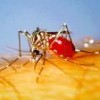
HEALTH-PARAGUAY: Dengue Alert
As health authorities in Paraguay brace themselves to face another possible outbreak of dengue fever, critics are becoming more outspoken about the limited effectiveness of campaigns to prevent the disease, which affected over 28,000 people and caused 17 deaths in 2007.THEATRE-BRAZIL: Bringing Dreams to Life in the Favela
In La Rocinha, the largest favela in Rio de Janeiro, Romeo and Juliet’s love story is impossible because they live on hills controlled by rival gangs of drug traffickers.ENVIRONMENT-ARGENTINA: Tourism Growth Threatens Glacier Lake
The ice front of the Perito Moreno glacier in Argentina is five kilometres wide and up to 70 metres high, as it moves majestically across the Lago Argentino, oblivious to the environmental threat posed by the rapid growth of the nearby tourist centre which hosts thousands of visitors.ENVIRONMENT-PERU: “For Sale” Signs in Amazon Jungle
The Peruvian Congress plans this week to debate a draft law pushed by the government that would authorise the sale of vast tracts of deforested, uncultivated land in the Amazon jungle to private companies that invest in "reforestation" efforts.MEDIA-ARGENTINA: Transvestites Find a Voice
With the support of one of Argentina’s leading public universities, a group of transvestites have launched a magazine aimed at reaffirming their identity and giving them a voice, as they tend to be ignored or given stereotypical coverage by the mainstream press.ECONOMY-EL SALVADOR: Dollarisation Backfires, Fuelling Price Hikes
When he dollarised the Salvadoran economy in January 2001, then President Francisco Flores predicted that the move would lower interest rates and curb inflation. Now, however, there is wide agreement that what actually happened was nothing of the sort, and that instead, prices have increased by up to 100 percent.PARAGUAY: Victims of Supermarket Fire Protest ‘Lax’ Sentences
Survivors and relatives of victims of the Ycuá Bolaños supermarket fire in Paraguay were overcome with indignation and grief at the reading of the court’s ruling on the disaster, which killed 364 people and injured over 500 in 2004.PERU: Government Generosity Swells Mining Company Profits
The Peruvian government saw its tax revenues shrink by nearly 2.7 billion dollars in 2006 and 2007 as a result of a decision not to charge mining companies royalties or a tax on windfall profits generated by the current high prices, according to a civil society umbrella group.« Previous Page — Next Page »


The Week with IPS

NEXT STOP - SDGs
Tracking global progress towards a sustainable world

