Languages
Saturday, November 28, 2026



News and Views from the Global South
Latin America & the Caribbean
BRAZIL: Homeless Take Fate into Their Own Hands
The occupation of the huge empty lot was carried out at night, by some 300 families. Just a few days later, there were nearly 5,000 families living in a sea of black tents in Valo Velho, a poor, sparsely populated neighbourhood in Itapecerica da Serra, on the outskirts of this Brazilian city.MEDIA-LATIN AMERICA: Easy to See the Speck in the Other’s Eye
People have been collectively tearing their hair out all over Latin America because of the Venezuelan government's decision not to renew the broadcasting licence of that country's most popular television station, RCTV.EL SALVADOR: Water Pipes Don’t Mean Water in the Tap
"We have been facing this problem for 36 years; sometimes we have a little, but we actually spend a lot more time without water," says Ana Hortensia Cabrera, who is in fact among the lucky Salvadorans who have piped water in their home.HEALTH-ARGENTINA: Abortion – No Longer a Taboo Subject
Capitalising on a more favourable public opinion, an alliance of civil society organisations in Argentina presented to Congress a draft law Monday for the legalisation of abortion in a country where illegal abortions are the main cause of maternal mortality.DISARMAMENT-LATIN AMERICA: Cluster Bomb-Free Region?
Peru's proposal to make Latin America the world's first cluster munitions-free region received broad support from the countries that took part in this week's intergovernmental conference on a future global treaty against the weapons in Lima, said local authorities.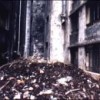
BRAZIL: Homeless Squatters Find 'Social Function' for Empty Buildings
The dark entry hallway and a lower floor full of rubble that smells of excrement make it difficult to imagine that this was once a busy hotel, located next to two train stations in the central Luz neighbourhood of the southern Brazilian city of Sao Paulo.PARAGUAY: Solidarity Lending Bolsters Community Development
Esperanza Santos Aranda, who lives in a poor neighbourhood in the Paraguayan capital, used to sell vegetables at a precarious market stall. But thanks to a 60-dollar loan, she was able to open up her own small clothes-selling business.MEXICO: Activists Defending Central American Migrants Complain of Harassment
Activists with the Mexican non-governmental organisation Sin Fronteras complained that they are the targets of harassment and intimidation by the authorities in Mexico because of their work on behalf of Central American migrants who suffer abuses of all kinds in this country on their way to the United States.CHILE: Rights of Mapuche Indians Still Not Ensured
Indigenous people in Chile face serious problems in terms of access to justice and protection of their rights, Sergio Laurenti, executive director of Amnesty International-Chile, told IPS.GUATEMALA: Ex-Dictator on Rocky Road to Congress – and Immunity
The race against the clock to keep former Guatemalan dictator Efraín Ríos Montt from returning to parliament ends Thursday. The decision to accept the registration of his candidacy, despite an international arrest warrant out for him, has caused indignation within and outside the country's borders.LATIN AMERICA: Measuring Civil Society By Its Own Yardstick
Legal reforms, manuals of good practice, codes of ethics and schools for activists are some of the tools that organised civil society in Latin America wants in order to improve its transparency and legitimacy.ARGENTINA: An (Air) Accident Waiting to Happen?
Although the Argentine government is adamant that air transport safety is guaranteed, for the past 80 days the main airports in the country have been facing an unprecedented crisis. Air traffic controllers are operating without radars, flights are delayed or cancelled, and the risks are mounting.VENEZUELA: Marches and Counter-Marches Over TV Station’s End
Hundreds of journalists and students carried a one-kilometre banner reading "S.O.S. Freedom of Expression", written in 10 languages with letters one metre high, through the Venezuelan capital Monday to protest the authorities' decision not to renew the broadcasting licence of the country's most popular TV station.CLIMATE CHANGE-BRAZIL: Once and Future Environmental Leader?
Brazil appears to be about to pass over a prime opportunity to affirm itself as a leading environmental power in negotiations to bring the threat of global warming under control, according to environmentalists and analysts.RIGHTS-COLOMBIA: ‘Battalions of Lawyers, Not Soldiers’
In San Onofre, a municipality in the northwestern Colombian province of Sucre, where according to the Movement of Victims of Crimes of the State the far-right paramilitaries have killed 3,000 people, locals say in a low voice that "He will get us out of this."BIODIVERSITY-MEXICO: Sierra Gorda Reserve Hit Hard by Climate Change
In the Sierra Gorda Biosphere Reserve, Mexico's richest in biological diversity, thousands of trees are dying from the attack of pests, against which there are few viable weapons. The ongoing lack of rainfall opened the door to the onslaught.ARGENTINA: The Long (Children’s) March Against Hunger
"There are lots of hungry, barefoot children in Argentina, but they don't talk about that in school, so I learn a lot when I come on these marches," said Aluminé Giuliani, a teenager participating in a nationwide children's march, which arrived in the Argentine capital Friday.LATIN AMERICA: Second Chance for Indigenous People After ‘Lost Decade’
Tensions between indigenous people, governments and transnational corporations will grow in the second International Decade of the World's Indigenous People, which began in 2005, say experts.BOLIVIA: Faster Internet Connections – For the Few
A varied crowd of academics, civil servants, and university and high school students gathered in the hall of the vice-presidential building to celebrate Internet Day. The main event was the launching of Internet II, a project to incorporate Bolivia into the cutting-edge Latin American Cooperation of Advanced Networks (CLARA).DEATH PENALTY-GUATEMALA: Inmates in Limbo
Twenty-one inmates have spent years on death row in Guatemala because of a legal vacuum that has brought a de facto halt to executions but has done away with the president's right to pardon prisoners or commute their sentences.CHILE: Pressing Hard for Full Recognition of Indigenous Rights
In the next few days, President Michelle Bachelet will throw all her political weight behind the motion for Congress to finally ratify the ILO convention recognising the collective and individual rights of indigenous people.« Previous Page — Next Page »


The Week with IPS

NEXT STOP - SDGs
Tracking global progress towards a sustainable world

