Languages
Wednesday, November 11, 2026



News and Views from the Global South
IPS UN Bureau
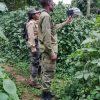
Rwanda’s Biodiversity Conservation Gains Momentum With Bird Sounds Recording
Claver Ntoyinkima wakes up early in the morning, at least three times a week, and goes into the Nyungwe rainforest to record bird vocalizations. Ntoyinkima is one of several community members in a remote village in rural southwestern Rwanda who volunteer with a group of scientists to help boost wildlife conservation.
Matchmaking for Green Cities? Accelerating Climate Finance in Urban Areas
Asia and the Pacific is home to 54 per cent of the world's urban population, who are disproportionately vulnerable to the impacts of climate change (ESCAP, 2023; IPCC, 2022). Why then, do climate action projects in cities commonly face delays in implementation?
Settling the Middle East Vs West Asia Debate
“Middle East” or “West Asia?” This somewhat divided nomenclature adds another layer to the region’s already “complicated” label. Is it the “Middle East” because it is in the “middle” of the East? Is it “West Asia” because it is in the western part of Asia? So, why is the region mostly called the Middle East? It is “geographically ambiguous” to some, as it is “East” only from the “West’s” perspective. The term West Asia has fewer challengers, but it isn’t used as much.
Is Bangladesh Sleep Walking to Dictatorship ?
The parliamentary elections held in Bangladesh on 7 January, 2024, has created much controversy in the country, terming it an “election of the Awami League (AL) government, for the AL government and by the AL government", by many. Internationally, China and India have congratulated the government for victory and organization of a fair election. But, several western countries have termed it as unsatisfactory. However, irrespective of the diverse views, everyone agrees that it was not participatory elections. Voter turn out was significantly low and it was boycotted by the main opposition Bangladesh National Party (BNP).
Scared of Sharps? This MAP Shows the Way to Delivering Painless Vaccines
If the fear of sharps makes a visit to the doctor dreadful, you need not dread it anymore. A South Korean company's invention of an innovative micro-needle patch could make you look forward to your next doctor’s visit.
Turning Protracted African Conflicts into Sustainable Peace
Among East Africa’s dozens of pastoral tribes, major conflicts have erupted repeatedly, largely over land and water disputes. Generational trauma and anger have built to create tensions and grievances that carry emotional weight even hundreds of years later.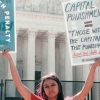
Death Penalty, Condemned by UN, Still in Force in US– but With a New Twist
In a bygone era, public executions of condemned prisoners were common in certain parts of the United States where the death penalty, mostly with lethal injections, is still in force now. The hangings, at the turn of the century, apparently were open to the public and the media.
Gaza Health Workers Struggling to Save Injured Without Medical Supplies, WHO Expert Warns
Gaza’s healthcare system is “on its knees” as ongoing hostilities force hospitals to operate beyond their capacity and displace their healthcare workers, according to a WHO expert.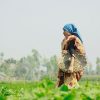
Climate Change Is Taking a Major Toll on Agriculture. Here’s How to Support Farmers
Half the world eats rice. In Bangladesh, everyone eats it. The small, densely-populated nation is the third-highest rice-producing country in the world.
2024: A Year of Cautious Hope for African Economies Facing Worldwide Challenges
As African economies look to the new year, countries across the continent are poised to make moderate economic gains but must navigate the maze of domestic and international challenges.
Guatemala’s Chance for a New Beginning
Guatemala’s new president, Bernardo Arévalo, was expected to be sworn in on 14 January at 2pm –the 14th at 14:00, as people repeated in anticipation for months. It was a momentous event – but it wasn’t guaranteed to happen.
Hindu Woman Doctor Confident of Election In Pakistan Polls
A woman medical graduate from the Hindu community is making waves, as she is the first minority woman to contest the Pakistan Parliamentary election for a general seat, and she does so in the face of deep-rooted religious traditions and wealthy political opponents. Dr Saveera Parkash, a nominee of the Pakistan People’s Party (PPP) for the February 8 polls, is sure of her victory despite her religion.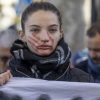
The Global Femicide Epidemic
‘Per Giulia e per tutte’ (‘For Giulia and for all’) echoed through the streets of Italy in mid-November 2023. Thousands of women, activists and supporters gathered to protest and show solidarity with the 22-year-old student Giulia Cecchettin, who was killed by her ex-boyfriend on the night of 11 November 2023.
The Impact of Climate Migration on Developing Nations
As the world is still gearing up to welcome 2024, let us find a moment to reflect on some of the key trends of the past year and pursue now to embrace the path towards hope and promise for everyone, everywhere.
Mozambique Insurgency Significantly Decreased, Say Experts
There is cautious optimism regarding the conflict that has been raging in northern Mozambique, largely in the province of Cabo Delgado, since 2017. There are encouraging indications that the Islamic State (IS)-driven insurgency has significantly decreased thanks to the deployment of the Mozambique Defense Armed Forces (FADM), Southern African Development Community (SAMIM) forces, and a contingent of Rwandan troops (RSF).
World Bank Enables Foreign Aid Theft
World Bank aid encourages governments to enable illicit financial outflows to offshore tax havens by reducing capital controls, thus draining precious foreign exchange and government resources.
Iran, Back to the Grim Normal
Iran’s time of public rebellion has ended. The protesters marching, chanting, and dancing under the ‘Woman, Life, Freedom’ banner have long stopped. And shifting regional dynamics may play to the regime’s favour.
New Era: Unlocking Africa’s Agriculture Potential Through CGIAR TAAT Model
As hunger and food insecurity deepen, Africa is confronting an unprecedented food crisis. Estimates show that nearly 282 million people on the continent, or 20 percent of the population, are undernourished. Numerous challenges across the African continent threaten the race to achieve food security; research and innovative strategies are urgently needed to transform current systems as they are inadequate to address the food crisis.
AI Will Transform the Global Economy: Let’s Make Sure It Benefits Humanity
We are on the brink of a technological revolution that could jumpstart productivity, boost global growth and raise incomes around the world. Yet it could also replace jobs and deepen inequality.
With Attack on Yemen, the U.S. Is Shameless: “We Make the Rules, We Break the Rules”
Have you heard the one about the U.S. government wanting a “rules-based international order”? It’s grimly laughable, but the nation’s media outlets routinely take such claims seriously and credulously. Overall, the default assumption is that top officials in Washington are reluctant to go to war, and do so only as a last resort.
The World’s Richest Men Leave Women Far Behind—Amid Rising Economic Inequalities
The world’s rich are getting progressively richer while the world’s poor continue to be increasingly poorer. In a new report released January 15, Oxfam says the wealth of the world’s five richest men has doubled since 2020 –even as five billion people were made poorer in a “decade of division.”« Previous Page — Next Page »





The Week with IPS

NEXT STOP - SDGs
Tracking global progress towards a sustainable world
Tracking global progress towards a sustainable world
